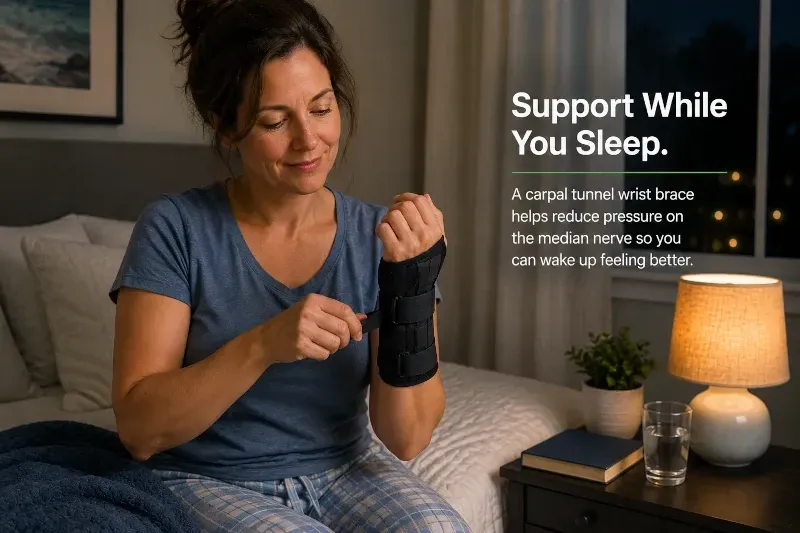
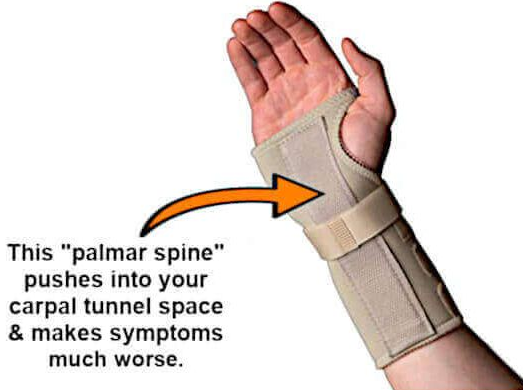
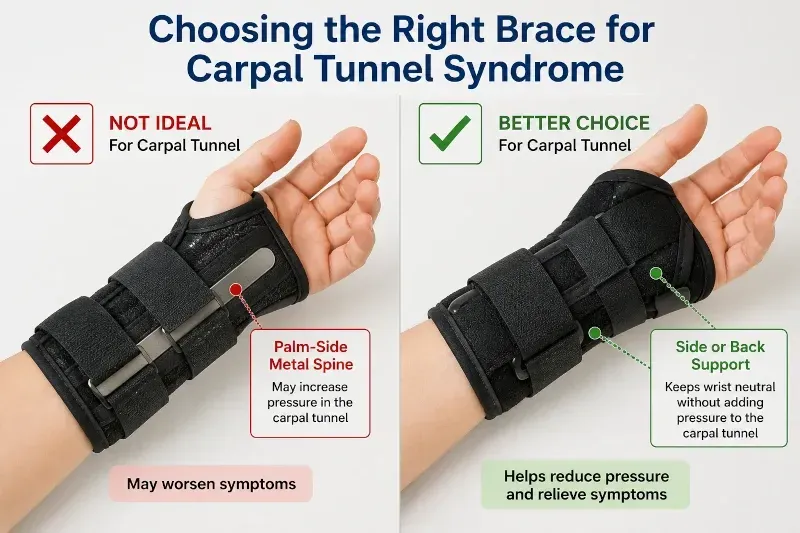
The best carpal tunnel brace keeps your wrist in a neutral position while sleeping without placing pressure on the carpal tunnel. Braces with a rigid palmar spine can actually increase pressure on the median nerve and may worsen symptoms.
Choosing the best carpal tunnel brace isn't as easy as buying the most expensive one or selecting a brace labeled "for carpal tunnel."
In fact, many braces marketed for carpal tunnel syndrome have design features that may actually make symptoms worse. Knowing what to look for—and what to avoid—can help you choose a brace that supports healing instead of increasing pressure on the median nerve.
What is the best carpal tunnel brace?
The best carpal tunnel brace holds the wrist in a neutral position while sleeping without placing pressure over the palm. It should be comfortable, adjustable, breathable, washable, and avoid a rigid palmar spine that can increase pressure inside the carpal tunnel. The most important feature to look for isn't the brand name or the price—it's whether the brace reduces pressure on the median nerve instead of increasing it.
People Also Ask
- What is the best brace for carpal tunnel syndrome?
- Should I wear a carpal tunnel brace all day?
- Why do some wrist braces make carpal tunnel worse?
- Can a wrist brace cure carpal tunnel syndrome?
Need a Carpal Tunnel Brace?
Before buying a brace, make sure your symptoms actually fit carpal tunnel syndrome and learn how advanced your condition may be.
Check Your Symptoms
Test Your Severity
What Should A Carpal Tunnel Brace Do?
The
best carpal tunnel brace does much more than simply support your wrist. Its primary purpose is to reduce pressure on the median nerve while allowing irritated tissues to recover.
Most hand specialists recommend wearing the brace only while sleeping, when the wrist naturally bends into positions that can aggravate symptoms.
A properly designed brace should:
Comfort is equally important. Since most patients wear a brace for several hours every night, it should also be:
- breathable
- lightweight
- adjustable
- washable
- easy to put on with one hand
It's important to have realistic expectations. Even the best carpal tunnel brace is not a cure by itself. Bracing works best when combined with
stretching exercises, activity modification, and
myofascial release massage as part of a comprehensive treatment program.
Night Bracing Works Best
Most specialists recommend wearing a carpal tunnel brace while sleeping rather than during work. Nighttime bracing helps prevent the wrist from bending into positions that increase pressure on the median nerve.
Avoid Braces With A Palmar Spine
Check Before You Buy
Turn the brace over and look at the palm side. If you see a rigid metal or plastic stay running down the center of the palm, it's generally not the best choice for treating carpal tunnel syndrome.
Features Of The Best Carpal Tunnel Brace
Besides avoiding a palmar spine, the best carpal tunnel brace should include several features that improve comfort, support, and long-term compliance.
Look for a brace that:
- has lateral or dorsal stays
- keeps the wrist in a neutral position
- fully supports the hand, wrist, and forearm
- uses breathable materials
- is machine washable
- has multiple adjustable Velcro straps
- allows easy one-handed application
- fits snugly without restricting circulation
A well-designed brace should feel secure without being overly tight. If your fingers become cold, swollen, or discolored, the brace is probably too tight and should be adjusted.
Price is a poor predictor of quality. Some inexpensive braces outperform premium-priced models simply because they use a better design.
The most important consideration is choosing a brace that protects the median nerve instead of placing additional pressure on it.
Recommended Carpal Tunnel Braces
The Best Brace Is One You'll Actually Wear
Even the best-designed brace cannot help if it sits in a drawer. Comfort, fit, and ease of use are just as important as the brace's overall design because consistent nighttime wear leads to the best results.
Braces To Avoid
Many wrist braces sold online and in retail stores are advertised as "carpal tunnel braces," but that label alone doesn't mean they're appropriate for carpal tunnel syndrome.
Many of these braces contain a rigid palmar spine or use designs intended for sprains, fractures, or general wrist support rather than median nerve compression.
Examples include:
- Featol Wrist Brace
- ComfyBrace
- Ace Wrist Stabilizer
- Copper Fit Wrist Brace
- Mueller Wrist Brace
- Futuro Wrist Brace
- AirCast A2 Wrist Stabilizing Brace
- Ossur Exoform Wrist Brace
- Bauerfeind ManuTrain Wrist Brace
- Bauerfeind ManuLoc Wrist Brace
Many of these braces are excellent for sprains, strains, arthritis, or general wrist support—but they may not be ideal for treating carpal tunnel syndrome. If they place pressure directly over the palm side of the wrist, they may not be the best choice.
Rather than shopping by brand name or price, evaluate the brace based on its design and whether it keeps pressure away from the carpal tunnel.
Not Sure Which Brace Is Right?
The best wrist brace depends on whether your symptoms are actually caused by carpal tunnel syndrome and how severe the condition has become.
Check Your Symptoms
Test Your Severity
Summary
The
best carpal tunnel brace should keep your wrist in a neutral position, avoid a rigid palmar spine, and fit comfortably enough to wear every night.
When selecting a brace, look for one that:
- avoids a rigid palmar spine
- provides firm but comfortable support
- is breathable and washable
- uses adjustable Velcro straps
- fits securely without restricting circulation
Remember that even the best carpal tunnel brace works best when combined with activity modification, stretching exercises, and myofascial release massage.
Key Takeaways
- Avoid braces with a rigid palmar spine that presses on the carpal tunnel.
- The best carpal tunnel brace keeps the wrist in a neutral position while sleeping.
- Look for breathable materials, adjustable straps, and a comfortable fit.
- Expensive braces are not necessarily better than lower-priced models.
- Wear your brace at night rather than during repetitive daytime activities.
- A wrist brace works best when combined with stretching, activity modification, and myofascial release massage.
- Consistent nightly use usually produces the greatest benefit.
About Dr. Zannakis