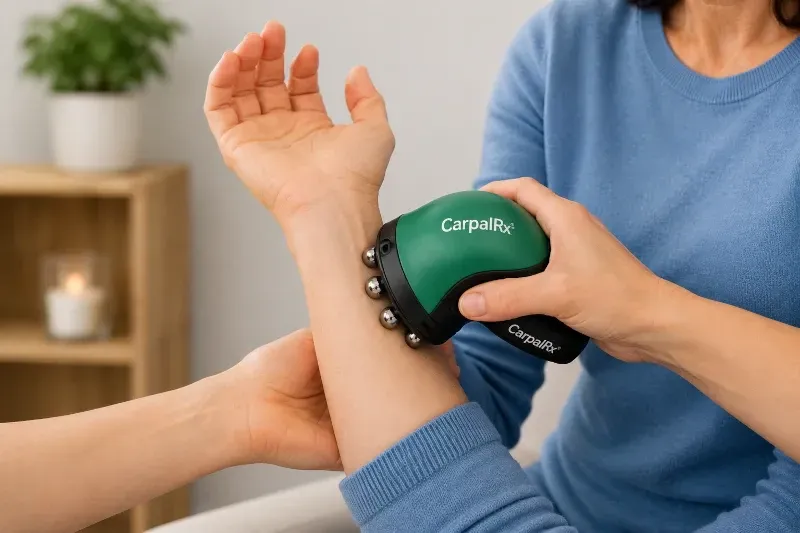
Neuropathy in hands occurs when peripheral nerves become damaged, causing numbness, tingling, burning, pain, weakness, or loss of sensation. Diabetes is the most common cause, but chemotherapy, vitamin deficiencies, autoimmune diseases, injuries, and other conditions can also damage the nerves. Because neuropathy is often mistaken for carpal tunnel syndrome, obtaining the correct diagnosis is essential for choosing the most effective treatment.
Numbness, tingling, burning, or weakness in your hands can be alarming. Many people immediately assume they have carpal tunnel syndrome. While that's certainly possible,
neuropathy in hands is another common cause that affects millions of Americans.
Unlike carpal tunnel syndrome, peripheral neuropathy is not a single disease. Instead, it is a sign that one or more peripheral nerves have been damaged by an underlying medical condition or injury.
Peripheral neuropathy develops when nerves outside the brain and spinal cord become damaged. Depending on which nerves are affected, symptoms can range from mild tingling to severe burning pain, muscle weakness, poor coordination, and loss of sensation. Some forms develop gradually over many years, while others appear suddenly.
The good news is that many cases of neuropathy can be managed successfully once the underlying cause is identified. The key is understanding what's causing your symptoms and how neuropathy differs from other conditions such as carpal tunnel syndrome.
This guide explains the symptoms, causes, diagnosis, and treatment of
neuropathy in hands, including the special case of chemotherapy-induced peripheral neuropathy (CIPN).
What causes neuropathy in the hands?
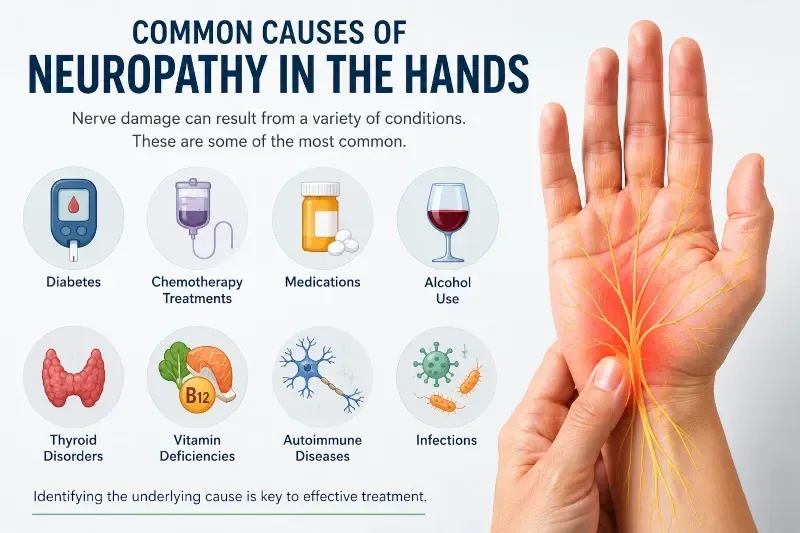
Neuropathy in the hands occurs when peripheral nerves become damaged by conditions such as diabetes, chemotherapy, vitamin deficiencies, autoimmune diseases, infections, injuries, or excessive alcohol use. Common symptoms include numbness, tingling, burning pain, weakness, and reduced sensation. Because neuropathy can resemble carpal tunnel syndrome, an accurate diagnosis is important before treatment begins.
People Also Ask
- What does neuropathy in the hands feel like?
- Can neuropathy affect only the hands?
- Is neuropathy the same as carpal tunnel syndrome?
- Can nerve damage in the hands heal?
Could It Be Carpal Tunnel Instead?
Neuropathy and carpal tunnel syndrome can cause similar symptoms. Find out whether your numbness, tingling, or hand weakness is more consistent with carpal tunnel syndrome.
Check Your Symptoms
Test Your Severity
What Is Neuropathy in the Hands?
Neuropathy in hands refers to damage or malfunction of the peripheral nerves that supply sensation and movement to the hands and fingers. Peripheral nerves act like electrical cables, carrying signals between the brain, spinal cord, muscles, skin, and other tissues.
When these nerves become damaged, those signals become distorted or interrupted. As a result, you may experience numbness, tingling, burning pain, weakness, or loss of coordination. Depending on the type of nerve involved, symptoms may affect sensation, muscle function, or both.
Neuropathy can involve a single nerve (mononeuropathy), several individual nerves (multiple mononeuropathy), or many nerves throughout the body (polyneuropathy). Polyneuropathy is by far the most common form and often affects both hands and both feet in a fairly symmetrical pattern.
Unlike carpal tunnel syndrome, which compresses one specific nerve at the wrist, peripheral neuropathy usually affects nerves more diffusely and is often caused by an underlying medical condition.
Neuropathy Means Nerve Damage
The word neuropathy
literally means "disease or damage of a nerve." It doesn't describe a single disease—it describes what has happened to the nerve. Finding the underlying cause is the key to successful treatment.
Symptoms of Neuropathy in the Hands
The symptoms of
neuropathy in hands vary depending on which nerves have been damaged and how severe the damage has become. Some people notice only occasional tingling, while others develop constant pain, weakness, or loss of feeling.
Symptoms may appear gradually over several years or develop rapidly after an illness, injury, or exposure to certain medications such as chemotherapy.
Common symptoms include:
- Tingling or "pins and needles" sensations.
- Numbness in the fingers or entire hand.
- Burning, stabbing, or electric-shock-like pain.
- Increased sensitivity to touch, even from light pressure.
- Reduced ability to feel temperature, vibration, or pain.
- Weak grip strength.
- Difficulty buttoning clothing or handling small objects.
- Clumsiness or frequently dropping objects.
- Cold hands or altered temperature sensation.
Some people experience symptoms only in their hands. Others notice that the same symptoms gradually develop in their feet as well, which is especially common with
diabetic peripheral neuropathy.
Common Symptoms of Neuropathy in the Hands
| Symptom |
Typical Description |
| Tingling |
Pins and needles sensation |
| Numbness |
Reduced or absent sensation |
| Burning pain |
Hot, stinging, or electric pain |
| Weakness |
Difficulty gripping or lifting objects |
| Clumsiness |
Dropping objects or poor coordination |
| Cold sensation |
Hands feel unusually cold |
Common Symptoms
Tingling
Pins and needles
Numbness
Reduced sensation
Burning Pain
Hot, stinging, electric pain
Weakness
Difficulty gripping objects
Clumsiness
Dropping objects
Cold Hands
Altered temperature sensation
Common Causes of Neuropathy in the Hands
Peripheral neuropathy is not a disease itself—it's a sign that one or more peripheral nerves have been damaged. The challenge is determining
what caused the damage.
Some causes affect the entire body and damage nerves gradually over many years. Others, such as injuries or chemotherapy, can damage nerves much more quickly.
The most common causes of
neuropathy in hands include:
1. Diabetes
Diabetes is by far the most common cause of peripheral neuropathy. Years of elevated blood sugar gradually damage small blood vessels that nourish the nerves, leading to numbness, tingling, burning pain, and weakness.
Although diabetic neuropathy usually begins in the feet, many people eventually develop symptoms in their hands as well.
2. Chemotherapy
Certain chemotherapy drugs—including platinum compounds (such as oxaliplatin) and taxanes—are highly effective at killing cancer cells but can also damage healthy peripheral nerves.
This condition is known as
chemotherapy-induced peripheral neuropathy (CIPN). Symptoms often begin during treatment and may continue for months afterward.
3. Vitamin Deficiencies
Deficiencies of vitamin B12, vitamin B6, vitamin E, and several other nutrients can interfere with normal nerve function.
Fortunately, if recognized early, vitamin-related neuropathy may improve once the deficiency is corrected.
4. Autoimmune Diseases
Conditions such as rheumatoid arthritis, lupus, and Sjögren's syndrome may cause the immune system to attack healthy nerves, resulting in inflammation and nerve damage.
5. Alcohol Use
Long-term excessive alcohol consumption can directly damage peripheral nerves while also contributing to nutritional deficiencies that worsen neuropathy.
6. Kidney Disease
Advanced kidney disease allows waste products to accumulate in the bloodstream, where they can become toxic to peripheral nerves.
7. Infections
Certain viral and bacterial infections—including shingles, Lyme disease, hepatitis, and HIV—may injure peripheral nerves directly or trigger an immune response that damages them.
8. Physical Injury
Crush injuries, fractures, deep cuts, or prolonged compression can damage nerves in the hands or arms, producing localized neuropathy.
9. Unknown Causes (Idiopathic Neuropathy)
Despite extensive testing, doctors cannot identify a cause in approximately 25–30% of patients. This condition is called
idiopathic peripheral neuropathy.
Diabetes Is the Leading Cause
Although many conditions can damage peripheral nerves, diabetes remains the most common cause of peripheral neuropathy worldwide. Good blood sugar control is one of the best ways to reduce the risk of diabetic nerve damage.
Most Common Causes of Neuropathy in the Hands
| Cause |
Typical Pattern |
Can It Improve? |
| Diabetes |
Gradual, both hands and feet |
Often manageable |
| Chemotherapy |
During or after cancer treatment |
Sometimes |
| Vitamin deficiency |
Gradual onset |
Often yes |
| Autoimmune disease |
Variable |
Sometimes |
| Alcohol |
Slow progression |
May improve |
| Physical injury |
Localized symptoms |
Depends on severity |
Common Causes
Diabetes
Most common cause
Chemotherapy
May cause CIPN
Vitamin deficiency
Often reversible
Autoimmune disease
Inflammatory nerve damage
Alcohol
Direct nerve toxicity
Physical injury
Localized nerve damage
Neuropathy vs. Carpal Tunnel Syndrome
One of the biggest challenges in diagnosing
neuropathy in hands is that its symptoms often resemble
carpal tunnel syndrome (CTS). Both conditions can cause numbness, tingling, burning pain, weakness, and difficulty using the hands.
The important difference is
where the nerve damage occurs.
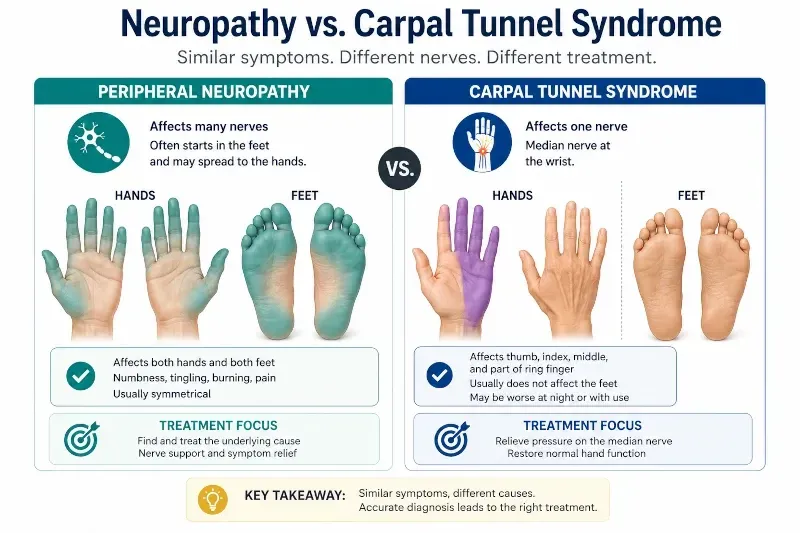
Carpal tunnel syndrome results from compression of the
median nerve as it passes through the wrist. Because only one nerve is involved, symptoms usually affect the thumb, index finger, middle finger, and half of the ring finger. The little finger is
never affected.
Peripheral neuropathy, on the other hand, usually damages
multiple nerves. Symptoms often involve the entire hand—or both hands—and frequently develop in the feet as well. Unlike carpal tunnel syndrome, neuropathy isn't caused by compression at the wrist but by an underlying disease or injury affecting the nerves themselves.
Recognizing these differences helps doctors determine which tests to perform and which treatments are most appropriate.
Learn more in our complete guide to carpal tunnel syndrome symptoms and treatment.
Neuropathy vs. Carpal Tunnel Syndrome
| Feature |
Peripheral Neuropathy |
Carpal Tunnel Syndrome |
| Cause
|
Disease or damage affecting peripheral nerves |
Compression of the median nerve at the wrist |
| Usually affects
|
Entire hand or both hands (often feet too) |
Thumb, index, middle, and ring finger only |
| Little finger involved?
|
Often yes |
No |
| Symptoms
|
Burning, numbness, tingling, weakness |
Numbness, tingling, nighttime symptoms, weak grip |
| Typical pattern
|
Often begins in the feet before the hands |
Usually starts in one hand |
| Treatment
|
Treat underlying cause plus symptom management |
Reduce pressure on the median nerve |
Neuropathy vs. Carpal Tunnel
Peripheral Neuropathy
• Often affects both hands
• Little finger may be involved
• Often affects feet too
• Treat the underlying cause
Carpal Tunnel Syndrome
• Median nerve compression
• Little finger spared
• Often starts in one hand
• Focus on relieving wrist pressure
The Little Finger Is an Important Clue
If numbness includes your little finger, peripheral neuropathy becomes more likely. Classic carpal tunnel syndrome affects the median nerve, which does not supply sensation to the little finger.
Could Your Symptoms Actually Be Carpal Tunnel?
Neuropathy and carpal tunnel syndrome can feel remarkably similar. If your symptoms mainly affect your thumb, index, middle, and ring fingers—but not your little finger—you may have carpal tunnel syndrome instead of peripheral neuropathy.
Check Your Symptoms
Test Your Severity
How Doctors Diagnose Neuropathy
Diagnosing
neuropathy in the hands begins with identifying the underlying cause of the nerve damage. Because many different disorders can produce similar symptoms, your doctor will usually combine a medical history, physical examination, and specialized testing.
The evaluation often includes questions about your symptoms, medications, medical conditions, alcohol use, family history, and whether symptoms also affect your feet or legs.
Depending on your situation, your healthcare provider may recommend:
- A neurological examination to evaluate sensation, muscle strength, reflexes, and coordination.
- Blood tests to look for diabetes, vitamin deficiencies, thyroid disease, autoimmune disorders, kidney disease, or infections.
- Nerve conduction studies (NCS) to measure how well electrical signals travel through your nerves.
- Electromyography (EMG) to evaluate muscle activity and determine whether muscles are being affected by nerve damage.
- Imaging studies, such as ultrasound or MRI, when nerve compression or structural problems are suspected.
Accurately identifying the cause of neuropathy is essential because treatment varies considerably depending on the diagnosis. For example, diabetic neuropathy, vitamin B12 deficiency, chemotherapy-induced neuropathy, and carpal tunnel syndrome each require different management strategies.
Treatment Options for Neuropathy in the Hands
The best treatment for
neuropathy in the hands depends on
what caused the nerve damage. Unlike carpal tunnel syndrome, which is treated by relieving pressure on the median nerve, peripheral neuropathy usually requires treating the underlying condition that's damaging the nerves.
There is
no single treatment that cures every type of peripheral neuropathy. Depending on the cause, treatment may involve controlling diabetes, correcting vitamin deficiencies, managing autoimmune disease, modifying medications, relieving symptoms, or preventing further nerve damage.
In many cases, symptoms improve once the underlying condition is brought under control. Other therapies focus on reducing pain, improving hand function, and maintaining quality of life.
The following are among the most common treatment approaches.
1. Treat the Underlying Cause
The most important step is identifying why the neuropathy developed.
Depending on the diagnosis, treatment may involve:
- Improving blood sugar control for diabetes.
- Correcting vitamin B12 or other nutritional deficiencies.
- Treating thyroid disease or kidney disease.
- Managing autoimmune disorders.
- Reducing alcohol consumption.
- Adjusting medications that may be damaging nerves.
Treating the underlying condition often slows—or sometimes stops—the progression of neuropathy.
2. Medications
Several medications can reduce nerve pain, although they do not repair damaged nerves.
Common prescription medications include:
- Duloxetine
- Pregabalin
- Gabapentin
- Amitriptyline
These medications help control burning, stabbing, and electric-shock pain, particularly in diabetic peripheral neuropathy.
3. Physical and Occupational Therapy
Therapists can recommend exercises that improve strength, flexibility, balance, and coordination.
Occupational therapists also teach patients how to modify everyday activities and use adaptive equipment to make dressing, cooking, typing, and other tasks easier and safer.
4. Lifestyle Changes
Healthy lifestyle habits can reduce symptoms and help protect remaining nerve function.
These include:
- Regular exercise
- Eating a balanced diet
- Maintaining a healthy weight
- Limiting alcohol
- Stopping smoking
- Carefully protecting numb hands from burns and cuts
Although lifestyle changes do not reverse nerve damage, they often improve overall nerve health and reduce symptom progression.
5. Massage Therapy
Massage therapy may help relieve pain, improve circulation, reduce muscle tightness, and improve overall comfort for some people with peripheral neuropathy.
Although massage does
not repair damaged nerves, many patients report temporary improvements in pain, stiffness, and hand function.
For patients with
chemotherapy-induced peripheral neuropathy (CIPN), a specialized form known as
Oncology Massage has shown particularly encouraging results in clinical studies.
Treat the Cause Whenever Possible
Pain medications may reduce symptoms, but they usually don't address the underlying cause of neuropathy. Whenever possible, treatment should focus on correcting the condition that's damaging the nerves.
Chemotherapy-Induced Peripheral Neuropathy (CIPN)
One of the most common causes of
neuropathy in hands among cancer patients is
chemotherapy-induced peripheral neuropathy (CIPN).
Certain chemotherapy drugs—including platinum compounds such as
oxaliplatin and medications in the
taxane family—are highly effective at destroying cancer cells. Unfortunately, they can also damage healthy peripheral nerves.
This nerve damage is known as
neurotoxicity. As treatment continues, patients may develop numbness, tingling, burning pain, sensitivity to touch, weakness, and loss of coordination in their hands and feet.
For some people, symptoms gradually improve after chemotherapy ends. For others, the neuropathy may persist for months or even years.
Because CIPN can significantly reduce quality of life, researchers continue to investigate therapies that may reduce symptoms without interfering with cancer treatment.
CIPN Is Different From Most Neuropathies
Chemotherapy-induced peripheral neuropathy is caused by medications that damage healthy nerves while treating cancer. Although the symptoms resemble other forms of neuropathy, the underlying cause—and often the treatment approach—is different.
Can Oncology Massage Help?
Several clinical studies suggest that
Oncology Massage may help reduce pain and improve quality of life for people with
chemotherapy-induced peripheral neuropathy (CIPN).
Unlike a traditional Swedish massage, Oncology Massage is specifically adapted for cancer patients. Therapists receive specialized training to account for chemotherapy-related side effects, surgical sites, radiation changes, lymphedema risk, fatigue, and other medical considerations.
During treatment, therapists use carefully selected massage techniques while avoiding areas that could cause discomfort or complications. They also modify body positioning, pressure, and treatment duration according to each patient's condition.
The goal is not to cure nerve damage but to reduce pain, improve circulation, decrease muscle tension, and help patients regain comfort and function. Evidence remains limited, however, and larger clinical trials are still needed to determine which patients benefit the most.
What Research Shows
One of the best-known studies evaluating Oncology Massage for chemotherapy-induced peripheral neuropathy was led by
Dr. Gabriel Lopez at the
MD Anderson Cancer Center. The results were presented at the 2019 Supportive Care in Oncology conference.
Patients receiving Oncology Massage reported significantly greater improvement in neuropathy symptoms than patients who did not receive massage therapy.
The participants were typical of many patients receiving chemotherapy:
- Approximately
78% were women.
- Most were being treated for
breast or gastrointestinal cancers.
- The average age was
60 years.
- All participants had neuropathy caused by
oxaliplatin chemotherapy.
Patients commonly reported improvement in:
- Burning pain
- Tingling
- Numbness
- Hand discomfort
- Overall quality of life
Although additional research is still needed, the study suggests that Oncology Massage may be a useful complementary therapy for managing chemotherapy-related neuropathy symptoms.
Clinical Findings From Oncology Massage Studies
| Study |
Patients |
Main Finding |
| Lopez et al. |
Patients with oxaliplatin-induced CIPN |
Significant reduction in neuropathy symptoms after Oncology Massage |
| Mendez et al. |
Patients with chemotherapy-induced neuropathy |
Over 50% reported symptom improvement after a single treatment session |
Massage Studies
Lopez Study
Reduced CIPN symptoms after Oncology Massage
Mendez Study
More than 50% improved after one treatment
Massage Complements—It Doesn't Replace—Medical Care
Oncology Massage is considered a complementary therapy. It may help relieve pain and improve quality of life, but it should be used alongside—not instead of—your oncologist's recommended cancer treatment and medical care.
Summary
Neuropathy in hands is a common condition caused by damage to the peripheral nerves. Symptoms such as numbness, tingling, burning pain, weakness, and loss of coordination can have many different causes, including diabetes, chemotherapy, vitamin deficiencies, autoimmune diseases, infections, and physical injuries.
Because peripheral neuropathy often resembles carpal tunnel syndrome, obtaining the correct diagnosis is essential before treatment begins. While carpal tunnel syndrome results from compression of a single nerve at the wrist, peripheral neuropathy usually reflects a broader problem affecting one or more nerves throughout the body.
Treatment depends on the underlying cause. Managing diabetes, correcting nutritional deficiencies, treating autoimmune disease, and modifying medications may slow or stop further nerve damage. Physical therapy, occupational therapy, medications, and lifestyle changes can also help reduce symptoms.
Although there is no universal cure for peripheral neuropathy, early diagnosis and appropriate treatment can often slow progression, reduce symptoms, and improve quality of life.
Key Takeaways
- Peripheral neuropathy is damage to one or more peripheral nerves.
- Symptoms include numbness, tingling, burning pain, weakness, and clumsiness.
- Diabetes is the leading cause of neuropathy in the hands.
- Other causes include chemotherapy, vitamin deficiencies, autoimmune disease, alcohol use, infections, and injuries.
- Peripheral neuropathy is often mistaken for carpal tunnel syndrome, but the two conditions require different treatments.
- Diagnosis may include blood tests, nerve conduction studies (NCS), and electromyography (EMG).
- Treatment focuses on correcting the underlying cause whenever possible while managing symptoms.
- Oncology Massage has shown encouraging results for some patients with chemotherapy-induced peripheral neuropathy.
Selected Sources
About Dr. Zannakis