

Massage for Carpal Tunnel: Which Type Works Best?
From Dr. Z - Carpal tunnel syndrome specialist
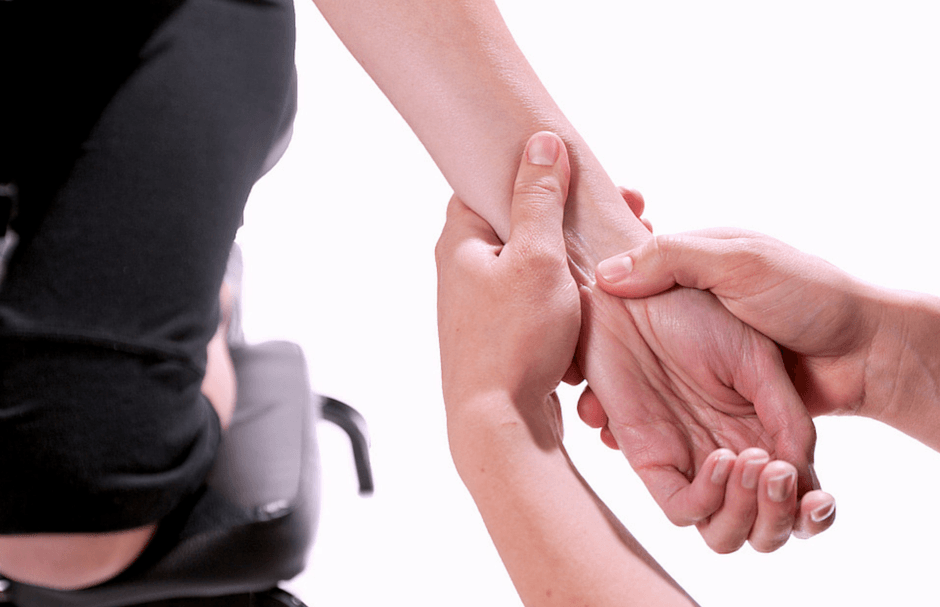
Many people search for "massage for carpal tunnel," but few realize that some massage techniques may help while others can actually aggravate symptoms. The difference often comes down to the right massage, the right place, and the right pressure.
In my experience treating people with hand symptoms, one of the biggest mistakes is assuming that stronger massage produces better results. Carpal tunnel syndrome involves compression of the median nerve at the wrist. Aggressive treatment that increases numbness or tingling may irritate the nerve instead of helping it.
A better approach is to focus on three things: the right massage, the right place, and the right pressure. This guide explains how those principles apply to carpal tunnel syndrome and how to recognize when massage may not be enough.
Is it good to massage carpal tunnel?
Where should you massage for carpal tunnel?
Can deep-tissue massage make carpal tunnel worse?
Can you use a massage gun for carpal tunnel?
How often should you massage carpal tunnel?
Can massage help carpal tunnel syndrome?
Massage may help relieve carpal tunnel symptoms for some people. Small clinical studies of structured massage and manual therapy have reported improvements in pain, symptoms, or hand function, although research remains limited and no single massage technique has been proven best for every patient.
The type of massage matters. Carpal tunnel syndrome occurs when the median nerve is compressed at the wrist. A useful massage approach therefore focuses on appropriate wrist and forearm soft tissues without repeatedly irritating the nerve.
This is why choosing the right type of massage is more important than simply massaging the area that hurts.
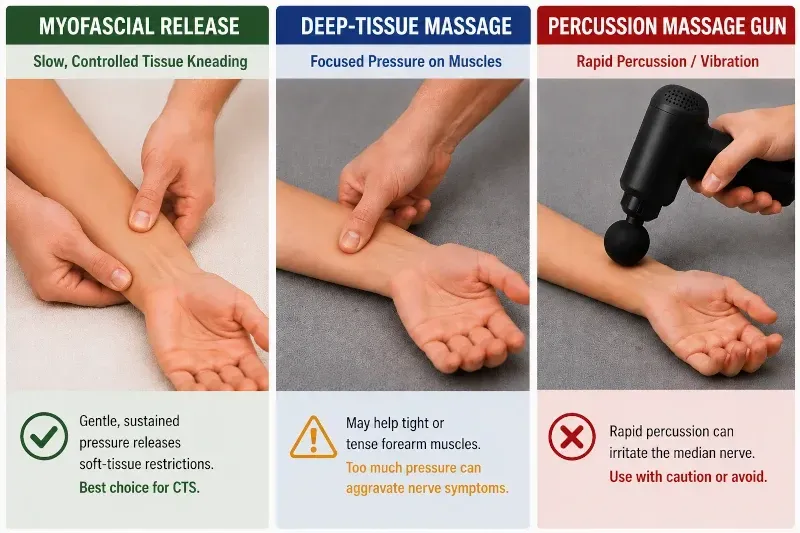
What is the best massage for carpal tunnel?
The best massage for carpal tunnel is a controlled soft-tissue technique that treats the wrist and forearm without irritating the median nerve. The goal is not simply to relax the wrist or apply more pressure than other massage styles.
Myofascial release is one of the most targeted techniques because it uses slow, controlled tissue kneading instead of rapid percussion or forceful muscle compression. Rather than simply pressing on sore muscles, it focuses on improving movement of restricted soft tissues around the wrist and forearm.
| If you're looking for... | Recommended massage |
|---|---|
| Targeted treatment for carpal tunnel | ✓ Myofascial release |
| General muscle relaxation | Gentle therapeutic massage |
| Tight forearm muscles | Deep-tissue massage (use caution) |
| Rapid vibration therapy | Percussion massage gun (generally avoid over the wrist) |
For detailed instructions on the manual technique, see our guide to myofascial massage for carpal tunnel.
Where should you massage for carpal tunnel?
Massage for carpal tunnel should not automatically focus all pressure on the exact spot where the wrist hurts. Although symptoms are often felt in the hand and fingers, the soft tissues involved extend through the palm-side wrist and into the forearm.
Depending on the technique, treatment may include the forearm flexor muscles, lower forearm, palm-side wrist, and base of the palm. The wrist itself requires controlled pressure because the median nerve passes through the carpal tunnel in this area.
This is also why simply rubbing numb or tingling fingers is unlikely to address the primary site of carpal tunnel syndrome. The symptoms may be felt in the fingers, but the median nerve is compressed at the wrist.
How much pressure should you use?
Massage pressure should be firm enough to mobilize soft tissue but controlled enough that it does not sharply increase nerve symptoms. More force does not necessarily produce a better result.
• Gentle stretching sensation
• Warmth that settles after treatment
• Tingling or burning
• Electric-shock sensations
• Symptoms that remain worse afterward
People with constant numbness, significant hand weakness, frequent dropping of objects, or visible muscle loss at the base of the thumb should be evaluated rather than attempting increasingly forceful massage.

Self-massage vs. professional massage
Both self-massage and professional massage have advantages. The better choice depends on the technique you need, the severity of your symptoms, and how consistently you can perform the treatment.
If you choose professional treatment, look for a qualified provider experienced in treating wrist and hand conditions. If you choose self-massage, avoid compensating for limited hand position by simply pressing harder.
How often should you massage for carpal tunnel?
There is no universally established massage schedule for every person with carpal tunnel syndrome. Frequency depends on the technique, treatment intensity, symptom severity, and how your hand responds afterward.
In general, a controlled technique performed consistently is preferable to occasional aggressive massage. If your symptoms repeatedly become worse after treatment, the pressure, technique, or frequency should be reassessed.
Many people notice improvement gradually over several weeks rather than after a single massage session.Massage may also be combined with other conservative measures. Depending on your symptoms, these may include activity modification, appropriate carpal tunnel stretching exercises, and keeping the wrist in a neutral position while sleeping.
If nighttime numbness or tingling is a major problem, a properly fitted carpal tunnel wrist brace may help prevent excessive wrist bending during sleep.
When massage is not enough
Massage should not become a reason to ignore worsening neurological symptoms. More advanced median nerve compression may require medical evaluation and a different treatment approach.
Seek evaluation if you develop:
These signs may indicate more significant nerve involvement. The priority should be determining the severity of the compression rather than increasing the intensity or frequency of massage.
You should also reconsider the diagnosis if your symptoms do not follow a typical carpal tunnel pattern. Numbness isolated to the little finger or symptoms that begin in the neck, for example, may have another cause.
If symptoms continue to worsen despite conservative care, learn more about your treatment options for carpal tunnel syndrome.
Summary
Massage for carpal tunnel is not simply about rubbing a painful wrist. Choosing the appropriate technique is far more important than applying stronger pressure. The key is remembering three simple principles.
About Dr. Zannakis
Dr. Maik Zannakis is the Medical Director of CarpalRx and a specialist in soft-tissue injury. For more than three decades, he has researched conservative treatments for nerve and tendon disorders of the hand and wrist, with a special focus on carpal tunnel syndrome and myofascial therapy.
His goal is to help patients understand their symptoms, avoid unnecessary surgery when appropriate, and choose evidence-based treatment options.
Medical References
Government & Medical Organizations
- American Academy of Orthopaedic Surgeons (AAOS): Carpal Tunnel Syndrome
- American Society for Surgery of the Hand (ASSH): Carpal Tunnel Syndrome
- National Institute of Neurological Disorders and Stroke (NINDS): Carpal Tunnel Syndrome Fact Sheet
Peer-Reviewed Research
- Comparison of a Targeted and General Massage Protocol on Strength, Function, and Symptoms Associated With Carpal Tunnel Syndrome
- Myofascial Release of Carpal Tunnel Syndrome
- Manual Therapy and Related Interventions for Carpal Tunnel Syndrome: A Systematic Review and Meta-Analysis
Patient Education & Complementary Therapies
- Cleveland Clinic: Median Nerve Anatomy, Function, and Common Conditions
- ScienceDirect Topics: Tissue Adhesion