

Recovery Time for Carpal Tunnel Surgery: Week-by-Week Healing Guide
From Dr. Z - Carpal tunnel syndrome specialist

Recovery time for carpal tunnel surgery varies, but most patients resume light daily activities within a few weeks. Office workers may return sooner, while people with physically demanding jobs may need several months. Pain and incision healing usually improve first, but grip strength, scar tenderness, and nerve symptoms may continue recovering for 6–12 months.
Carpal tunnel surgery releases pressure on the median nerve, but the operation is only the beginning of the healing process. Your incision may close within a few weeks, yet your hand can continue regaining strength, coordination, and sensation for many months.
That difference is important. Being able to type, drive, or prepare a meal does not necessarily mean your hand has fully recovered. The tissues around the wrist still need time to heal, and a severely compressed median nerve may recover much more slowly than the surgical wound.
This guide focuses on the practical recovery milestones patients care about most: when pain usually decreases, when normal hand use can resume, when it may be safe to return to work, and which factors can shorten or prolong the overall recovery time for carpal tunnel surgery.
How Long Is Recovery After Carpal Tunnel Surgery?
Most people recover from carpal tunnel surgery enough for light daily activities within 2–4 weeks. Office workers often return within several weeks, while heavy manual labor may require several months. Grip strength, scar tenderness, and nerve healing can continue improving for 6–12 months.
Table of Contents
- Average Recovery Time for Carpal Tunnel Surgery
- What Determines How Fast You Recover?
- Open vs. Endoscopic Surgery Recovery
- The First Week After Surgery
- Weeks 2–4 After Surgery
- Months 2–3 After Surgery
- Months 3–12 After Surgery
- When Can You Return to Work?
- Warning Signs During Recovery
- How to Recover Faster After Surgery
- Can Carpal Tunnel Surgery Fail?
- Summary
- About Dr. Zannakis
- Medical References
People Also Ask
How long does it take to recover from carpal tunnel surgery?
Many patients resume light activities within 2–4 weeks. Returning to work may take several weeks or several months, depending on the surgical procedure and the physical demands of the job. Strength and nerve function can continue improving for up to one year.
When can I use my hand normally after carpal tunnel surgery?
Gentle finger movement often begins shortly after surgery, but gripping, lifting, pushing, and repetitive wrist activity must be reintroduced gradually. Normal use depends on incision healing, pain, grip strength, and your surgeon’s instructions.
When can I drive after carpal tunnel surgery?
Driving should wait until you are no longer taking sedating pain medication and can grip, steer, turn the wheel, and react safely without significant pain. Your surgeon should approve the timing.
Why is my hand still numb after surgery?
Surgery removes pressure from the median nerve, but an injured nerve may heal slowly. Long-standing or severe compression can leave numbness, weakness, or tingling that improves gradually over several months.
What can delay recovery after carpal tunnel surgery?
Smoking, diabetes, infection, excessive hand use, forceful gripping, skipping rehabilitation, and returning to demanding work too soon can prolong recovery.
Think You Have Carpal Tunnel?
Check whether your symptoms match carpal tunnel syndrome and find out how advanced the condition may be before choosing treatment.
Average Recovery Time for Carpal Tunnel Surgery
There is no single recovery schedule that applies to every patient. Some people can perform light tasks within days, while others need several weeks before ordinary hand use becomes comfortable. Returning to strenuous work can take several months.
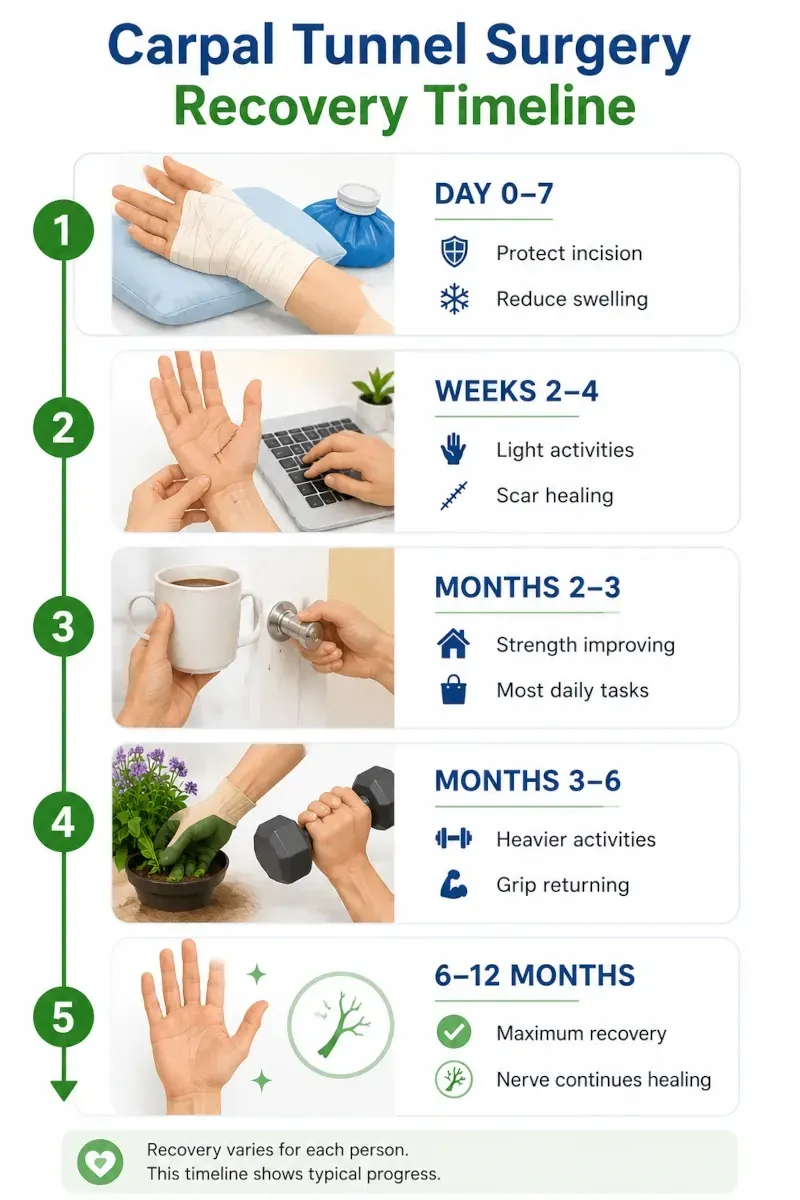
A typical recovery progresses in layers. The incision heals first. Pain and swelling usually decrease next. Grip strength, endurance, dexterity, and nerve function often take considerably longer to return.
General recovery milestones include:
- First several days: Pain, swelling, and tenderness are generally most noticeable.
- Within 2–4 weeks: Many patients resume light personal and household activities.
- Within several weeks: Some office workers can return if their symptoms are controlled and their duties can be modified.
- Within 2–4 months: Many patients return to broader work and recreational activities.
- Within 6–12 months: Grip strength, scar sensitivity, endurance, and nerve symptoms may continue improving.
The severity of the nerve injury before surgery is especially important. Surgery creates more space for the median nerve, but it cannot instantly reverse damage that accumulated over months or years. Patients with severe numbness, muscle weakness, or thenar muscle loss may therefore experience a much slower or less complete neurological recovery.
Healing Is Not the Same as Full Recovery
Your incision may look healed before your hand has regained its full strength and endurance. Returning to work or light activity is an important milestone, but internal tissue healing and median nerve recovery can continue for many months.
Carpal Tunnel Surgery Recovery at a Glance
These are typical recovery ranges. Your surgeon may recommend a different timeline based on your procedure, symptoms, and job demands.
What Determines How Fast You Recover?
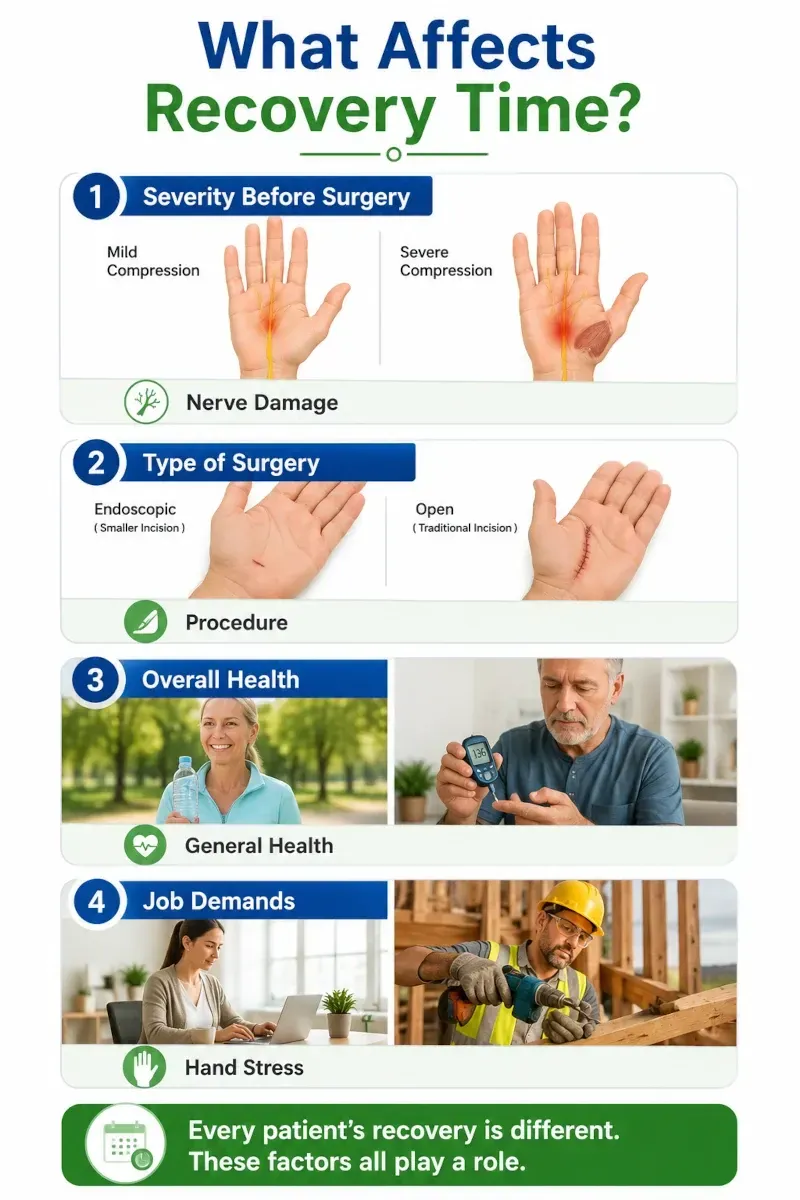
The recovery time for carpal tunnel surgery depends on much more than the operation itself. Two patients can have the same procedure yet recover at very different speeds because of differences in health, nerve damage, occupation, and how carefully they protect the hand afterward.
The following factors usually have the greatest influence on recovery:
Type of Surgical Procedure
The surgical technique affects how much tissue must heal. During open carpal tunnel surgery, the surgeon makes an incision in the palm to reach and divide the transverse carpal ligament. This generally creates more postoperative tenderness and scar sensitivity than the smaller incisions used during endoscopic surgery.
Severity Before Surgery
Patients with mild or moderate nerve compression may notice rapid relief of nighttime tingling. Severe carpal tunnel syndrome is different. Long-standing numbness, weakness, loss of coordination, or muscle wasting suggests greater median nerve injury, and neurological recovery can take many months.
In advanced cases, surgery may successfully stop further compression without completely restoring sensation or strength that was already lost.
Age and Overall Health
Younger and otherwise healthy patients often heal more quickly. Recovery may take longer in older adults or in people with diabetes, circulation problems, inflammatory disease, or other conditions that affect tissue repair and nerve function.
Smoking
Smoking can interfere with circulation and tissue healing. It may increase the likelihood of delayed incision healing and prolong tenderness around the surgical site.
Dominant vs. Nondominant Hand
Recovery can be more difficult when surgery is performed on your dominant hand. Even when you try to rest it, you are more likely to use that hand automatically for eating, dressing, opening doors, carrying objects, and other daily tasks.
Repeatedly using the healing hand can increase soreness and swelling, especially during the first few weeks.
Job Requirements
Returning to a desk job is very different from returning to construction, manufacturing, food service, healthcare, or another occupation involving forceful gripping and lifting.
People whose jobs require repetitive finger movements, vibrating tools, sustained wrist bending, heavy lifting, or prolonged gripping generally need a slower and more carefully staged return to work.
Rehabilitation and Activity Control
Following postoperative instructions is one of the most controllable parts of recovery. Gentle finger motion, scar care, activity modification, and prescribed hand therapy can help restore mobility and strength.
However, more exercise is not always better. Aggressive stretching, squeezing therapy balls too soon, or repeatedly testing your grip strength can irritate healing tissues and extend recovery.
Surgical Complications
Infection, wound separation, excessive swelling, prolonged pain, nerve irritation, or scar adhesions can delay recovery. Although serious complications are uncommon, even a relatively minor wound problem may temporarily restrict hand use and rehabilitation.
The Most Important Recovery Variable
The condition of the median nerve before surgery often matters more than the size of the incision. A wound can heal normally within weeks while severe numbness, weakness, or loss of coordination continues improving for many months.
Open vs. Endoscopic Surgery Recovery
Both open and endoscopic surgery treat carpal tunnel syndrome by cutting the transverse carpal ligament and reducing pressure on the median nerve. The main difference is how the surgeon reaches the ligament.
Endoscopic surgery usually involves one or two smaller incisions near the wrist. Open surgery requires a larger incision through the palm. Because open surgery disrupts more superficial tissue, palm tenderness and discomfort during gripping may last longer.
Endoscopic patients may return to light activity sooner, but the difference tends to narrow as healing progresses. Long-term recovery still depends heavily on nerve severity, general health, occupation, and rehabilitation.
Endoscopic Surgery
- Incision: One or two small incisions near the wrist.
- Early pain: Often less palm tenderness.
- Light activity: Frequently resumed sooner.
- Office work: Some patients return within a few weeks.
- Heavy work: Still requires gradual rehabilitation.
- Long-term nerve recovery: Depends on the severity of preexisting nerve damage.
Open Surgery
- Incision: A larger incision through the palm.
- Early pain: More palm and scar tenderness is common.
- Light activity: May take longer to become comfortable.
- Office work: Return may be delayed by typing or palm pressure.
- Heavy work: Forceful gripping may remain painful for months.
- Long-term nerve recovery: Also depends on preexisting median nerve damage.
Faster Does Not Mean Fully Healed
Endoscopic surgery may allow an earlier return to light activity, but it does not eliminate the need for tissue healing. Patients should still avoid forceful gripping, heavy lifting, and repetitive wrist stress until cleared by their surgeon.
Common Mistakes That Delay Recovery
- Returning to lifting or forceful gripping before the hand is ready.
- Assuming reduced pain means the tissues are fully healed.
- Skipping prescribed hand therapy or scar care.
- Performing aggressive strengthening exercises too early.
- Ignoring increasing redness, drainage, swelling, or unusual pain.
Understand Your Condition Before Surgery
The severity of median nerve compression can influence both treatment decisions and how quickly sensation and strength return afterward.
The First Week After Surgery
The first several days are usually the most uncomfortable part of the recovery time for carpal tunnel surgery. Pain, swelling, stiffness, and tenderness around the incision are expected, although the intensity varies from person to person.
Your hand will be bandaged after surgery, and your surgeon may also recommend a temporary splint or wrist support. Keep the dressing clean and dry, and follow the specific wound-care instructions provided by the surgical team.
Pain and Swelling
Postoperative discomfort is often greatest during the first 2–3 days. Elevating the hand above heart level can help control swelling and throbbing. Take prescribed or recommended pain medication exactly as directed.
Some soreness around the palm and wrist is normal. However, pain that becomes progressively worse rather than gradually improving should be reported to your surgeon.
Moving Your Fingers
Gentle finger movement is commonly encouraged soon after surgery to reduce stiffness and maintain circulation. Slowly bend and straighten the fingers only as instructed, without forceful squeezing or gripping.
Avoid repeatedly testing your strength. The fact that you can grip an object does not mean the healing tissues are ready for sustained pressure or lifting.
Protecting the Incision
Keep the bandage dry while bathing. A waterproof covering may help, but the hand should not be submerged unless your surgeon has specifically approved it.
Avoid lifting, pushing, pulling, opening tight jars, carrying grocery bags, or using the palm to push yourself out of a chair. These activities can increase pressure across the incision and aggravate the healing tissues.
Sleeping After Surgery
Sleeping slightly upright with the hand supported on pillows can reduce nighttime swelling. Position the hand so the wrist remains relatively straight and is not trapped beneath your body.
Plan Ahead for the First Week
Before surgery, arrange help with tasks that normally require two hands or strong gripping.
- Prepare simple meals in advance.
- Place frequently used items within easy reach.
- Arrange transportation home and to early follow-up visits.
- Have extra pillows available for elevation.
- Ask for help with children, pets, shopping, and household lifting.
Weeks 2–4 After Surgery
By the second week, swelling and surgical pain should generally be decreasing. The incision may still feel tight, sensitive, or tender, particularly after open surgery.
A follow-up appointment is often scheduled during this period so the surgeon can examine the wound and remove stitches when appropriate. Follow the surgeon’s timeline rather than assuming the incision is ready based only on how it looks.
Returning to Light Activities
Many patients can gradually resume light personal care, meal preparation, and short periods of computer use. Activities should remain comfortable and should not cause increased swelling or pain that lasts afterward.
Typing may be possible before gripping or lifting becomes comfortable. Even so, prolonged keyboard or mouse use should be broken into short sessions with frequent rest periods.
Scar Tenderness and Pillar Pain
Tenderness around the scar is common. Some patients also develop soreness on either side of the surgical area, especially when pressing the palm against a hard surface. This discomfort is often called pillar pain.
Pillar pain can make pushing up from a chair, using tools, or gripping handlebars uncomfortable even when the original nighttime numbness has improved.
Driving
Do not resume driving until you are no longer taking sedating medication and can safely grip and turn the steering wheel, operate the controls, and react quickly in an emergency. Ask your surgeon when driving is appropriate for your specific recovery.
When to Begin Scar Care
Scar massage should begin only after the incision has fully closed and your surgeon confirms that it is safe. Once approved, gentle massage may help reduce sensitivity, stiffness, and tissue adhesions. Do not massage an open, draining, inflamed, or infected incision.
Pain Relief Does Not Equal Complete Healing
Nighttime tingling may improve quickly, but the ligament, skin, and surrounding tissues are still healing. Returning to forceful gripping, weight training, or heavy household work simply because the nerve symptoms feel better can prolong soreness and delay recovery.
Months 2–3 After Surgery
During the second and third months, most patients become more independent and begin using the hand for a wider range of activities. Pain medication is usually no longer needed, although tenderness may remain with direct palm pressure or forceful gripping.
This stage often marks the transition from protecting the hand to rebuilding its strength, endurance, coordination, and confidence.
Hand Therapy and Strengthening
Your surgeon may recommend formal hand therapy or a home exercise program. Rehabilitation may include range-of-motion work, tendon-gliding exercises, scar management, desensitization, and gradual strengthening.
Strengthening should progress gradually. A temporary increase in soreness after exercise may occur, but persistent swelling, sharp pain, or worsening numbness suggests that the activity may be too aggressive.
Grip Strength and Endurance
Grip strength often lags behind incision healing. Tasks such as opening jars, carrying heavy bags, using garden tools, or holding exercise equipment may still feel weak or uncomfortable.
This does not automatically mean the surgery failed. Strength can continue improving for many months, especially when the palm remains tender or the median nerve was severely compressed before surgery.
Returning to Exercise and Hobbies
Low-stress activities can often resume before weight training, racket sports, cycling, gardening, or hobbies requiring prolonged gripping. Reintroduce demanding activities in short sessions and increase the duration only when the hand remains comfortable afterward.
Patients who want a broader overview of postoperative expectations can also review this guide to carpal tunnel surgery recovery.
Improvement Should Be Gradual
By months 2–3, most patients should notice better function than during the first few weeks. However, scar sensitivity, reduced grip strength, and intermittent nerve symptoms can still be present—especially after open surgery or treatment of severe carpal tunnel syndrome.
Months 3–12 After Surgery
By the third month, many patients can perform most ordinary daily activities. However, this does not mean the hand has reached its final level of strength, sensation, or endurance.
The later stages of the recovery time for carpal tunnel surgery are usually less dramatic than the first few weeks. Improvement may occur gradually as the scar softens, palm tenderness decreases, grip strength returns, and the median nerve continues to recover.
Grip Strength May Recover Slowly
Grip strength often remains below its preoperative level for several months. Forceful activities such as opening jars, using hand tools, lifting weights, gardening, or carrying heavy bags may continue to feel uncomfortable.
Palm tenderness can also limit grip even when the muscles themselves are becoming stronger. This is particularly common after open surgery, where the incision crosses an area that absorbs pressure during many everyday tasks.
Numbness May Take Longer Than Pain to Improve
Nighttime pain and tingling may improve relatively quickly after the median nerve is decompressed. Constant numbness, poor fingertip sensation, weakness, and loss of coordination often recover more slowly.
When compression was severe or present for a long time, some nerve damage may be permanent. Surgery may still prevent further deterioration even when sensation and strength do not return completely.
Scar Sensitivity and Pillar Pain
The scar commonly becomes flatter and less sensitive over time, but direct pressure may remain uncomfortable for several months. Pillar pain around the base of the palm can also persist, especially during pushing, gripping, or weight-bearing through the hand.
Continue only the scar-care and rehabilitation methods approved by your surgeon or hand therapist. Improvement should be gradual rather than forced.
Recovery Can Continue for a Full Year
Slow improvement does not necessarily mean the surgery failed. Scar tenderness, grip weakness, endurance, coordination, and median nerve symptoms may continue improving for 6–12 months, particularly after severe or long-standing compression.
When Can You Return to Work?
Return-to-work timing depends less on your job title than on what your hands must actually do. Two people with the same surgery may receive very different recommendations if one works at a computer and the other lifts, grips, pushes, or uses vibrating tools throughout the day.
Recovery may take longer if both hands are operated on simultaneously because everyday tasks such as dressing, eating, and personal hygiene become more difficult during the early healing period.Your surgeon should determine when you can return and whether temporary restrictions are needed. The following ranges are general estimates rather than fixed deadlines.
Light Desk Work
```Some patients can return within a few weeks, particularly after endoscopic surgery.
Short typing sessions, ergonomic adjustments, and frequent breaks may still be necessary.
```Moderate Hand Use
```Jobs involving frequent keyboarding, tool handling, food preparation, or repeated grasping may require several additional weeks.
Modified duties can help reduce the risk of a setback.
```Heavy Manual Work
```Construction, manufacturing, warehouse, mechanical, and other forceful occupations may require several months.
Heavy gripping, lifting, vibration, and prolonged wrist stress should return gradually.
```Why Returning Too Soon Can Delay Recovery
Returning to work before the hand is ready can trigger swelling, scar irritation, pillar pain, and persistent weakness. These problems may not damage the surgical release itself, but they can increase discomfort and extend the rehabilitation period.
A staged return is usually safer than moving immediately from complete rest to a full workload. Temporary restrictions may include shorter shifts, reduced lifting, limited tool use, slower production requirements, or more frequent rest periods.
Your Dominant Hand May Need More Time
Surgery on the dominant hand can affect work more significantly because that hand performs more precise and forceful tasks. Even office work may be difficult if typing, writing, mouse use, or repeated clicking aggravates the incision or palm.
Returning to Work Is Not the Same as Full Recovery
Many patients return to work while strength and nerve function are still improving. Continue to follow lifting restrictions, use modified duties when available, and avoid treating the return-to-work date as proof that the hand is completely healed.
Warning Signs During Recovery
Soreness, swelling, stiffness, scar sensitivity, and temporary weakness are common after surgery. However, symptoms that are severe, worsening, or unusual should be reported promptly.
Contact your surgeon if you notice:
- Increasing redness, warmth, swelling, or drainage around the incision.
- Bleeding that does not stop with the instructions you were given.
- Fever or other signs of infection.
- Pain that becomes significantly worse instead of gradually improving.
- New weakness, loss of finger movement, or worsening numbness.
- A wound that opens or fails to close normally.
- Marked color or temperature changes in the fingers.
Do not wait for a scheduled follow-up if you believe something is wrong. Early treatment of a wound complication, infection, or nerve problem may prevent a much longer recovery.
When to Call Your Surgeon
Call promptly for increasing drainage, redness, fever, uncontrolled pain, wound separation, worsening numbness, or loss of finger movement. These are not symptoms to manage by simply resting the hand and waiting.
Still Deciding Whether Surgery Is Right for You?
Confirm whether your symptoms are consistent with carpal tunnel syndrome and estimate how advanced the condition may be before choosing a treatment path.
How to Recover Faster After Carpal Tunnel Surgery
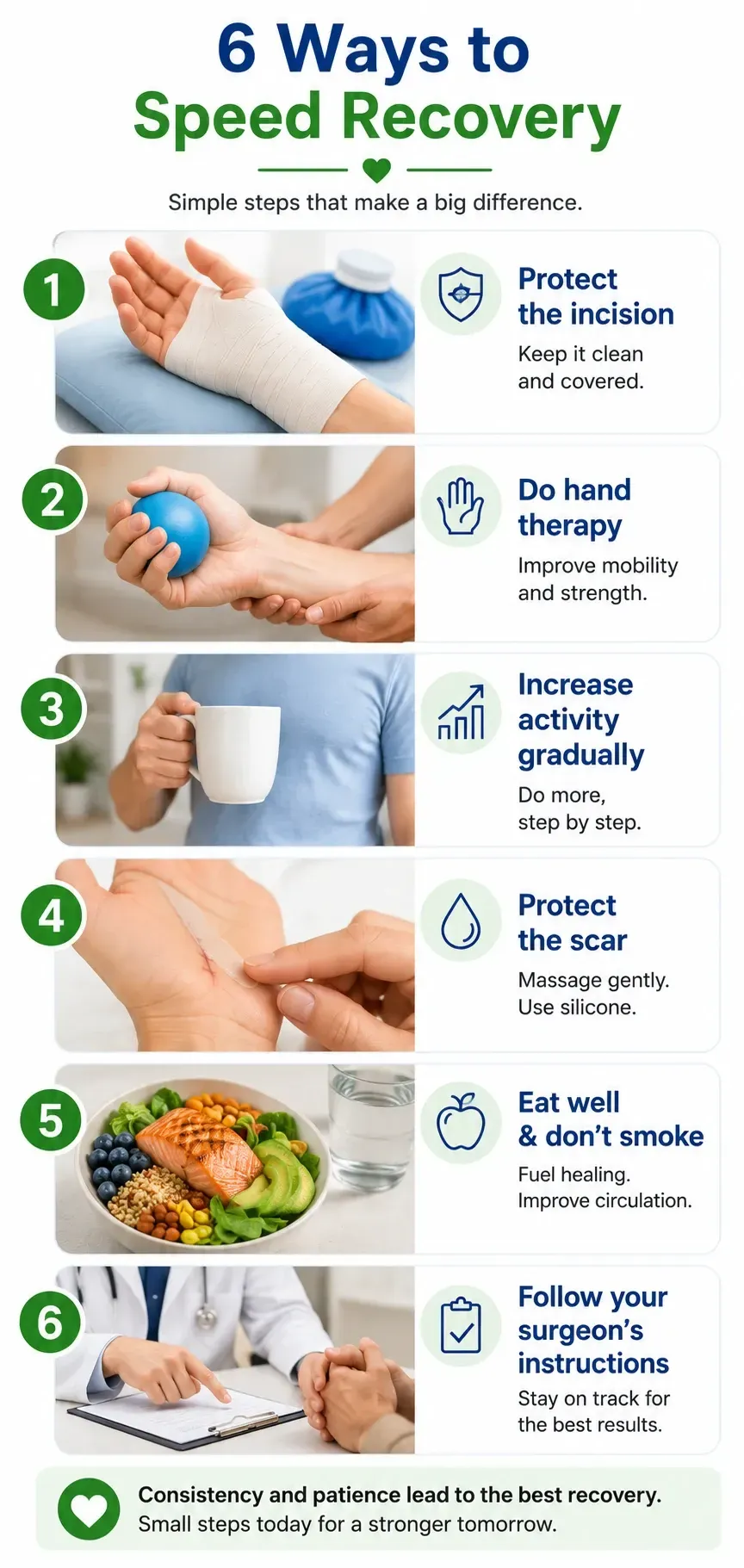
Although you cannot eliminate the normal healing process, several practical steps can help optimize your recovery time for carpal tunnel surgery. Most involve protecting the healing tissues while gradually restoring normal hand function.
Follow Your Surgeon’s Restrictions
Every operation and patient are different. Follow your surgeon’s instructions regarding lifting, driving, bathing, wound care, wrist support, medication, exercise, and returning to work. Advancing activities too quickly is one of the most common reasons recovery becomes unnecessarily painful or prolonged.
Complete Your Hand Therapy
Whether formal therapy or a home program is prescribed, consistency usually produces better results than occasional exercise. Rehabilitation may help restore motion, reduce scar sensitivity, improve coordination, and gradually rebuild strength.
Therapy should not be painful or overly aggressive. Forcing the wrist, squeezing resistance devices too soon, or repeatedly testing grip strength can irritate healing tissues rather than accelerate recovery.
Protect and Mobilize the Scar
Once the incision has completely closed and your surgeon approves, gentle scar massage may help improve scar mobility and reduce tenderness or adhesions. Continue protecting the palm from prolonged pressure until sensitivity gradually resolves.
Increase Activity Gradually
Reintroduce demanding activities in stages. Begin with short, low-stress tasks and increase the duration or resistance only when the hand remains comfortable afterward.
A mild temporary ache may occur as activity increases. Persistent swelling, sharp pain, renewed tingling, or soreness that lasts into the next day may indicate that you progressed too quickly.
Support Your General Health
Good nutrition, adequate sleep, smoking cessation, and careful management of chronic conditions such as diabetes support normal tissue and nerve healing. Recovery involves much more than simply waiting for the incision to close.
Consistency Is More Important Than Intensity
The smoothest recoveries usually occur when patients protect the hand, complete prescribed rehabilitation, and increase activity gradually. Doing more therapy or strengthening than recommended does not necessarily produce faster healing.
Can Carpal Tunnel Surgery Fail?
Although many patients improve after surgery, not every operation produces complete or permanent relief. Persistent numbness, continued weakness, recurring symptoms, or ongoing pain are sometimes described as failed or unsuccessful carpal tunnel surgery.
A disappointing result does not always mean the surgeon performed the operation incorrectly. Several different problems can cause symptoms to remain after the carpal tunnel has been released.
The Median Nerve Was Already Severely Damaged
Long-standing compression can permanently injure the median nerve. Surgery may prevent further deterioration, but it cannot guarantee that constant numbness, muscle wasting, or significant weakness will completely reverse.
The Original Diagnosis Was Incorrect
Cervical radiculopathy, peripheral neuropathy, arthritis, tendon disorders, and other conditions can produce symptoms resembling carpal tunnel syndrome. Surgery cannot correct symptoms caused by a different underlying problem.
The Ligament Was Not Completely Released
Incomplete release of the transverse carpal ligament can leave pressure on the median nerve. Persistent symptoms beginning immediately after surgery may require further evaluation.
Scar Tissue Developed Around the Nerve
Postoperative scar tissue can restrict or irritate the median nerve. This may contribute to recurrent numbness, tingling, weakness, or pain after an initial period of improvement.
Hand-Stressing Activities Continued
Returning to forceful gripping, prolonged wrist bending, vibrating tools, or highly repetitive hand activity may continue to irritate the tissues surrounding the carpal tunnel. Surgery creates more room for the nerve, but it does not eliminate every source of hand stress.
Persistent Symptoms Should Be Evaluated
Surgery relieves pressure on the median nerve, but it cannot reverse every case of permanent nerve damage or correct an inaccurate diagnosis. Symptoms that remain severe, worsen, or return after initial improvement should be medically evaluated rather than automatically dismissed as normal healing.
Is Surgery the Fastest Way to Recover?
Many patients assume surgery offers the quickest route back to normal. In reality, surgery creates a new tissue injury that must heal before full recovery can occur.
For patients with mild or moderate carpal tunnel syndrome, successful nonsurgical treatment may avoid an incision, postoperative restrictions, scar tenderness, and several months of rehabilitation. However, surgery may be appropriate when symptoms are severe, muscle loss is developing, nerve damage is advanced, or conservative care has failed.
The best treatment depends on the severity and duration of median nerve compression, your examination findings, and your response to nonsurgical care—not simply on which treatment initially appears faster.
Surgery Recovery vs. Successful Nonsurgical Treatment
Carpal Tunnel Surgery
- Requires an operation and surgical incision.
- Postoperative restrictions may last several weeks.
- Grip strength often returns gradually.
- Scar tenderness and pillar pain may occur.
- Full recovery may continue for 6–12 months.
- Long-standing nerve damage may not completely reverse.
Successful Conservative Treatment
- Does not require an incision.
- Daily activities often continue during treatment.
- Does not create a surgical scar.
- Avoids anesthesia and surgical wound complications.
- May require consistent daily therapy.
- Most appropriate before permanent nerve damage develops.
Summary
The recovery time for carpal tunnel surgery occurs in stages. The incision generally heals first, while scar sensitivity, grip strength, coordination, endurance, and median nerve function may continue improving for many months.
Many patients resume light activities within 2–4 weeks. Returning to work may take several weeks for light duties and several months for forceful or repetitive manual work. Final improvement can continue for 6–12 months.
Recovery is influenced by the surgical procedure, the condition of the median nerve before surgery, your age and general health, job demands, complications, and how carefully you follow postoperative restrictions and rehabilitation.
Protecting the healing hand and returning to activity gradually gives you the best chance of achieving a strong long-term result.
About Dr. Zannakis
Dr. Maik Zannakis is the Medical Director of CarpalRx and a medical scientist specializing in carpal tunnel syndrome and soft-tissue disorders. His work emphasizes accurate diagnosis, patient education, and nonsurgical treatment whenever medically appropriate.
Contact: dr.z@carpalrx.com| 800-450-6118| Read Dr. Zannakis’s full biography
Medical References
Government & Medical Organizations
- American Academy of Orthopaedic Surgeons: Carpal Tunnel Syndrome
- American Society for Surgery of the Hand: Carpal Tunnel Syndrome
- National Institute of Neurological Disorders and Stroke: Carpal Tunnel Syndrome
Peer-Reviewed Research
- American Academy of Orthopaedic Surgeons Clinical Practice Guideline on the Treatment of Carpal Tunnel Syndrome
- Long-Term Outcomes of Carpal Tunnel Release: A Critical Review of the Literature
- Predictors of Outcomes of Carpal Tunnel Release
- Return to Work After Carpal Tunnel Release Surgery: A Qualitative Interview Study
- Return to Work Following Carpal Tunnel Release