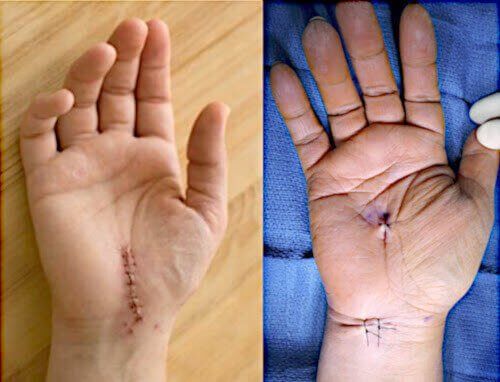
Recovering at Home
After carpal tunnel surgery, the first few days at home are typically the most difficult. As the anesthesia wears off, pain can become significant—but proper
aftercare can greatly improve your recovery. It's important to follow your doctor's
instructions closely to help minimize discomfort and support faster recovery.
Here’s what to expect and what to do:
1. Manage Pain Properly
As sensation returns,
pain and discomfort in your hand may increase. Your doctor will prescribe oral pain medication—be sure to take it exactly as directed to stay ahead of the pain rather than reacting to it.
2. Limit Movement & Elevate Your Hand
For the first 2–3 days, minimize hand and wrist movement as much as possible. Excess activity can increase pain and swelling.
Keep your hand elevated—such as resting it on a pillow while lying down—to reduce swelling and throbbing.
3. Protect the Surgical Site
Avoid bumping, pressing, or using your hand. Even minor impacts can:
- Bruise the wound
- Disrupt stitches
- Delay healing
Protecting your hand during this phase is critical for proper recovery.
4. Keep Bandages Completely Dry
Never allow your bandages to get wet. Moisture can lead to infection and significantly delay healing.
- When bathing: keep your hand out of the water
- When showering: wrap your hand tightly in plastic
For this reason, many doctors recommend avoiding full bathing or showering until stitches are removed (usually around 10 days).
5. Stitch Removal & Splinting
At about 10 days post-surgery, your stitches will be removed. This is a quick and painless process.
Afterward, you’ll typically be given a wrist splint to:
- Protect the surgical site
- Prevent excessive or painful movement
6. Begin Gentle Exercises
Your doctor will recommend
hand and finger exercises in the following weeks. These help:
- Restore flexibility
- Improve strength
- Prevent stiffness
Some patients may also need physical therapy, depending on recovery progress.
Returning to Work
Your return to work depends on your recovery and job demands:
- Endoscopic surgery: ~2 weeks
- Open surgery: ~4 weeks
Jobs requiring heavy hand use may require more time.
Factors Affecting Recovery
Your
recovery time and the amount of time you must take off work depends on several factors. Your recovery time will be
delayed
under the following conditions:
- If the operation was performed on your dominant hand.
- If you had open instead of endoscopic carpal tunnel surgery.
- When your
occupation requires extensive hand activity.
- You have poor health or a chronic disease (such as
diabetes).
- You are smoker.
Carpal Tunnel Surgery Statistics: Success Rates & Outcomes
Regardless of the technique used, outcomes after carpal tunnel surgery are mixed.
About 50–70% of patients report satisfaction within two years, while 30–50% are not satisfied with their results. In general, the more severe your symptoms are before surgery, the less favorable the outcome tends to be. Recovery and symptom relief also vary widely:
- In
41-90% of patients, pain symptoms return or persist (called "recurrent symptoms").
- About
50% of patients have partial or total loss of feeling for 3 months or more.
- Over
90% of surgical patients still have persistent symptoms after 1 year.
- About
3-10% of patients may have a post-operative infection.
- Between
7-16% of patients have (accidental) surgically induced nerve damage.
- Another
18% of patients may have abnormal pain or stiffness for at least 3 months.
- Up to
40% of patients experience some or permanent loss of hand strength, even with therapy.
- For
most patients, work responsibilities (roles) need changing if they don't change jobs.
- In about
30% of patients one or more carpal tunnel symptoms reappear after surgery.
- Over
80% of patients who have carpal tunnel release surgery never return to their original occupation.
- At least
15% of patients changed work roles requiring less use of their hands.
- Sometimes the surgeon advises patients with a failed carpal tunnel surgery to undergo
another surgery. The success of such a
revision surgery is less than 20%.
Summary
Carpal tunnel surgery can relieve pressure on the median nerve and improve symptoms like pain, numbness, and weakness—but results are not guaranteed. While many patients experience relief, a significant percentage continue to have symptoms or are dissatisfied with the outcome, especially when the condition is advanced.
Recovery requires careful aftercare, patience, and gradual rehabilitation. Pain, stiffness, and temporary loss of strength are common in the early stages, and full recovery can take several months.
For these reasons, carpal tunnel surgery is typically considered a last-resort option after non-surgical treatments have been tried. Understanding the risks, recovery process, and realistic success rates is essential before deciding if surgery is the right path for you.
FAQs
1. How long does it take to recover from carpal tunnel surgery?
Most patients recover within 2–4 weeks, depending on the type of surgery. However, full recovery—including strength and function—can take several months to up to a year.
2. What is the success rate of carpal tunnel surgery?
About 50–70% of patients are satisfied with their results after two years. Outcomes vary, and patients with more severe symptoms before surgery tend to have lower success rates.
3. What are the risks of carpal tunnel surgery?
Common risks include persistent or recurring symptoms, nerve damage, infection, and reduced hand strength. Some patients may not experience relief, and symptoms can occasionally worsen after surgery.
About Dr. Zannakis