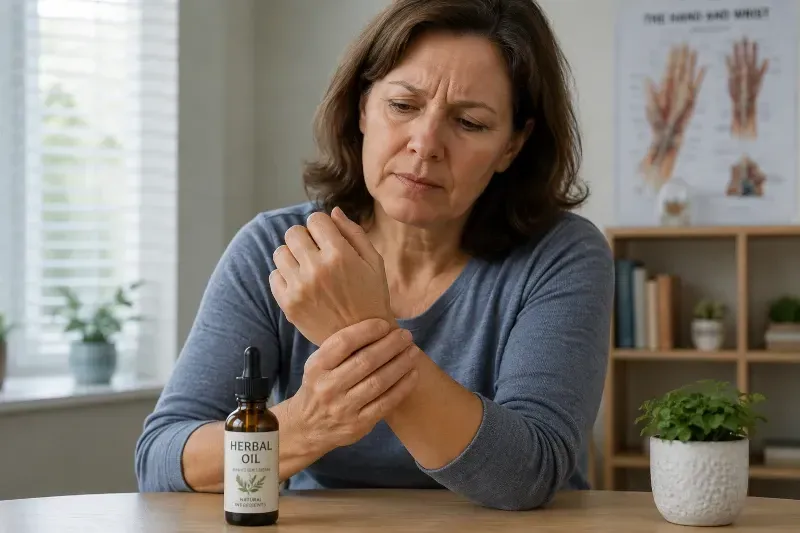
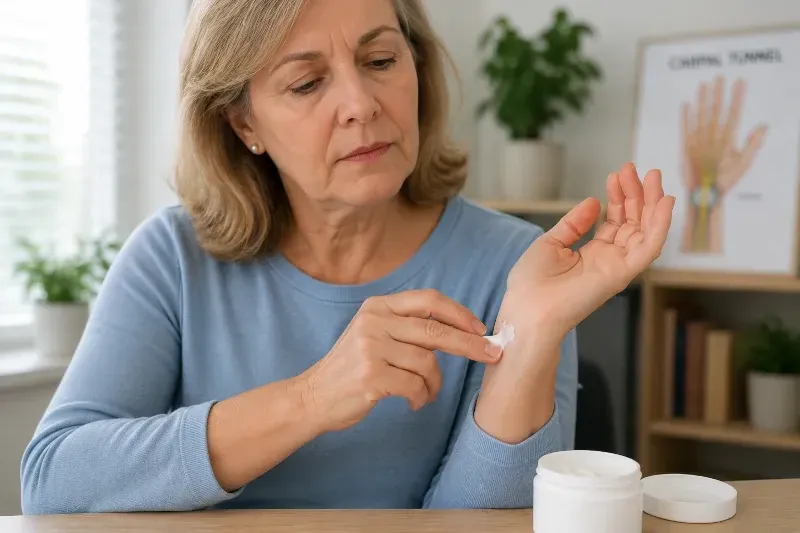
Frankincense & myrrh for carpal tunnel may feel soothing on the skin, but there is no evidence they treat the pressure inside the wrist that causes this disorder.
Frankincense & myrrh for carpal tunnel is often marketed as a natural way to relieve wrist pain, tingling, burning, numbness, and hand discomfort.
That sounds appealing, especially if you want to avoid surgery or medication.
But carpal tunnel syndrome is not caused by a skin problem. It happens when pressure builds inside the carpal tunnel and compresses the median nerve.
That is why rubbing herbs, oils, creams, or balms on the skin cannot correct the underlying problem.
Frankincense & myrrh for carpal tunnel
may provide a temporary warming or soothing sensation on the skin, but there is no clinical evidence that these herbs treat carpal tunnel syndrome. Carpal tunnel symptoms come from compression of the median nerve inside the wrist, so topical oils and creams cannot remove the internal swelling or nerve compression that causes numbness, tingling, pain, and weakness.
Find Out If You Have Carpal Tunnel — And How Severe It Is
Before spending money on creams, oils, or herbs, first confirm whether your symptoms match carpal tunnel syndrome. Then check how severe your condition may be.
People Also Ask
Does frankincense and myrrh help carpal tunnel?
There is no clinical evidence that frankincense and myrrh treat carpal tunnel syndrome. These herbs may feel soothing on the skin, but they do not reduce pressure on the median nerve inside the wrist.
Can essential oils cure carpal tunnel syndrome?
No. Essential oils cannot cure carpal tunnel syndrome because they do not correct the internal swelling and nerve compression that cause the condition.
Why do carpal tunnel creams feel like they work?
Some creams create warmth, cooling, tingling, or temporary skin sensation. That can distract from symptoms briefly, but it does not mean the cream is treating the median nerve compression.
What is better than frankincense and myrrh for carpal tunnel?
Treatments that address wrist position, tendon swelling, inflammation, and pressure inside the carpal tunnel are more logical options than topical herbs or oils.
What Are Frankincense and Myrrh?
Frankincense and myrrh are
natural plant resins or saps.
Frankincense comes from the
Boswellia tree. Myrrh comes from the
Commiphora plant. Both have been used for centuries in perfumes, incense, oils, and traditional remedies.
Today, they are often sold in creams, balms, roll-ons, and topical oils.
Some companies market frankincense & myrrh for carpal-tunnel as if they can relieve wrist pain, tingling, burning, numbness, and hand discomfort.
That is where the problem begins.
A topical herb may smell pleasant. It may feel warm or soothing. But carpal tunnel syndrome is not a surface-level skin condition.
It is a pressure problem inside the wrist.
Does Frankincense & Myrrh Work for Carpal Tunnel?
No reliable clinical evidence shows that frankincense and myrrh treat carpal tunnel syndrome.
That does not mean a person cannot feel temporary comfort after rubbing an oil or cream on the wrist. Many topical products create a warming, cooling, tingling, or moisturizing sensation.
But that is not the same as treating carpal tunnel syndrome.
Carpal tunnel syndrome happens when pressure builds around the
median nerve inside the wrist. That pressure can cause hand and finger:
Frankincense and myrrh do not open the carpal tunnel. They do not decompress the median nerve. They do not remove internal swelling from the wrist joint.
So while they may feel soothing on the skin, they should not be mistaken for a true carpal tunnel treatment.
Why Some People Think These Creams Work
Some people swear that frankincense & myrrh for carpal tunnel “works.” But there are several reasons why a cream or oil may seem helpful even when it is not actually treating the condition itself.
First, many topical products create a warming, cooling, tingling, or soothing sensation on the skin. That sensation can temporarily distract the brain from pain signals.
Second, rubbing a cream into the wrist naturally involves massage. Massage can briefly improve circulation, relax muscles, and reduce tension around irritated tissues. In some cases, the massage itself may provide short-term comfort — not necessarily the herbal ingredients.
Third, carpal tunnel symptoms often
fluctuate naturally throughout the day. Symptoms may temporarily improve after resting the hand, changing wrist position, or taking a break from repetitive activity. People may mistakenly credit the cream for improvement that would have happened anyway.
Finally, there is also a
placebo effect. When a product is marketed with strong promises and positive testimonials, it is natural for people to expect relief.
But temporary comfort is not the same as treating the actual
cause of carpal tunnel syndrome.
The real problem is compression of the median nerve deep inside the wrist — and topical creams cannot meaningfully change that internal pressure.
Why Topical Creams Cannot Treat Carpal Tunnel
The main reason topical creams fail is simple:
They are applied to the skin, but carpal tunnel syndrome occurs deep inside the wrist.
The median nerve passes through a narrow tunnel surrounded by bones, ligaments, and flexor tendons. When tendon irritation and swelling increase pressure in that space, the nerve becomes
compressed.
That compression is what causes
symptoms in the hand and fingers.
A cream, oil, balm, or herbal rub cannot reach deep enough to correct that internal compression. It may affect the skin surface, but it cannot meaningfully change the mechanical problem inside the carpal tunnel.
This is why claims about frankincense & myrrh for carpal tunnel are misleading -- they imply that rubbing herbs on the wrist can dissolve, reverse, or cure the condition.
Other Herbs Commonly Marketed for Carpal Tunnel
Frankincense and myrrh are not the only natural ingredients promoted for carpal tunnel relief.
Many formulas combine several herbs, essential oils, vitamins, minerals, or homeopathic ingredients in one product.
Common examples include:
- cinnamon
- St. John’s wort
- eucalyptus
- geranium
- peppermint
- arnica
- Boswellia oil
The marketing often sounds persuasive because these ingredients are described as natural, ancient, soothing, or anti-inflammatory. But carpal tunnel syndrome requires more than a pleasant topical sensation.
If a product does not reduce pressure against the median nerve, improve tendon movement, or address swelling inside the wrist, it is not treating the true source of carpal tunnel syndrome.
Beware of Unsupported Pain-Relief Claims
Be cautious when a topical product claims it can relieve carpal tunnel pain, burning, tingling, numbness, or hand symptoms within minutes.
That type of claim can sound convincing, especially when symptoms are severe and you are desperate for relief.
But there is an important distinction:
- A cream may create a
temporary
skin sensation.
- A true treatment must address the compression on the median nerve.
Those are not the same thing.
⚠ “Natural” Does Not Mean Proven
Many herbal creams and oils are marketed as “natural pain relief” for carpal tunnel syndrome. But natural ingredients are not automatically effective — especially for a condition caused by nerve compression deep inside the wrist.
A product may feel soothing on the skin while still doing nothing to relieve the actual pressure on the median nerve. Always look for treatments supported by anatomy, biomechanics, and clinical evidence — not just marketing claims.
The most misleading part of many frankincense & myrrh (for carpal tunnel) claims is the suggestion that symptoms in the hand can be corrected by rubbing oil where the discomfort is felt.
But
carpal tunnel symptoms are often felt in the fingers, palm, thumb, or hand because the median nerve is irritated at the wrist. The pain location is not always the problem location.
That is why rubbing oil on the hand or fingers cannot correct the actual source of the condition.
What Actually Helps Carpal Tunnel Syndrome?
Effective carpal tunnel treatment should focus on the actual cause of symptoms: nerve compression deep in the wrist.
Depending on severity, useful options may include:
The best treatment depends on
how severe the condition is.
Mild symptoms may respond well to conservative care. Moderate symptoms usually need more consistent therapy.
Severe symptoms require more caution because long-term nerve compression can lead to weakness, thumb muscle wasting, and permanent nerve damage.
That is why it is better to first
confirm whether your symptoms match carpal tunnel syndrome — and then
determine how severe they may be — before relying on topical oils or herbs.
Frankincense Creams vs Real Carpal Tunnel Treatments
Frankincense Creams vs Real Carpal Tunnel Treatments
Frankincense & Myrrh Creams
Targets root cause:
❌ No
Reduces nerve pressure:
❌ No
Evidence:
❌ Limited/none
Targets root cause:
✅ Yes
Reduces nerve pressure:
✅ Yes
Evidence:
✅ Good
Targets root cause:
✅ Sometimes
Reduces nerve pressure:
✅ Sometimes
Evidence:
✅ Moderate
Targets root cause:
✅ Yes
Reduces nerve pressure:
✅ Yes
Evidence:
✅ Moderate
Targets root cause:
⚠️ Temporary
Reduces nerve pressure:
✅ Yes
Evidence:
✅ Good
Carpal Tunnel Surgery
Targets root cause:
✅ Yes
Reduces nerve pressure:
✅ Yes
Evidence:
✅ Strong
Frankincense & myrrh for carpal tunnel may sound like a natural and harmless remedy, but there is no good evidence that these herbs treat carpal tunnel syndrome.
The problem is not on the skin.
The problem is compression of the median nerve inside the wrist.
A topical cream or oil may temporarily feel warm, cool, soothing, or distracting. But it cannot decompress the median nerve, remove internal wrist swelling, or reverse the condition.
If you have numbness, tingling, burning, pain, weakness, or nighttime hand symptoms, it is better to focus on treatments that address the actual source of carpal tunnel syndrome.
Don’t Guess — Check Your Carpal Tunnel Symptoms First
Oils and creams may feel soothing, but they do not tell you whether your symptoms are truly carpal tunnel or how advanced they may be.
- Frankincense and myrrh are plant resins often sold in oils and creams.
- There is no clinical evidence that they treat carpal tunnel syndrome.
- Carpal tunnel syndrome comes from pressure on the median nerve inside the wrist.
- Topical creams may soothe the skin but cannot correct deep nerve compression.
- Be cautious of products that promise fast relief from carpal tunnel pain, burning, tingling, or numbness.
- The best next step is to confirm whether your symptoms are truly carpal tunnel and determine how severe they are.