Frequently dropping objects can result from several medical conditions, but
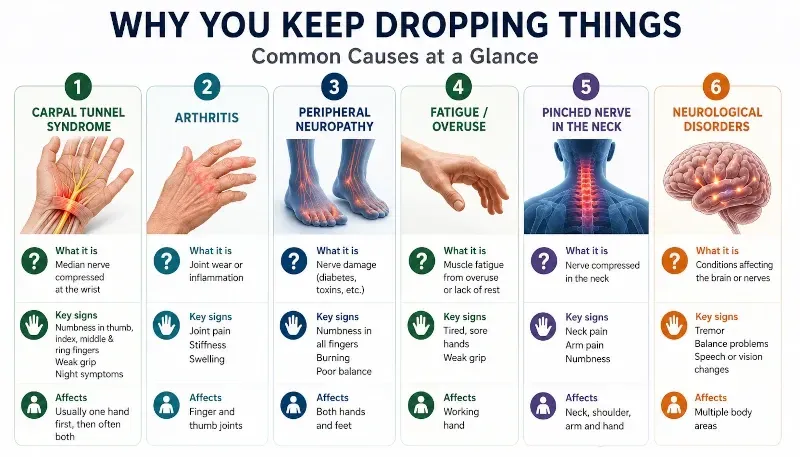
carpal tunnel syndrome is one of the most common causes affecting the hands. Compression of the median nerve reduces grip strength, thumb coordination, and finger sensation, making it easier to lose your grip. Other possible causes include arthritis, muscle weakness, fatigue, medication side effects, peripheral neuropathy, cervical nerve compression, and certain neurological disorders.
If you've started dropping your coffee mug, phone, keys, or other everyday objects, you're probably wondering what's causing it.
Occasionally dropping something is perfectly normal. But if it happens repeatedly—especially if it's becoming more frequent—it may signal an underlying problem affecting your nerves, muscles, joints, or brain.
One of the most common hand-related causes is
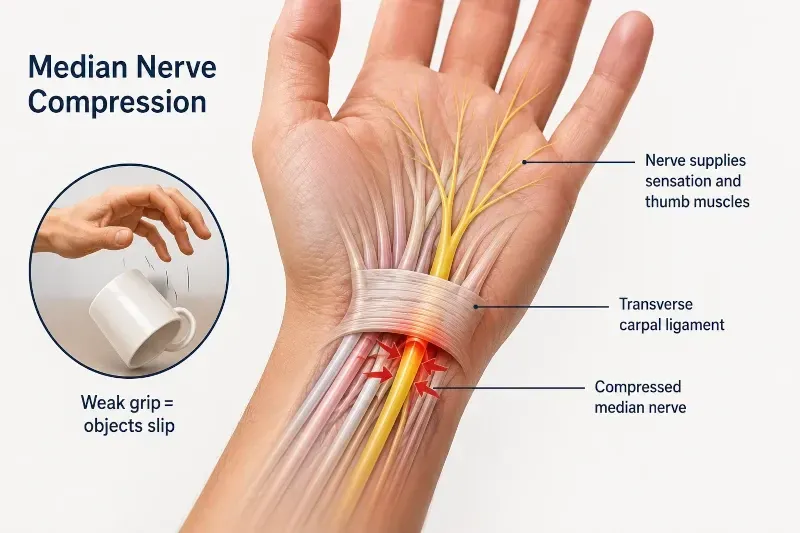
carpal tunnel syndrome. As the median nerve becomes compressed at the wrist, your grip gradually weakens, your thumb becomes less coordinated, and objects begin slipping from your hand.
Fortunately, carpal tunnel syndrome is only one of several possible explanations. Understanding the differences can help you determine when it's time to seek medical attention.
Why do I keep dropping things?
Dropping things occasionally is normal. But if it happens repeatedly—especially together with numbness, tingling, or hand weakness—it may signal an underlying medical condition that deserves evaluation.
One of the most common hand-related causes is carpal tunnel syndrome, where compression of the median nerve weakens grip strength, thumb control, and finger sensation. Other possible causes include arthritis, peripheral neuropathy, fatigue, medication side effects, pinched nerves in the neck, and less common neurological disorders.
People Also Ask
- Why do I suddenly keep dropping things?
- Can carpal tunnel syndrome make you drop objects?
- Is dropping things a sign of nerve damage?
- When should I worry about hand weakness?
Are You Dropping Things Because of Carpal Tunnel?
If you're frequently dropping objects, numbness or weakness from carpal tunnel syndrome could be the cause. Find out if your symptoms match and how advanced they may be.
Check Your Symptoms
Test Your Severity
What Causes You to Keep Dropping Things?
If you keep dropping things, something may be interfering with your ability to grip, sense, or coordinate your fingers. The problem may involve the muscles, joints, peripheral nerves, spinal nerves, or—less commonly—the brain.
Sometimes the cause is temporary. Fatigue after a long day, overusing your hands, or taking certain medications can make your grip less reliable. In many cases, however, repeatedly dropping objects is the first noticeable symptom of an underlying medical condition.
Among disorders affecting the hands,
carpal tunnel syndrome is one of the most common causes. As the median nerve becomes compressed inside the wrist, the thumb and fingers gradually lose strength, sensation, and coordination. Many people first realize something is wrong not because of pain, but because they keep dropping everyday items.
Other possible causes include arthritis, muscle weakness, peripheral neuropathy, vitamin deficiencies, pinched nerves in the neck, and certain neurological diseases. The key is identifying which symptoms accompany your hand clumsiness, because those additional clues often point toward the correct diagnosis.
Dropping Things Is a Symptom—Not a Diagnosis
Repeatedly losing your grip doesn't identify a specific disease. Instead, it signals that something is affecting the nerves, muscles, joints, or coordination of your hand. Determining the underlying cause is the first step toward effective treatment.
Carpal Tunnel Syndrome
One of the most common reasons people begin dropping objects is
carpal tunnel syndrome (CTS). In fact, many patients notice they're
losing their grip long before they experience severe pain.
Carpal tunnel syndrome develops when the
median nerve becomes compressed as it passes through a narrow tunnel in the wrist. This nerve supplies feeling to the thumb, index finger, middle finger, and part of the ring finger. It also controls several small muscles at the base of the thumb that are essential for gripping and pinching.
As pressure on the nerve gradually increases, several things begin to happen:
- grip strength weakens
- thumb pinch becomes less powerful
- fine finger coordination decreases
- numbness makes it harder to sense objects
- hand fatigue develops more quickly
Together, these changes make it much easier to accidentally drop everyday objects. For example, many people first notice they are dropping:
- coffee mugs
- phones
- keys
- pens
- utensils
- hair brushes
- grocery bags
Because these changes occur gradually, many people blame simple clumsiness or aging. In reality, the median nerve may already be significantly compressed.
Another clue is
when the dropping occurs. People with carpal tunnel syndrome often notice accompanying symptoms such as:
- numbness or tingling in the thumb, index, middle, and ring fingers
- symptoms that are worse at night
- waking with a "dead hand"
- difficulty buttoning clothing
- trouble turning keys
- weakness opening jars
- frequently shaking the hand to "wake it up"
When these symptoms occur together, carpal tunnel syndrome becomes one of the most likely explanations for repeatedly dropping objects.
Fortunately, recognizing carpal tunnel syndrome early often prevents permanent nerve damage and improves treatment success.
Common Causes of Dropping Things
| Condition |
Typical Clues |
Numbness? |
Usually Affects |
| Carpal Tunnel Syndrome
|
Night symptoms, weak grip, thumb weakness, dropping objects |
✔ Thumb, index, middle & ring fingers |
Usually one hand first, then often both |
| Arthritis
|
Painful joints, stiffness, swelling |
Rare |
Finger and thumb joints |
| Peripheral Neuropathy
|
Burning, loss of sensation, poor balance |
✔ Usually all fingers |
Both hands and feet |
| Fatigue / Overuse
|
Occurs after repetitive activity or lack of sleep |
Usually no |
Working hand |
| Cervical Radiculopathy
|
Neck pain with arm weakness or numbness |
✔ Often entire arm |
Arm and hand |
| Neurological Disorders
|
Tremor, balance, speech or vision changes |
Sometimes |
Often multiple body areas |
Common Causes of Dropping Things
Carpal Tunnel Syndrome
Clues:
Night numbness, weak grip, thumb weakness
Numbness:
✔ Thumb & first 3 fingers
Arthritis
Clues:
Joint pain, stiffness, swelling
Numbness:
Rare
Peripheral Neuropathy
Clues:
Burning, poor sensation, balance problems
Numbness:
✔ Usually all fingers
Fatigue / Overuse
Clues:
After repetitive activity or poor sleep
Numbness:
Usually no
Pinched Neck Nerve
Clues:
Neck pain with arm symptoms
Numbness:
✔ Often entire arm
Neurological Disorders
Clues:
Tremor, balance, speech or vision changes
Dropping Things May Be an Early Warning Sign
Many people assume they're simply becoming clumsy. In reality, repeatedly dropping objects is often one of the earliest signs of carpal tunnel syndrome because the median nerve begins losing strength and coordination before permanent nerve damage develops.
Muscle and Joint Problems
Not every case of dropping objects is caused by nerve compression. Weak muscles, painful joints, and reduced hand mobility can also make it difficult to maintain a secure grip.
One common cause is
arthritis.
Osteoarthritis gradually wears away joint cartilage, while
rheumatoid arthritis causes chronic joint inflammation. Both conditions can produce pain, stiffness, swelling, and decreased hand strength that make it easier to lose your grip. Unlike nerve disorders, arthritis usually causes pain before weakness develops.
General muscle weakness is another possibility. This may develop because of aging, prolonged inactivity, recovery after illness, or certain medical conditions affecting the muscles themselves.
Unlike carpal tunnel syndrome, muscle and joint disorders usually
do not cause numbness or tingling. Instead, people are more likely to notice:
- aching joints
- finger stiffness
- swelling
- reduced grip because of pain
- difficulty opening jars or twisting lids
The location of the discomfort also provides important clues. Arthritis often affects the finger joints or the base of the thumb, whereas carpal tunnel syndrome typically causes numbness and tingling in the fingers supplied by the median nerve.
Although these conditions can make you drop objects, they generally require different treatments than carpal tunnel syndrome.
Pain and Numbness Point in Different Directions
Painful joints usually suggest arthritis or another musculoskeletal disorder. Numbness and tingling, especially in the thumb and first three fingers, are much more suggestive of carpal tunnel syndrome.
Peripheral Neuropathy
Peripheral neuropathy is another common reason people begin dropping objects. Unlike carpal tunnel syndrome, however, it usually affects
multiple nerves rather than a single nerve at the wrist.
The most common cause of peripheral neuropathy is
diabetes, although excessive alcohol use, chemotherapy, certain autoimmune disorders, infections, and vitamin deficiencies can also damage peripheral nerves.
As the nerves deteriorate, the brain receives less accurate information from the hands. This makes it harder to judge how firmly you're holding an object.
People with peripheral neuropathy often notice:
- numbness affecting all fingers rather than just the thumb side of the hand
- burning or "pins and needles" sensations
- decreased ability to feel hot or cold
- poor balance
- symptoms affecting both hands and both feet
Peripheral neuropathy usually develops gradually over months or years rather than appearing overnight. Unlike carpal tunnel syndrome, symptoms usually are
not limited to the median nerve distribution and often extend well beyond the palm and wrist.
Homeopathic Remedies vs. Evidence-Based CTS Treatments
Scientific Support
Homeopathy: No convincing evidence for CTS
Evidence-based: Supported by clinical research
Reduces Median Nerve Pressure
Homeopathy: Not demonstrated
Evidence-based: ✔ Yes
Treats the Underlying Problem
Homeopathy: No demonstrated evidence
Evidence-based: ✔ Yes
Placebo Effect
Homeopathy: ✔ Possible
Evidence-based: ✔ Possible (plus proven treatment effects)
Bottom Line
Evidence-based treatments have substantially stronger scientific support for treating carpal tunnel syndrome.
Medication Side Effects
Certain
medications can temporarily reduce hand coordination, grip strength, or concentration, making it easier to drop objects.
Examples include some:
- sleeping medications
- anti-anxiety drugs
- muscle relaxants
- opioid pain medications
- anti-seizure medications
- certain chemotherapy drugs
Some medications cause drowsiness or slowed reaction time, while others may directly affect the nerves or muscles.
If you've recently started a new medication and notice worsening hand clumsiness, discuss it with your healthcare provider. Never stop taking a prescribed medication without professional guidance.
Medication side effects are usually reversible once the underlying cause is addressed.
Fatigue and Overuse
Sometimes the explanation is much simpler.
After prolonged typing, gardening, woodworking, gaming, or other repetitive hand activities, your
muscles naturally become fatigued. As they tire, grip strength decreases and objects are more likely to slip from your fingers.
Sleep deprivation can produce a similar effect by reducing concentration, reaction time, and muscle coordination. These problems usually improve after:
- resting your hands
- getting adequate sleep
- taking frequent work breaks
- improving workstation ergonomics
However, if hand weakness continues after adequate rest—or if numbness accompanies the weakness—another condition such as carpal tunnel syndrome should be considered. Persistent weakness despite adequate rest suggests that something more than simple fatigue may be responsible.
Temporary Weakness Should Improve With Rest
Fatigue-related hand weakness usually improves after resting or sleeping. Persistent weakness, numbness, or dropping objects despite adequate rest deserves medical evaluation.
Pinched Nerves in the Neck
Not all nerve problems originate in the wrist. A
pinched nerve in the neck, called
cervical radiculopathy, can produce weakness, numbness, or clumsiness affecting the arm and hand.
This occurs when one of the spinal nerve roots becomes compressed by arthritis, a herniated disc, or age-related degeneration.
Unlike carpal tunnel syndrome, cervical radiculopathy often causes:
- neck pain
- pain radiating into the shoulder or arm
- symptoms involving the entire hand rather than specific fingers
- weakness affecting several muscle groups
Because both disorders may produce numbness and weakness, they are sometimes confused. In some patients,
both conditions occur at the same time, making diagnosis more challenging.
A careful physical examination and, when necessary, nerve conduction studies can usually distinguish between them.
Less Common Neurological Disorders
Although much less common, repeatedly dropping objects can occasionally be an early symptom of a neurological disorder affecting the brain, spinal cord, or peripheral nervous system.
Examples include:
These disorders usually produce
additional symptoms beyond isolated hand clumsiness. Depending on the condition, a person may also experience:
- tremors
- difficulty walking
- balance problems
- changes in speech
- facial weakness
- vision changes
- memory problems
- generalized muscle weakness
Fortunately, these conditions are
far less common than carpal tunnel syndrome, arthritis, fatigue, or peripheral neuropathy.
Nevertheless, if dropping objects develops suddenly, rapidly worsens, or occurs together with problems involving walking, speech, vision, or facial movement, seek immediate medical attention because a stroke or other serious neurological condition could be responsible.
When Should You See a Doctor?
Everyone drops something from time to time. But repeated episodes deserve attention, particularly when they become more frequent or are accompanied by other symptoms.
You should arrange a medical evaluation if you:
- frequently drop objects
- have persistent numbness or tingling
- notice progressive hand weakness
- wake with numb hands at night
- have difficulty buttoning clothes or turning keys
- notice muscle wasting near the base of the thumb
- develop symptoms in both hands
Seek
emergency medical care immediately if dropping objects begins suddenly and is accompanied by:
- facial drooping
- slurred speech
- sudden arm or leg weakness
- confusion
- difficulty walking
- loss of vision
These symptoms may indicate a stroke or another neurological emergency that requires immediate treatment.
Find Out If Carpal Tunnel Is Causing Your Hand Weakness
If you're repeatedly dropping objects, numbness or median nerve compression could be the cause. Our free tools can help you determine whether your symptoms are consistent with carpal tunnel syndrome.
Check Your Symptoms
Test Your Severity
Summary
Repeatedly dropping objects is more than simple clumsiness. It often signals that something is affecting your grip strength, sensation, or hand coordination.
One of the most common causes is
carpal tunnel syndrome, where compression of the median nerve gradually weakens the thumb and fingers while reducing sensation. However, arthritis, peripheral neuropathy, medication side effects, fatigue, cervical radiculopathy, and less common neurological disorders can produce similar symptoms.
The key is identifying the pattern of accompanying symptoms. Numbness and tingling that affect the thumb, index, middle, and ring fingers—especially if symptoms are worse at night—strongly suggest carpal tunnel syndrome. In contrast, widespread numbness, painful joints, neck pain, or problems with walking and balance point toward other conditions.
The sooner the correct diagnosis is made, the sooner appropriate treatment can begin. Early treatment often prevents symptoms from worsening and may reduce the risk of permanent loss of hand function.
Key Takeaways
- Repeatedly dropping objects is a symptom, not a diagnosis.
- Carpal tunnel syndrome is one of the most common hand-related causes of dropping things.
- Carpal tunnel syndrome often causes people to begin dropping objects before severe pain or numbness
develops.
- Median nerve compression reduces grip strength, thumb control, and finger sensation.
- Arthritis, peripheral neuropathy, medication side effects, fatigue, and cervical radiculopathy can also impair hand function.
- Sudden hand weakness accompanied by facial drooping, speech difficulty, or balance problems requires immediate emergency evaluation.
- Early diagnosis improves the chances of successful treatment and may help prevent permanent nerve damage.
Selected Sources
About Dr. Zannakis