

Carpal Tunnel Syndrome: Symptoms, Causes, Diagnosis & Treatment Guide
From Dr. Z - Carpal tunnel syndrome specialist

Carpal tunnel syndrome can start quietly. Many people first notice hand numbness, tingling, or pain at night, then symptoms gradually become more frequent during the day.
The condition is important to recognize early because untreated nerve compression can worsen over time. As pressure on the median nerve increases, symptoms may progress from mild nighttime discomfort to daytime pain, weakness, loss of dexterity, and possible permanent nerve damage.
The good news is that most mild and moderate cases can improve with conservative treatment when addressed early. This guide explains what carpal tunnel syndrome is, what symptoms to watch for, why it happens, how it is diagnosed, and which treatments are most commonly used.
Carpal tunnel syndrome is a nerve compression disorder that affects the median nerve inside the wrist. It commonly causes numbness, tingling, pain, burning, weakness, and electric-shock sensations in the thumb, index, middle, and part of the ring finger.
Table of Contents
- What Is Carpal Tunnel Syndrome?
- Signs and Symptoms of Carpal Tunnel Syndrome
- What Causes Carpal Tunnel Syndrome?
- Who Gets Carpal Tunnel Syndrome?
- How Is Carpal Tunnel Diagnosed?
- How Severe Is My Carpal Tunnel?
- Can Carpal Tunnel Get Worse?
- How Is Carpal Tunnel Syndrome Treated?
- Is Surgery My Only Option?
- Alternatives to Surgery
People Also Ask
What are the first signs of carpal tunnel syndrome?
The first signs are usually nighttime numbness, tingling, or hand pain affecting the thumb, index finger, middle finger, and part of the ring finger.
Can carpal tunnel syndrome go away on its own?
Mild symptoms may improve temporarily with rest, but carpal tunnel syndrome often worsens if the pressure on the median nerve is not reduced.
What happens if carpal tunnel is left untreated?
Untreated carpal tunnel may progress from occasional numbness to constant symptoms, hand weakness, poor dexterity, and possible permanent nerve damage.
Can carpal tunnel be treated without surgery?
Yes. Many patients improve with activity modification, stretching, night bracing, myofascial release therapy, and other conservative treatments.
What Is Carpal Tunnel Syndrome?
Carpal tunnel syndrome is a neurological disorder involving the median nerve, one of the major nerves that travels from the forearm into the hand.
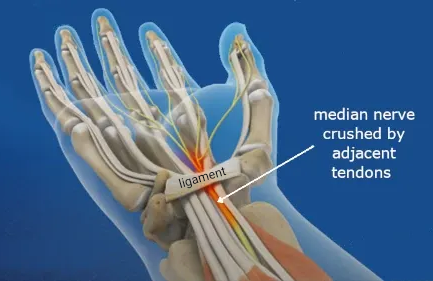
This nerve passes through a narrow space in the wrist called the carpal tunnel. The tunnel also contains flexor tendons, which help bend the fingers and make a fist.
When tissues inside this tunnel become irritated or swollen, pressure increases around the median nerve. Because the carpal tunnel cannot expand very much, the nerve becomes compressed.
That compression interferes with normal nerve signals. The result is the familiar pattern of carpal tunnel symptoms: numbness, tingling, pain, burning, weakness, and electric-shock sensations in the hand and fingers.
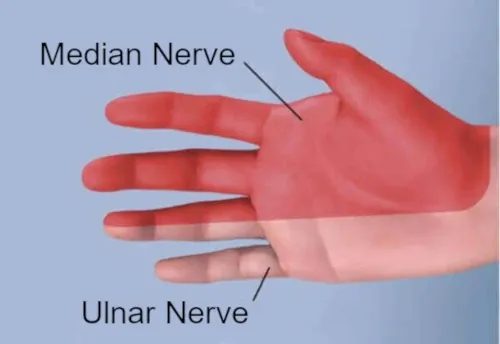
Carpal tunnel syndrome usually affects the thumb, index finger, middle finger, and part of the ring finger. The little finger is usually not affected because it is controlled by a different nerve.
Think You Have Carpal Tunnel?
Check whether your symptoms match carpal tunnel syndrome and find out how severe your condition may be.

Signs and Symptoms of Carpal Tunnel Syndrome
Carpal tunnel symptoms usually begin gradually. Many people first notice unusual sensations at night or while resting.
Early symptoms may feel mild, so they are often dismissed as tired or overworked hands. But as median nerve pressure increases, symptoms usually become more frequent, more intense, and more disruptive.
The most common signs and symptoms include:
- Numbness in the thumb, index finger, middle finger, or ring finger
- Tingling or pins-and-needles sensations
- Pain in the palm, wrist, fingers, or forearm
- Burning or itching sensations in the hand
- Shooting electric shocks, especially while gripping objects
- Weak grip strength
- Loss of dexterity, such as trouble buttoning clothes or picking up small objects
- Clumsiness or dropping items
- A puffy feeling in the fingers, even when they do not look swollen
One of the most important clues is finger location. Carpal tunnel syndrome usually affects the thumb, index finger, middle finger, and part of the ring finger. It usually does not affect the little finger.
If your little finger is numb or tingling, another nerve problem may be involved.
Carpal tunnel symptoms usually spare the little finger. Numbness in the little finger may suggest a different condition, such as cubital tunnel syndrome or another nerve disorder.
What Causes Carpal Tunnel Syndrome?
Carpal tunnel syndrome develops when pressure inside the carpal tunnel becomes great enough to compress the median nerve. Because the tunnel is surrounded by bones and a strong ligament, there is very little room for swelling.
In many people, the increased pressure comes from irritated flexor tendons. These tendons slide through the carpal tunnel every time you bend your fingers or grip an object. When they become inflamed or thickened, they occupy more space and place pressure on the nearby median nerve.
Less commonly, the pressure results from fluid retention, wrist injuries, inflammatory diseases, or an unusually small carpal tunnel. Regardless of the cause, the end result is the same—compression of the median nerve.
As nerve compression increases, symptoms typically progress from occasional tingling to persistent numbness, weakness, and loss of hand function.
If you'd like a more detailed explanation, see our article on what causes carpal tunnel syndrome.
Carpal tunnel syndrome is usually caused by increased pressure inside the carpal tunnel, not by damage to the nerve itself. Treatments work by reducing that pressure and allowing the median nerve to recover.
Who Gets Carpal Tunnel Syndrome?
Anyone can develop carpal tunnel syndrome, but certain people have a much higher risk than others. Most cases result from several contributing factors rather than a single cause.
Common risk factors include:
- Repetitive gripping or pinching
- Frequent keyboard or mouse use
- Assembly-line or manufacturing work
- Use of vibrating hand tools
- Pregnancy
- Diabetes
- Rheumatoid arthritis
- Hypothyroidism
- Previous wrist fractures or injuries
- A family history of carpal tunnel syndrome
Women develop carpal tunnel syndrome more often than men, partly because they generally have a smaller carpal tunnel. Symptoms also become more common during middle age, although the condition can occur at almost any age.
Many occupations increase risk, but repetitive work alone does not guarantee that someone will develop carpal tunnel syndrome. Genetics, anatomy, medical conditions, and overall tendon health also play important roles.
If several risk factors apply to you, recognizing symptoms early becomes even more important.
Many people believe repetitive hand use is the only cause of carpal tunnel syndrome. In reality, repetitive activities are just one risk factor. Genetics, pregnancy, diabetes, arthritis, thyroid disease, and wrist anatomy can all contribute to median nerve compression.
How Is Carpal Tunnel Syndrome Diagnosed?
Doctors diagnose carpal tunnel syndrome by combining your symptom history, a physical examination, and—when necessary—specialized nerve tests. In many cases, the pattern of symptoms alone strongly suggests the diagnosis.
Your doctor will ask which fingers are affected, when symptoms occur, what activities make them worse, and whether numbness wakes you at night. These details help distinguish carpal tunnel syndrome from arthritis, tendonitis, cervical radiculopathy, and other nerve disorders.
A physical examination typically includes several simple tests designed to temporarily increase pressure on the median nerve.
Common physical tests
- Phalen Test — bending the wrists forward for about one minute to reproduce symptoms.
- Tinel Sign — gently tapping over the median nerve at the wrist.
- Durkan Compression Test — applying direct pressure over the carpal tunnel.
If symptoms and examination findings strongly suggest carpal tunnel syndrome, additional testing may not be necessary. However, more advanced or uncertain cases often require further evaluation.
Nerve conduction studies and EMG
Nerve conduction studies measure how quickly electrical signals travel through the median nerve. Slowed nerve conduction suggests compression within the carpal tunnel.
An electromyogram (EMG) evaluates how well the muscles supplied by the median nerve are functioning. These tests help confirm the diagnosis, determine severity, and rule out other nerve disorders.
Although nerve tests are useful, they are not perfect. Some patients with early carpal tunnel syndrome have normal test results despite typical symptoms.
Learn more about how carpal tunnel syndrome is diagnosed, including self-tests and medical testing.
No single test diagnoses carpal tunnel syndrome by itself. Doctors combine your symptoms, examination findings, and—when needed—nerve testing to make the diagnosis.
How Severe Is My Carpal Tunnel?
Not all carpal tunnel syndrome is the same. Treatment recommendations and expected recovery depend largely on whether the condition is mild, moderate, or severe.
Severity is determined by:
- How often symptoms occur
- Whether numbness is intermittent or constant
- The presence of hand weakness
- Loss of thumb muscle strength
- Nerve conduction study results (when performed)
Most people begin with mild symptoms that occur only at night. Without treatment, symptoms often become more frequent and begin interfering with work, sleep, and daily activities.
Advanced carpal tunnel syndrome may eventually lead to permanent loss of sensation or thumb muscle wasting if median nerve compression continues for too long.
Understanding your stage helps determine which treatments are most appropriate and whether conservative treatment is likely to succeed.
Can Carpal Tunnel Syndrome Get Worse?
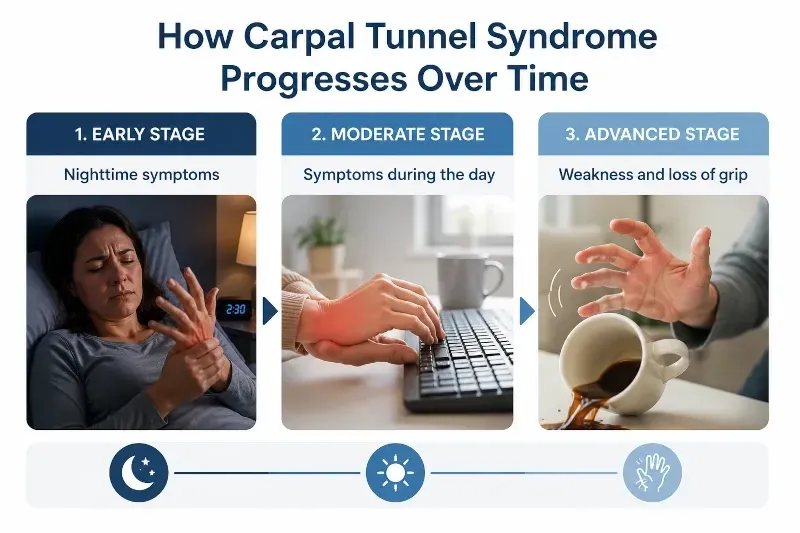
Yes. Carpal tunnel syndrome is usually a progressive condition. While symptoms often come and go in the early stages, they rarely remain stable if pressure on the median nerve continues.
Many people experience nighttime numbness or tingling for months—or even years—before seeking treatment. During that time, the median nerve may continue to deteriorate despite occasional periods of symptom relief.
Without treatment, symptoms often progress in a predictable pattern:
- Nighttime numbness and tingling
- Increasing daytime symptoms
- Pain while driving, reading, or holding a phone
- Weak grip strength
- Frequently dropping objects
- Difficulty with buttons, keys, or other fine finger movements
- Constant numbness
- Thumb muscle weakness and muscle wasting
Not everyone develops severe carpal tunnel syndrome, but the longer the median nerve remains compressed, the greater the risk of permanent loss of sensation, strength, and dexterity. Early diagnosis and treatment provide the best chance of a full recovery. :contentReference[oaicite:0]{index=0}
Carpal tunnel syndrome is much easier to treat before numbness becomes constant or thumb weakness develops. Early conservative treatment often produces better outcomes and may help avoid surgery.
How Is Carpal Tunnel Syndrome Treated?
Treatment depends on your symptom severity, how long symptoms have been present, and whether there is evidence of permanent nerve damage. Most physicians recommend starting with conservative treatments before considering more invasive options. :contentReference[oaicite:1]{index=1}
Activity modification
Simple changes to daily activities can reduce stress on the median nerve. Improving workstation ergonomics, taking frequent breaks, and avoiding prolonged forceful gripping often help reduce symptoms without limiting normal hand use.
Stretching exercises
Gentle stretching exercises help improve tendon mobility within the carpal tunnel and may reduce irritation of the surrounding tissues. Stretching is most effective when performed consistently as part of a comprehensive treatment plan rather than as a stand-alone therapy.
Learn more about carpal tunnel stretching exercises.
Night bracing
Night braces keep the wrist in a neutral position while you sleep, helping reduce pressure on the median nerve. Many people notice significant improvement in nighttime numbness and tingling after several weeks of consistent use. :contentReference[oaicite:2]{index=2}
Choosing the proper brace is important. Learn how to select the best wrist brace for carpal tunnel syndrome.
Myofascial release therapy
Myofascial release therapy focuses on improving the mobility of the muscles, tendons, and connective tissues in the forearm and wrist. By reducing soft-tissue restrictions and improving tendon movement, it may help decrease pressure within the carpal tunnel and improve symptoms.
Many physical and occupational therapists perform myofascial release manually. Home-based systems such as CarpalRx allow patients to perform similar therapy consistently between office visits.
Learn more about myofascial release therapy for carpal tunnel syndrome.
Physical and occupational therapy
Hand therapists often combine stretching, nerve-gliding exercises, manual therapy, splinting, strengthening, and ergonomic education into an individualized rehabilitation program. These treatments frequently complement home-based therapy.
Medication
Over-the-counter anti-inflammatory medications may temporarily reduce pain and inflammation, but they generally do not relieve the underlying pressure on the median nerve. :contentReference[oaicite:3]{index=3}
Steroid injections
Corticosteroid injections can reduce inflammation and provide temporary symptom relief. While often effective in the short term, injections usually do not permanently correct the underlying cause of carpal tunnel syndrome. :contentReference[oaicite:4]{index=4}
Hydrodissection
Ultrasound-guided hydrodissection is a minimally invasive procedure that uses fluid to gently separate the median nerve from surrounding tissues. Early research suggests it may benefit carefully selected patients, although it is not appropriate for everyone and long-term evidence is still developing. :contentReference[oaicite:5]{index=5}
Learn more about hydrodissection for carpal tunnel syndrome.

Not Sure Which Treatment Is Right for You?
Your symptoms and severity determine which treatments are most likely to help. Start by finding out how advanced your carpal tunnel syndrome may be.
Is Surgery My Only Option?
No. Surgery is not the first treatment for most people with carpal tunnel syndrome.
Patients with mild or moderate symptoms often improve with conservative treatments such as stretching, night bracing, activity modification, myofascial release therapy, physical therapy, or other nonsurgical approaches. These treatments aim to reduce pressure on the median nerve and restore normal hand function.
Surgery is generally considered when:
- Symptoms remain severe despite appropriate conservative treatment.
- Numbness becomes constant.
- Thumb muscles begin to weaken or shrink.
- Nerve conduction studies show significant nerve damage.
- Daily activities or work become impossible because of persistent symptoms.
Even when surgery is recommended, it should usually be considered only after discussing the expected benefits, risks, recovery time, and available alternatives with your physician.
Learn more about carpal tunnel surgery and recovery.
Surgery creates more space inside the carpal tunnel by dividing the transverse carpal ligament. It relieves pressure on the median nerve, but it does not eliminate the underlying reasons why the nerve became compressed in the first place.
Alternatives to Surgery
For many patients, conservative treatment successfully controls symptoms and delays—or completely avoids—the need for surgery.
The most effective nonsurgical treatment plans typically combine several therapies rather than relying on a single approach.
- Activity modification
- Night bracing
- Stretching exercises
- Myofascial release therapy
- Physical or occupational therapy
- Ergonomic improvements
- Weight management when appropriate
- Managing diabetes, thyroid disease, or inflammatory arthritis
The goal of conservative treatment is to reduce pressure on the median nerve while improving tendon mobility, hand strength, and overall function.
Although surgery can be very successful for carefully selected patients, many people improve without an operation when treatment begins before permanent nerve damage develops.
Learn more about:
- Myofascial release therapy
- Carpal tunnel stretching exercises
- Choosing the best wrist brace
- Hydrodissection for carpal tunnel syndrome
- Endoscopic carpal tunnel surgery
- Open carpal tunnel surgery
The earlier treatment begins, the greater the chance of relieving symptoms before permanent nerve damage occurs. Most patients do not need to begin with surgery.

Considering Surgery?
Before deciding on surgery, find out how severe your carpal tunnel syndrome may be and whether conservative treatment is still a reasonable option.
Summary
Carpal tunnel syndrome is one of the most common nerve disorders affecting the hand. It develops when increased pressure inside the carpal tunnel compresses the median nerve, producing numbness, tingling, pain, weakness, and loss of hand function.
Most people respond well to early conservative treatment. Stretching, night bracing, activity modification, myofascial release therapy, physical therapy, and other nonsurgical treatments often relieve symptoms before permanent nerve damage occurs.
When symptoms become severe or fail to improve despite appropriate treatment, surgery may be recommended to relieve pressure on the median nerve.
The most important step is recognizing symptoms early. Prompt treatment offers the best opportunity to relieve symptoms, preserve hand function, and avoid unnecessary progression.
Key Takeaways
- Carpal tunnel syndrome is caused by compression of the median nerve inside the wrist.
- The earliest symptoms are usually nighttime numbness and tingling.
- Without treatment, symptoms often progress to weakness and permanent nerve damage.
- Most mild and moderate cases improve with conservative treatment.
- Surgery is generally reserved for severe or persistent cases.
- Early diagnosis provides the best chance of avoiding permanent loss of hand function.
Selected Sources
- American Academy of Orthopaedic Surgeons – Clinical guidance on carpal tunnel syndrome diagnosis and treatment.
- American Society for Surgery of the Hand – Patient education resources on carpal tunnel syndrome.
- National Institute of Neurological Disorders and Stroke – Carpal Tunnel Syndrome Fact Sheet.
- NCBI Bookshelf – Medical overview of carpal tunnel syndrome.
- CarpalRx – Carpal tunnel diagnosis and testing.
About Dr. Zannakis
Dr. M. Zannakis is Medical Director of CarpalRx and a soft tissue injury specialist with decades of experience evaluating and treating carpal tunnel syndrome and other repetitive strain disorders. He has authored more than 120 medical journal articles and developed the patented CarpalRx® system to help patients reduce median nerve compression through targeted myofascial release therapy.
His goal is to help patients understand their symptoms, receive an accurate diagnosis, and explore effective nonsurgical treatment options whenever appropriate. Through CarpalRx, he has helped thousands of people better understand carpal tunnel syndrome and avoid unnecessary surgery.