Carpal Tunnel Syndrome Surgery: Risks, Recovery & Success Rate

From Dr. Z - Carpal tunnel syndrome specialist

Carpal tunnel syndrome surgery relieves nerve pressure by cutting a wrist ligament, but results vary. Most doctors recommend trying non-surgical treatments first.

If your hands are numb, painful, or waking you up at night, you may be wondering if carpal tunnel syndrome surgery is your only option.


It’s not.


While surgery can help in certain cases, it’s usually considered a last resort—only after other treatments fail. And even then, outcomes can vary widely.


Here’s what you need to know before deciding.

Carpal tunnel syndrome surgery relieves pressure on the median nerve by cutting a ligament in the wrist, but results vary and it is usually considered a last resort.
  • Called carpal tunnel release surgery
  • Involves cutting the transverse carpal ligament
  • Typically recommended after non-surgical treatments fail
  • Success rates range from about 50% to 70%
  • Recovery can take weeks to several months

While surgery can reduce nerve pressure, many patients try non-surgical options first, such as night bracing, stretching, and myofascial release therapy, to relieve symptoms without the risks of surgery.

man's painful face

Table of Contents

  • When Is Carpal Tunnel Syndrome Surgery Needed?
  • Criteria for Having Carpal Tunnel Surgery
  • Preparing for Carpal Tunnel Syndrome Surgery
  • Types of Carpal Tunnel Syndrome Surgery
  • Open Carpal Tunnel Release Surgery
  • Endoscopic Carpal Tunnel Release Surgery
  • Pros and Cons of Each Surgical Procedure
  • Recovering from Carpal Tunnel Surgery
  • Factors Affecting Recovery Time
  • Carpal Tunnel Surgery Statistics
  • Risks and Complications
  • Summary
  • About Dr. Zannakis

People Also Ask

Is carpal tunnel syndrome surgery worth it?

It can be helpful for severe cases, but many patients still have symptoms afterward. Non-surgical treatments often work and should be tried first.

How long does it take to recover from carpal tunnel surgery?

Most people return to work in 2–4 weeks, but full recovery and strength can take several months depending on the procedure and severity.

What is the success rate of carpal tunnel surgery?

About 50–70% of patients report satisfaction after surgery, meaning a significant number continue to have symptoms or incomplete relief.

Can carpal tunnel come back after surgery?

Yes. Recurring symptoms are common, and some patients even require a second (revision) surgery, which has a lower success rate.

When Is Carpal Tunnel Syndrome Surgery Needed?

Most people assume surgery is the next step once symptoms become annoying. But that’s not how doctors approach it.

Before surgery is considered:


  • Your symptoms must be confirmed as carpal tunnel syndrome (not another condition)
  • You must try non-surgical treatments first


In fact, non-surgical methods work in about 77% of cases. Surgery is typically reserved for patients who don’t improve after several months. 


EMG test for carpal tunnel syndrome

Who Qualifies for Surgery?

You’re more likely to be considered for carpal tunnel syndrome surgery if:


Preparing for Carpal Tunnel Surgery

Preparation can directly impact your outcome.

1. Stop smoking

Smoking slows healing, reduces blood flow, and increases complications. Doctors recommend stopping 2–4 weeks before and after surgery.

2. Stop Certain Medications

Some drugs increase bleeding risk or interfere with healing, including:


  • Blood thinners (Coumadin, Plavix) usually discontinued 3-4 days before surgery.
  • NSAIDs (aspirin, Advil, Motrin, Aleve) usually discontinued 7-10 days before surgery.

3. No Food Before Surgery

Avoid eating or drinking after midnight to prevent complications during anesthesia and to prevent potential vomit in your airway.

2 types of carpal tunnel syndrome surgery

Types of Carpal Tunnel Syndrome Surgery

There are two main procedures:


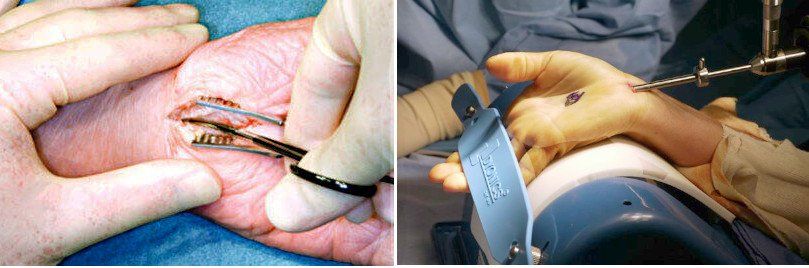
There are 2 basic types of carpal tunnel syndrome surgery. They are called open and endoscopic carpal tunnel release surgery.


Also, there are 2 basic types of endoscopic carpal tunnel release surgery. They are called single or double portal endoscopic carpal tunnel release surgery.


Your doctor will decide on which operative procedure you will have. That's because doctors prefer to use the procedure they are most skilled with.


Open and endoscopic technique have their own advantages and disadvantages. These are called pros & cons, and are discussed in greater detail below. The below side-by-side comparison outlines the key differences between the two surgical techniques.

1. Open Surgery

A 2–3 inch incision is made in the palm. The ligament is cut to relieve pressure on the median nerve.

2. Endoscopic Surgery

A small camera (endoscope) is inserted through tiny openings. The ligament is cut internally with minimal skin incision. 

Pros and Cons of Each Procedure

Open Surgery Endoscopic Surgery
Fewer risks to nerves and arteries Less post-op pain and complications
Lower cost Faster recovery
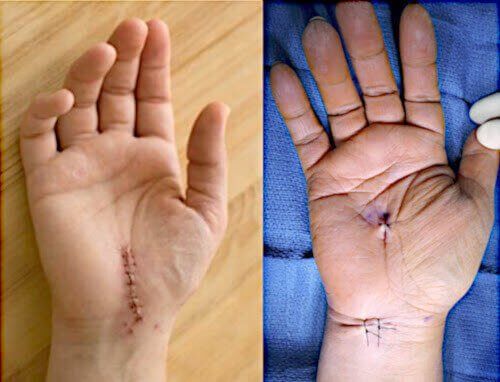
Larger, more painful scar Smaller, less painful scar
55–75% success rate 50–70% success rate

Bottom line:
Open surgery is simpler and safer in some ways, while endoscopic surgery offers faster recovery—but neither guarantees full relief. 

woman with hand bandaged

Recovery and Aftercare

The first few days are the toughest. Once anesthesia wears off, pain can increase quickly.


Key recovery tips:


  • Keep your hand elevated
  • Avoid unnecessary movement
  • Keep bandages dry
  • Take prescribed pain medication


Stitches are usually removed in about 10 days, followed by splinting and exercises.


Return to work:


  • ~2 weeks (endoscopic)
  • ~4 weeks (open surgery)

What Affects Recovery Time?

Recovery may be slower and aftercare more complicated if:


  • Surgery is on your dominant hand
  • Your job requires heavy hand use
  • You have chronic illness like diabetes 
  • You are older, obese, or smoke
carpal tunnel surgery scars

Success Rate of Carpal Tunnel Syndrome Surgery

Outcomes vary widely:


  • 50–70% of patients are satisfied
  • 30-50% are not satisfied
  • 31% see no improvement at all


Some patients even experience worse symptoms after surgery. 

Risks and Complications

Carpal tunnel syndrome surgery carries real risks:


In fact, many patients never fully return to their previous level of hand function.

Carpal Tunnel Surgery Statistics

American Family Physician cites the statistics behind carpal tunnel syndrome surgery. It shows that results are often less predictable than many patients expect:


  • 50% to 70% of patients report being satisfied with their surgery
  • 30% to 50% of patients are not satisfied with their results
  • 35% of patients experience some relief within 1 to 2 days
  • 30% of patients may take up to 6 months to notice improvement
  • 35% of patients report no symptom relief at all
  • Among those who do not improve, about half report worse symptoms after surgery


Even when surgery reduces numbness or pain, some patients still experience long-term issues such as reduced grip strength, scar sensitivity, or incomplete recovery.


The key takeaway is that carpal tunnel syndrome surgery can help, but it is not a guaranteed solution. That’s why most doctors recommend trying non-surgical treatments first.

Summary

Carpal tunnel syndrome surgery can relieve pressure on the median nerve by cutting a ligament in the wrist—but it’s not a guaranteed fix.


Most doctors recommend trying non-surgical treatments first because they work in the majority of cases. Surgery is typically reserved for more severe symptoms that haven’t improved after several months of conservative care.


While some patients experience relief after surgery, results vary widely. Recovery can take weeks to months, and a significant number of patients continue to have symptoms, reduced strength, or require additional treatment.


The key takeaway is simple:


Understand your options fully before choosing surgery. In many cases, less invasive treatments can provide meaningful relief without the risks and downtime of an operation.

About Dr. Zannakis

Biography: Dr. Z - CarpalRx Medical Director & author

Dr. Maik Zannakis (Dr. Z) 

Medical Director at the CarpalRx


Dr. Z is an acclaimed medical scientist renowned for his expertise in carpal tunnel syndrome and soft tissue disorders. With over 40 years of experience, he is credited with hundreds of medical journal publications and hundreds more web articles about carpal tunnel syndrome. After inventing the CarpalRx, Dr. Z became the go-to expert for carpal tunnel syndrome and wrist tendonitis. His opinions, inventions, and personalized care have distinguished Dr. Z as a trusted leader in this growing field. Read full Bio


Click here to learn more about Dr. Z

Email: dr.z@carplarx.com

Phone: 800-450-6118