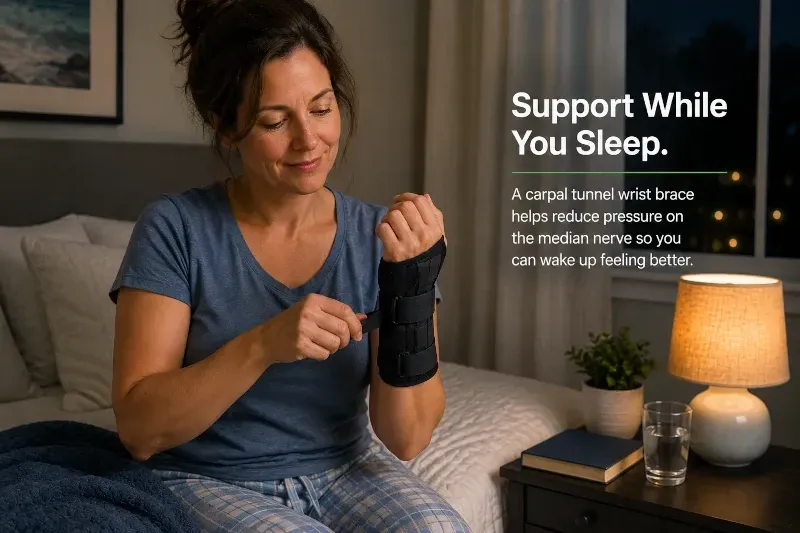
A carpal tunnel wrist brace helps reduce pressure on the median nerve by preventing excessive wrist bending during sleep. The most effective braces are worn at night, fit comfortably, avoid palm-side pressure, and are combined with other treatments when symptoms are moderate or severe.
If you've been diagnosed with carpal tunnel syndrome—or suspect you have it—a carpal tunnel wrist brace is often the first treatment doctors recommend.
That's because bracing is simple, inexpensive, non-invasive, and surprisingly effective for many patients with mild symptoms.
However, most people make at least one major mistake when using a brace. Some buy the wrong brace. Others wear it at the wrong time. Some wear it too tightly. Others expect it to eliminate symptoms completely.
Understanding how a carpal tunnel wrist brace actually works can help you avoid these mistakes and get the greatest possible benefit from bracing.
A carpal tunnel wrist brace helps keep the wrist in a neutral position during sleep, reducing pressure on the median nerve. Most doctors recommend nighttime bracing as a first-line treatment for mild carpal tunnel syndrome. The most effective braces avoid palm-side pressure and are comfortable enough to wear every night.
People Also Ask
Does a carpal tunnel wrist brace really work?
Many patients with mild carpal tunnel syndrome experience significant improvement when they wear a properly designed brace consistently at night.
Should I wear a carpal tunnel brace all day?
Most experts recommend nighttime use. Daytime use is generally reserved for activities likely to overstress the wrist.
What is a certified carpal tunnel wrist brace?
A certified carpal tunnel brace is designed specifically to minimize pressure on the median nerve while keeping the wrist in a neutral position.
Can the wrong wrist brace make carpal tunnel worse?
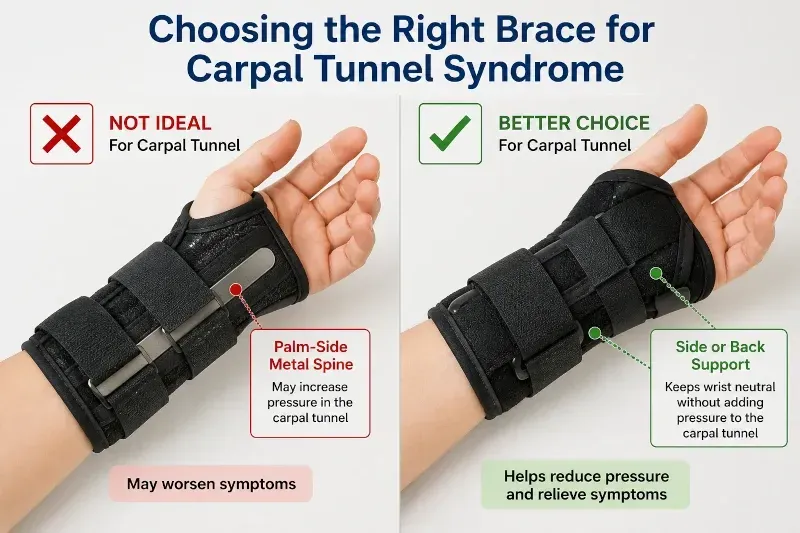
Yes. Braces with palm-side metal stays or excessive compression may increase pressure inside the wrist and worsen symptoms.
Do You Need A Carpal Tunnel Wrist Brace?
Before buying a carpal tunnel wrist brace, it's important to determine whether your symptoms are actually caused by carpal tunnel syndrome.
Common symptoms include:
These symptoms usually affect:
- the thumb
- index finger
- middle finger
- part of the ring finger
The little finger is typically not involved.
When these symptoms begin appearing, a carpal tunnel wrist brace is often the first treatment doctors recommend. That's because bracing is inexpensive, safe, easy to use, and effective for many patients with mild symptoms.
However, a brace works best when symptoms are recognized early. More
advanced cases often require additional treatments in combination with bracing.
When To Buy A Carpal Tunnel Wrist Brace
Many people wait too long before trying a wrist brace. Instead, they often purchase:
While these products may improve comfort, they rarely address the underlying pressure on the median nerve.
A carpal tunnel wrist brace becomes appropriate when symptoms begin occurring regularly, especially:
- during sleep
- while driving
- while holding a phone
- during repetitive hand activities
The earlier you begin nighttime bracing, the better your chances of preventing symptoms from progressing.
A brace should be viewed as the first step in treatment—not the last.
How To Choose The Right Brace
Choosing the correct brace is far more important than most people realize. Many braces sold in pharmacies advertise themselves as being useful for:
- sprains
- fractures
- arthritis
- tendonitis
- carpal tunnel syndrome
A brace cannot be ideally designed for all of these conditions at the same time.
Carpal tunnel syndrome has unique requirements because the primary goal is reducing
pressure on the median nerve.
Before buying a brace, ask:
- Does it keep my wrist neutral?
- Is it comfortable enough to sleep in?
- Does it avoid palm-side pressure?
- Is it easy to put on and remove?
- Can I adjust it easily?
- The best brace is one you'll actually wear every night.
Features Of A Certified Carpal Tunnel Wrist Brace
A
certified carpal tunnel wrist brace is specifically designed to treat carpal tunnel syndrome. Important features include:
- neutral wrist positioning
- no palm-side metal stay
- side or dorsal support structures
- breathable fabric
- adjustable straps
- washable materials
- comfortable nighttime wear
The brace should not be overly restrictive. Small amounts of wrist movement are actually beneficial because they help circulate fluid and reduce stiffness.
A good brace supports the wrist without completely immobilizing it.
Remember:
The goal of a carpal tunnel wrist brace is not to eliminate all wrist movement. The goal is to prevent excessive bending that increases pressure on the median nerve while still allowing enough movement for healthy circulation.
Why Palmar Spines Are A Problem
This may be the single most important thing to understand when shopping for a carpal tunnel wrist brace.
Many braces contain a metal stay or spine directly beneath the wrist on the palm side. For tendonitis and other conditions, this may be acceptable. But for carpal tunnel syndrome, it may be harmful.
When the wrist bends, a palm-side spine can increase pressure inside the carpal tunnel. Even small unconscious movements during sleep may increase pressure on the median nerve.
A proper carpal tunnel brace avoids this problem by placing support away from the carpal tunnel itself, either:
- on the sides of the wrist
- on the back of the hand
How To Wear A Brace Correctly
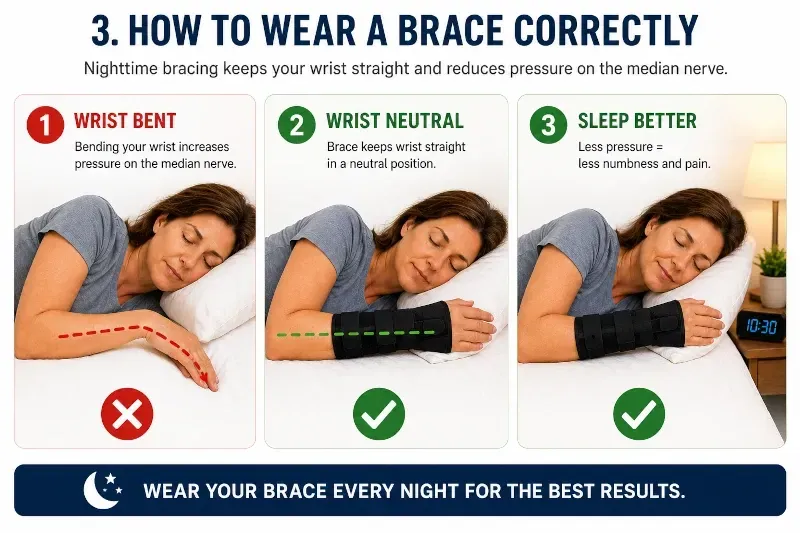
Most doctors recommend wearing a carpal tunnel wrist brace
only while sleeping. Nighttime is when many patients unknowingly bend their wrists into positions that increase pressure on the median nerve.
A properly fitted
nighttime brace should:
- keep the wrist neutral
- feel comfortable
- not be overly tight
- stay in place throughout the night
Wear the brace every night for at least several weeks before judging its effectiveness. Many patients notice improvement within:
- several nights
- two weeks
- one month
Consistency is critical. Skipping nights often reduces the benefit significantly.
Should You Wear A Brace During The Day?
In most situations, the answer is no.
Many people assume more bracing is better bracing. Unfortunately, that is not always true.
During daytime activities, your hand naturally wants to move. When a brace resists that movement, many patients subconsciously push against it. Over time, this may increase strain and discomfort.
The exception is when you anticipate unusually stressful activities such as:
- moving furniture
- lifting heavy objects
In these situations, temporary daytime bracing may be helpful. Otherwise, nighttime use remains the primary recommendation.
Rigid vs Soft Wrist Braces
Many consumers assume rigid braces must work better because they cost more. That is usually not true.
Rigid braces:
- cost more
- are bulkier
- are less comfortable
- may increase pressure when the wrist attempts to move
Soft braces often provide all the support necessary for carpal tunnel syndrome while remaining comfortable enough to wear every night.
Comfort matters because a brace only works when you actually wear it every night.
For most patients, a properly designed soft carpal tunnel brace is the better choice.
Examples Of Certified Carpal Tunnel Braces
Only a small percentage of wrist braces are specifically designed for carpal tunnel syndrome.
Examples commonly cited include:
- CarpalRx Night Brace
- Sammons Preston Rolyan Dorsal Resting Hand Orthosis
- RCAI Dorsal Carpal Tunnel Splint
- Allegro Medical Dorsal Resting Splint
- Comfy Splints Dorsal Hand Orthosis
- AliMed Dorsal Resting Splint
- Advanced Dorsal Resting Splint
- LEEDer Dorsal Orthosis
- Bort Soft CTS Splint
Regardless of brand, focus on the features discussed earlier:
- neutral positioning
- comfort
- no palm-side spine
- adjustable fit
- nighttime usability
The best brace is the one that supports healing while allowing you to wear it consistently night after night.
Still Wondering If A Wrist Brace Is Enough?
Bracing is often the first step in treatment, but moderate and severe carpal tunnel syndrome may require additional therapies.
Check Your Symptoms
Test Your Severity
Good News
Many patients who begin treatment early never require surgery. Nighttime bracing combined with other conservative therapies often improves symptoms significantly before permanent nerve damage develops.
Buying A Brace Is Only The First Step
Purchasing a carpal tunnel wrist brace is often the first positive step toward addressing your symptoms. However, it's important to understand what a brace can and cannot do.
A brace helps by:
- preventing excessive wrist bending
- reducing pressure on the median nerve
- minimizing nighttime irritation
- improving symptom control
What a brace does not do is eliminate the underlying tendon swelling and restrictions that contributed to the problem in the first place.
For many patients with mild symptoms, nighttime bracing alone may provide significant relief. For
moderate and severe symptoms, however, additional therapies are often necessary.
These may include:
The earlier treatment begins, the greater the chance of avoiding permanent nerve damage and surgery.
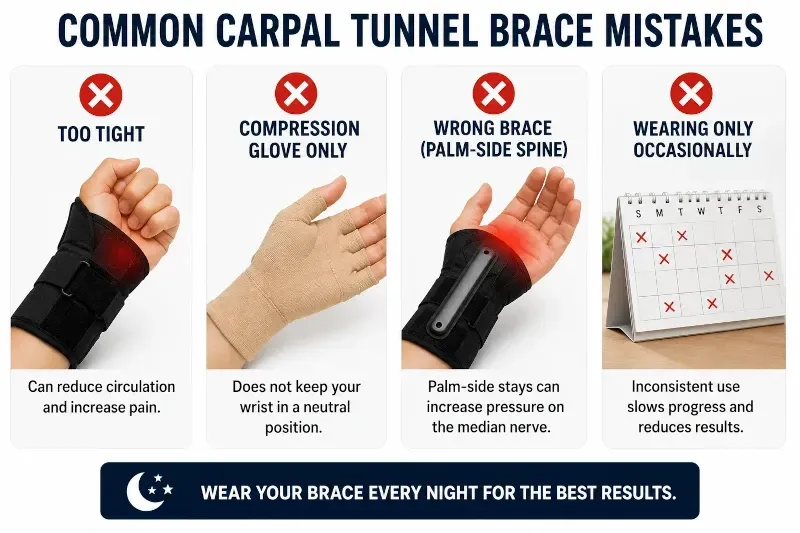
Common Carpal Tunnel Wrist Brace Mistakes
Many people buy a brace and then unknowingly use it incorrectly. Common mistakes include:
- buying a brace with a palm-side metal spine
- wearing the brace too tightly
- wearing the brace only occasionally
- expecting the brace to cure symptoms by itself
- relying on a compression glove instead of a brace
- wearing the brace all day when nighttime use alone would be sufficient
- stopping treatment too soon
Compression gloves deserve special mention. While they may provide warmth and comfort, they do not keep the wrist in a neutral position and are not a substitute for a proper carpal tunnel wrist brace.
Likewise, many patients stop wearing their brace after only a few nights because symptoms do not disappear immediately. Bracing works gradually. Consistent use over several weeks is usually necessary before judging effectiveness.
Could Your Symptoms Still Improve Without Surgery?
Many patients improve numbness, tingling, burning, weakness, and nighttime symptoms when treatment begins early and remains consistent.
1️⃣ Check Symptoms 2️⃣ Test Severity
Summary
A carpal tunnel wrist brace is one of the most effective first-line treatments for mild carpal tunnel syndrome.
The best braces:
- keep the wrist neutral
- avoid palm-side pressure
- remain comfortable throughout the night
- are worn consistently while sleeping
However, a brace is only one part of treatment. Many patients achieve the best results when bracing is combined with stretching exercises, activity modification, and myofascial release massage.
Choosing the correct brace and using it properly may help reduce symptoms, improve sleep, slow disease progression, and reduce the likelihood of needing surgery later.
Key Takeaways
- A carpal tunnel wrist brace is usually a first-line treatment for mild symptoms.
- The brace should keep the wrist in a neutral position during sleep.
- Palm-side metal spines may increase pressure on the median nerve.
- Most patients should wear a brace at night rather than throughout the day.
- Soft braces are generally preferable to rigid braces.
- Compression gloves are not a substitute for a proper wrist brace.
- Consistent nighttime use often produces the best results.
- Moderate and severe symptoms usually require additional treatments besides bracing.
About Dr. Zannakis