An electric shock feeling in your hand is usually caused by an irritated or compressed nerve, most often from carpal tunnel syndrome. It commonly happens when pressure on the median nerve triggers sudden jolts, tingling, or sharp shooting sensations into the fingers.
A sudden electric shock sensation in your hand can be surprising, uncomfortable, and hard to ignore. Many people describe it as a quick jolt that shoots through the wrist or fingers when gripping an object, bending the wrist, or using the hand for everyday tasks. While the feeling may last only a moment, repeated episodes usually point to an underlying nerve problem.
In most cases, this symptom happens because the median nerve is being irritated or compressed inside the wrist, which is the hallmark of carpal tunnel syndrome. As pressure builds around the nerve, it can misfire and send abnormal signals to the brain. That is what creates the sharp, shock-like feeling, often along with numbness, tingling, burning, weakness, or pain.
This article explains why electric shocks happen in the hand, how they relate to carpal tunnel syndrome, what other symptoms to watch for, and which treatments may help depending on how advanced the condition has become.
An electric shock feeling in your hand is usually caused by a compressed or irritated nerve—most commonly from carpal tunnel syndrome.
- Feels like a sudden jolt, tingling, or shooting pain
- Often triggered by gripping, lifting, or bending the wrist
- Typically affects the thumb, index, and middle fingers
- Caused by pressure on the median nerve in the wrist
- May worsen over time if nerve compression increases
In most cases, this sensation occurs when the median nerve misfires due to pressure inside the carpal tunnel. Early treatment—such as rest, night bracing, stretching, and myofascial release—can help relieve symptoms and prevent progression.
People Also Ask
What causes an electric shock feeling in the hand?
An electric shock feeling in the hand is usually caused by nerve irritation or compression. The most common cause is carpal tunnel syndrome, but it can also result from ulnar nerve compression, neck problems, or overuse of the hand.
Is an electric shock sensation in the hand a sign of carpal tunnel?
Yes. Carpal tunnel syndrome commonly causes sudden “electric shock” sensations, especially in the thumb, index, and middle fingers. These symptoms often occur at night or with repetitive hand use.
When should I worry about electric shock feelings in my hand?
You should be concerned if the sensation is frequent, worsening, or accompanied by weakness, clumsiness, or persistent numbness. Sudden symptoms with arm weakness or speech difficulty may require emergency care.
Why do I feel a sudden shock in my fingers?
A sudden shock feeling often happens when a nerve is briefly compressed or irritated. This can occur from wrist bending, pressure on the elbow, or repetitive movements that stress the nerves in your hand.
Can nerve damage cause electric shock sensations in the hand?
Yes. Nerve damage or irritation can produce sharp, shock-like sensations. Conditions like carpal tunnel syndrome, diabetic neuropathy, or cervical spine problems are common causes.
Free Carpal Tunnel Tools
Find Out If You Have Carpal Tunnel
Use these free tools to identify possible carpal tunnel symptoms and estimate how advanced your condition may be.
Free • Fast • No signup required
Understanding Carpal Tunnel Syndrome
Carpal tunnel syndrome arises when there's damage to your
median nerve. This nerve runs from your forearm into your hand. Damage occurs when it becomes compressed as it passes through the carpal tunnel. The
carpal tunnel is a narrow passageway in your wrist which also contains tendons that allow you to grasp with your fingers.
This median nerve compression causes a type of damage called
neuropathy. And it can lead to
various symptoms, including
pain,
numbness, tingling,
weakness, and that characteristic sensation of an
electric shock.
The carpal tunnel passageway is surrounded by bones and ligaments. Any swelling or narrowing in this space can press on the median nerve. This nerve is responsible for sensation in most of your fingers (except the pinky). It also controls some of the muscles at the base of your thumb. When it’s compressed, it can’t function properly, leading to the discomfort associated with carpal tunnel syndrome.
What Causes Electric Shock Feeling in Your Hand
An electric shock feeling in your hand is usually caused by
nerve compression or irritation. When a nerve is squeezed or inflamed, it can send sudden, sharp “shock-like” signals instead of normal sensations.
The
most common cause is Carpal Tunnel Syndrome, where the
median nerve is compressed as it passes through the wrist. This typically affects the thumb, index, and middle fingers and often worsens at night or with repetitive hand use.
Other causes can include:
- Cubital Tunnel Syndrome (affects the pinky and ring finger)
- Cervical Spondylosis (nerve irritation originating from the neck)
- Thoracic Outlet Syndrome (symptoms worsen when arms are raised)
- Diabetic Neuropathy (often affects both hands)
In many cases, the sensation is triggered by
repetitive hand use, wrist bending, or prolonged pressure on a nerve, such as leaning on your elbow or sleeping with your wrist bent.
👉 The key to identifying the cause is noticing:
- Which fingers are affected
- When the sensation occurs (night vs daytime)
- Whether symptoms are temporary or persistent
Persistent or worsening symptoms usually indicate an underlying condition that should be evaluated.
Other Symptoms to Watch For
An electric shock feeling in your hand rarely occurs alone. It’s usually part of a broader pattern of nerve irritation.
Common accompanying symptoms include:
When caused by Carpal Tunnel Syndrome, these symptoms most often affect the
thumb, index, and middle fingers, and may gradually worsen over time.
👉 A key warning sign is when symptoms:
- Become
more frequent or intense
- Spread beyond the fingers
- Begin to
interfere with daily activities
These changes usually indicate that the nerve is under increasing pressure and needs treatment.
Managing Carpal Tunnel: Treatment by Severity
The good news is that carpal tunnel syndrome can often be managed effectively, especially when caught early. Treatment approaches depend on the severity or "stage" of the condition.
- Mild stage carpal tunnel: Usually the most treatable, where symptoms are uncomfortable while trying to sleep.
- Moderate stage carpal tunnel: When symptoms spill over into the daytime and usually interfere with your daily activities.
- Severe stage carpal tunnel: When symptom are maximally intense, and impact your quality of life.
Mild Stage Cases
For mild stage carpal tunnel syndrome, the goal is to reduce pressure on the median nerve and prevent its progression.
1) Rest and Activity Modification
- Take regular breaks from repetitive or other
harmful activities.
- Avoid positions that exacerbate symptoms, such as prolonged wrist flexion (like doing push-ups).
2) Core Stretching Exercises
There are
4 core stretching exercises which can improve tendon health, increase circulation, and reduce tension in the wrist. These stretches are below. They should be performed regularly, especially when stressing your hands. A more comprehensive discussion can be found at
Stretching Exercises for Carpal Tunnel.
- Stop stretch: Extend your hand, with fingers up, like saying, "Stop!" Pull back the upturned fingers with your other hand.
- Prayer stretch: Put your hands together, chest level, as in a prayer. Then slowly raise your elbows
only.
- Finger interlace stretch: Interlace your fingers and extend your palms outward in front of you.
- Thumb stretch: Grasp you thumb and twirl it around like a helicopter blade.
3) Night Bracing
Wearing a wrist brace while sleeping helps keep your wrist in a neutral position. This reduces pressure on the median nerve. Night bracing (or "nocturnal splinting") is particularly effective for people whose symptoms worsen during sleep.
Caution:
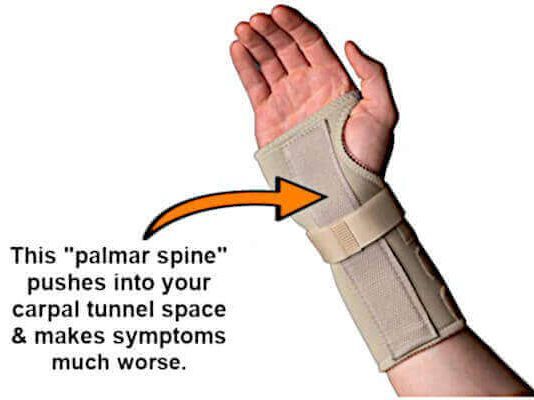
Wear only a "certified" carpal tunnel brace, and never a brace containing a palmar spine. (Such harmful braces are often sold in pharmacies, and can cause more nerve damage.)
See this explanation about proper night bracing.
4) Heat
If you have symptoms of carpal tunnel syndrome, keeping you hand warm is important. And applying heat is extra beneficial because it speeds healing.
Heat therapy has
numerous beneficial effects. It promotes blood flow, which is necessary to carry restorative oxygen and nutrients to damaged tissues. It also carries away damaged cellular debris.
Apply heat to your hand at night, before sleeping, for about 15 minutes. It's best to use a
Heating Mitt or a heating pad rolled into a tube. (Hold the rolled-up shape with tape.) That's because heating both sides of the hand is optimal for healing.
Moderate Stage Cases
If symptoms persist or worsen despite conservative measures, more intensive interventions may be needed.
1) Myofascial Release Massage
- A skilled therapist uses
myofascial release massage to reduce tension and adhesions in the tissues surrounding the carpal tunnel. This process takes time, but is very effective -- with a
97% patient satisfaction rate. It removes adhesions which cause inflammation around tendons. The inflammation produces swelling, which crushes the median nerve.
- The
CarpalRx is an automated device providing the identical myofascial release massage at home, without the need of a human therapist.
Learn more about the CarpalRx.
2) Non-Steroidal Anti-Inflammatory Drugs (NSAIDs)
Over-the-counter
NSAID medicines such as ibuprofen and naproxen can help reduce inflammation. Less inflammation means less pressure on the median nerve, which alleviates the discomfort. Of course, once the medicine wears off in a few hours, the inflammation returns. This is why such medicines are considered a short-term remedy. Furthermore, long-term use of NSAIDs can result in
kidney damage.
3) Corticosteroid Injections
In some cases, a doctor may recommend
corticosteroid injections into your wrist area. The steroid reduces swelling around the median nerve. The success rate of a corticosteroid injection at the moderate stage of carpal tunnel syndrome is
about 45%. There can be significant
side effects to the injection. Recurrence of symptoms occurs in about
60% of patients after 3-4 months.
Severe Stage Cases
1) Carpal Tunnel Release Surgery
This procedure involves cutting the ligament that forms the roof of the carpal tunnel. The goal is to create more space for the median nerve which is being compressed by swollen tendons. Surgery is typically performed on an outpatient basis. Two types of surgery can be used, and both have
advantages and disadvantages:
- Open carpal tunnel release surgery: More painful and takes longer to recover.
- Endoscopic carpal tunnel release surgery: Less painful and quicker recovery time.
The patient satisfaction rate with either procedure is
about 50-60%. Symptoms may return within 2 years. After surgery,
post surgical rehabilitation is necessary. This is crucial to restoring hand strength and wrist flexibility.
2) Myofascial Release Massage
- This treatment is identical to that applied for moderate carpal tunnel syndrome. A therapist can use myofascial release massage even in severe cases to reduce tension and adhesions inside the carpal tunnel. In the severe stage, it's even more crucial to remove inflammation-causing adhesions around tendons which crush the median nerve. The healing process takes more time than with moderate cases, and is
80-90% effective.
Prevention Tips
Preventing carpal tunnel syndrome or minimizing its progression involves adopting wrist-friendly habits:
1) Take Regular Breaks
Taking regular "rest" breaks from stressful hand activities can help reduce the strains you put on your hand and fingers. The "30-30" rule is best to follow. That means for every 30 minutes of stressful hand activity (like typing) take a 30 second break. Your break will be even more effective when, during that break, you perform the
4 core stretching exercises below.
2) Perform Stretching Exercises
The
4 core stretching exercises discussed above are crucial to preventing carpal tunnel syndrome. A more in-depth discussion of each exercise can be found at
Stretching Exercises for Carpal Tunnel.
3) Avoid Harmful Activities
Most people can prevent carpal tunnel syndrome if they disengage from harmful hand activities. Pay attention to your hand/finger activities and adopt more finger or wrist-friendly habits. The
specific
finger and hand motions which can result in carpal tunnel can be found at
Harmful Activities.
4) Protect Your Hands
Protecting you hands can mean different things to different people. For instance, wear insulated gloves to never allow your hands to get cold. Wear thick padded gloves when riding a bike, lifting weights, or using
vibrating tools. Use ergonomic equipment (mouse, keyboard, scissors, can opener, etc.) when possible. And of course, use
proper sitting posture when typing.
Summary
Getting an electric shock feeling in your hand can be alarming. But it’s often a telltale sign of carpal tunnel syndrome. Understanding why this sensation occurs — and addressing the underlying cause — is key to finding relief. Whether your symptoms are mild, moderate, or severe, a range of treatment options are available to help you regain comfort and functionality. By taking proactive steps, you can manage carpal tunnel syndrome effectively and keep your hands healthy for years to come.
About Dr. Zannakis