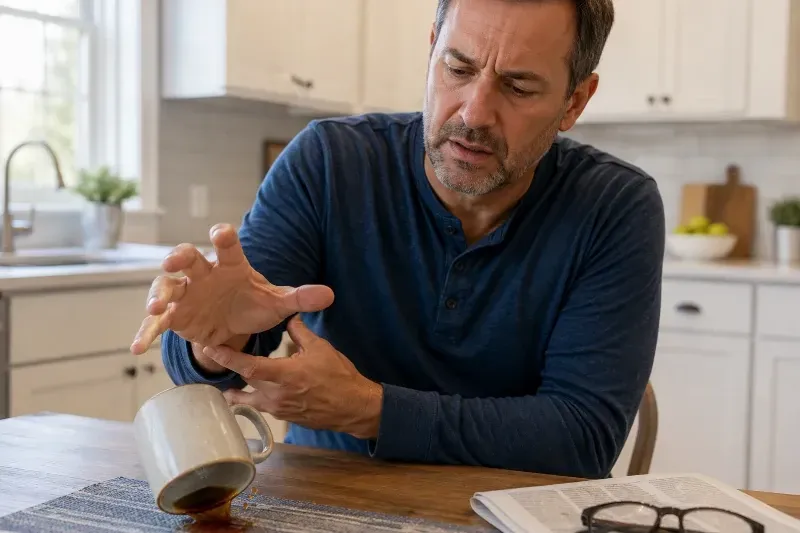
Carpal tunnel hand strength loss occurs when prolonged median nerve compression weakens the muscles controlling grip, dexterity, and fine finger movement.
Carpal tunnel hand strength loss can become extremely frustrating and disruptive. Many people first notice weakness when they begin dropping objects, struggling to grip handles, or having difficulty with simple daily tasks.
Unfortunately, hand weakness usually means carpal tunnel syndrome is advancing. The longer the median nerve remains compressed, the greater the risk of permanent nerve and muscle damage.
Fortunately, many patients improve without surgery when treatment begins early and multiple therapies are used consistently.
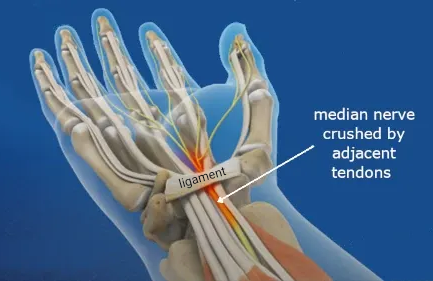
Carpal tunnel hand strength loss happens because swollen flexor tendons compress the median nerve inside the wrist. As nerve compression worsens, grip strength, dexterity, coordination, and fine finger movement gradually decline.
Treatment often includes night bracing, stretching exercises, rest, activity modification, and myofascial release massage.
Is Carpal Tunnel Causing Your Hand Weakness?
Frequent numbness, tingling, burning, weakness, or dropping objects may signal worsening median nerve compression.
Check Your Symptoms
Test Your Severity
How Carpal Tunnel Causes Hand Strength Loss
The earliest symptoms of carpal tunnel syndrome are usually:
As the condition progresses, weakness and loss of dexterity gradually develop.
Many patients first notice weakness during simple daily activities such as:
- opening jars,
- holding a coffee cup,
- gripping a steering wheel,
- brushing teeth,
- using keys,
- buttoning clothing,
- typing,
- or holding a phone.
Fine motor coordination also declines. Tasks requiring precise finger control often become clumsy and frustrating.
As nerve compression worsens, some people begin dropping objects unexpectedly because grip strength becomes unreliable.
Many patients also notice their thumb becoming weaker during pinching or grasping movements.
Why The Hand Becomes Weak
Carpal tunnel syndrome causes weakness because swollen flexor tendons compress the
median nerve inside the wrist.
The median nerve controls both sensation and muscle function. It supplies feeling to:
- the thumb,
- index finger,
- middle finger,
- and part of the ring finger.
It also controls several muscles involved in:
- grip strength,
- thumb movement,
- pinch strength,
- and fine finger coordination.
When the nerve remains compressed for long periods:
- nerve signaling slows,
- muscles weaken,
- coordination declines,
- and dexterity worsens.
Severe or prolonged compression may eventually lead to permanent nerve damage and visible muscle wasting at the base of the thumb.
Signs Your Hand Strength Is Getting Worse
Loss of hand strength often develops gradually. Warning signs commonly include:
- dropping objects,
- difficulty opening containers,
- weaker grip,
- difficulty holding utensils,
- shooting electric shocks,
- clumsy finger movements,
- trouble buttoning clothing,
- difficulty writing,
- reduced pinch strength,
- and visible thumb weakness.
Many people also notice worsening symptoms during:
- typing,
- driving,
- holding tools,
- gaming,
- or repetitive hand activity.
Once weakness begins appearing regularly, the condition is usually more advanced and should not be ignored.
Important Warning
Visible flattening or muscle wasting at the base of the thumb may indicate severe nerve damage. Once advanced muscle wasting develops, treatment becomes much less effective.
Restoring Carpal Tunnel Hand Strength
Research consistently shows that earlier treatment generally produces better recovery of hand strength and nerve function.
In fact, the
American Academy of Orthopedic Surgeons recommends beginning with conservative treatment before considering surgery.
Commonly recommended nonsurgical strategies include:
- Brace therapy
- Rest/activity modification
- Exercise/stretching
- Massage therapy
These therapies work together to reduce pressure on the median nerve and restore tendon mobility inside the wrist.
Brace
Night bracing helps keep the wrist in a neutral position during sleep. This reduces pressure inside the carpal tunnel and helps prevent worsening nighttime nerve compression.
Within several weeks of consistent nighttime bracing, many patients notice improvement in:
- nighttime numbness,
- morning stiffness,
- hand fatigue,
- and grip weakness
Important Warning
Never substitute a
compression glove
for a proper
carpal tunnel night brace.
Compression gloves do not keep the wrist in a neutral position during sleep and may actually worsen symptoms by morning.
Rest
Rest involves reducing or modifying the
repetitive activities that caused symptoms to develop. Important activity modifications may include:
- reducing repetitive gripping,
- taking mini-breaks,
- avoiding prolonged wrist bending,
- improving workstation ergonomics,
- and limiting stressful hand activity.
Even partial reduction of repetitive strain may significantly improve mild or moderate symptoms.
Exercise
Targeted stretching exercises help improve tendon gliding, circulation, and flexibility inside the wrist and forearm. Regular stretching may help reduce:
- stiffness,
- swelling,
- tendon restriction,
- and median nerve pressure.
Many experts recommend brief stretching sessions several times daily, especially during repetitive hand activity.
Massage
Myofascial release massage aims to loosen adhesions and restrictions surrounding the flexor tendons inside the wrist and forearm.
As tendon mobility improves:
- swelling decreases,
- circulation improves,
- and pressure on the median nerve is reduced.
After several weeks of consistent treatment, many patients notice improvement in:
- numbness,
- tingling,
- weakness,
- hand fatigue,
- and dexterity
Could Your Hand Strength Still Improve?
Many patients improve weakness, numbness, and dexterity problems when treatment begins before severe nerve damage develops.
Check Your Symptoms
Test Your Severity
Summary
Carpal tunnel hand strength loss occurs because prolonged median nerve compression weakens the muscles controlling grip, dexterity, and fine finger movement.
As symptoms progress, patients commonly experience:
- dropping objects,
- clumsy hand movements,
- weaker grip,
- and reduced coordination.
Fortunately, many patients improve without
carpal tunnel surgery when treatment begins early and combines:
- night bracing,
- stretching,
- rest,
- activity modification,
- and myofascial release massage.
Early treatment is extremely important because prolonged nerve compression may eventually cause permanent weakness and muscle wasting. Once visible muscle wasting develops, restoring full hand strength becomes much more difficult.
Key Takeaways
- Hand weakness is often a sign that carpal tunnel syndrome is advancing.
- Median nerve compression interferes with grip strength and dexterity.
- Dropping objects and clumsy finger movements are common warning signs.
- Severe nerve compression may eventually cause permanent muscle wasting.
- Early treatment generally produces better recovery of hand strength.
- Many patients improve with conservative treatment without surgery.
About Dr. Zannakis