Carpal tunnel release surgery is a procedure that cuts the transverse carpal ligament to relieve pressure on the median nerve and reduce severe carpal tunnel symptoms.
Many patients feel anxious before carpal tunnel release surgery because they simply do not know what to expect.
Questions like:
- “Will I be awake?”
- “How painful is it?”
- “What actually happens during surgery?”
- “How long does recovery take?”
...are extremely common.
Carpal tunnel release surgery is one of the most frequently performed hand operations in the United States. But despite how common it is, most people only have a vague understanding of what surgeons actually do during the procedure.
This article walks you through:
- when surgery is recommended
- the difference between open and endoscopic techniques
- exactly what happens during surgery step by step
- what recovery is really like afterward
Carpal tunnel release surgery
is a hand operation that cuts the transverse carpal ligament to reduce pressure on the median nerve. The surgery may be performed using either an open incision or an endoscopic camera-assisted technique.
Before Considering Surgery…
First determine whether your symptoms may still respond to conservative treatment.
People Also Ask
What happens during carpal tunnel release surgery?
The surgeon cuts the transverse carpal ligament to reduce pressure on the median nerve inside the wrist.
Will I be awake during carpal tunnel release surgery?
Some patients are awake with a nerve block during endoscopic surgery, while others receive general anesthesia during open surgery.
How long does carpal tunnel release surgery take?
Most procedures take about 30–45 minutes and are performed on an outpatient basis.
How painful is recovery after carpal tunnel surgery?
Recovery discomfort varies, but open surgery generally causes more post-operative pain and scar tenderness than endoscopic surgery.
How long does recovery take after carpal tunnel release surgery?
Recovery may take several weeks to months depending on the surgical technique, occupation, and overall health.
Doctors usually recommend carpal tunnel release surgery only after several conditions are met.
In general, surgery becomes more likely when:
Most patients first try:
Surgery is typically reserved for severe or persistent cases.
⚠ Symptoms That May Require Prompt Surgical Evaluation
Certain symptoms may suggest worsening nerve compression and should be evaluated promptly by a hand specialist.
- visible thumb muscle wasting
- severe hand weakness
- constant numbness
- loss of finger coordination
- worsening grip strength
- difficulty holding or pinching objects
Types of Carpal Tunnel Release Surgery
There are two primary forms of carpal tunnel release surgery:
- Open carpal tunnel release
- Endoscopic carpal tunnel releas
Both procedures cut the
transverse carpal ligament to create more room inside the wrist and reduce pressure on the
median nerve.
The main difference is how the surgeon reaches the ligament.
Understanding what actually happens during surgery can help reduce anxiety and make recovery expectations more realistic.
Open Surgery Step by Step
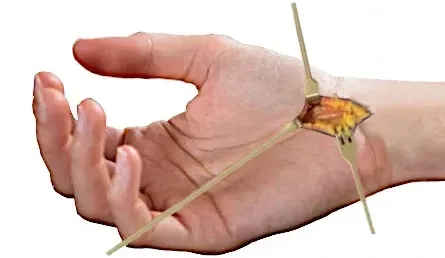
Open carpal tunnel surgery requires making a larger incision on palm.
Step 1: Anesthesia
Most surgeons perform open surgery using
general anesthesia, meaning you are asleep during the procedure. Some surgeons also inject numbing medication into the wrist before surgery begins.
Step 2: Tourniquet Placement
A tourniquet is wrapped around the arm to reduce bleeding during surgery.
Step 3: Palm Incision
The surgeon disinfects the hand and makes an incision in the palm, usually about 2–3 inches long. Some surgeons use a smaller “mini-incision” technique.
Step 4: Cutting the Ligament
The surgeon identifies the transverse carpal ligament and cuts it to reduce pressure inside the wrist joint. When the ligament is divided, the
wrist bones spread slightly apart, creating more room for the median nerve.
Step 5: Closing the Incision
The skin is closed using sutures that are usually removed 7–10 days later. Bandages are then applied.
Step 6: Recovery Room
After surgery, you are monitored in the
recovery room for several hours before going home.
Endoscopic Surgery Step by Step
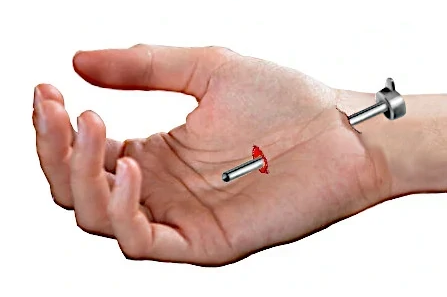
Endoscopic carpal tunnel surgery is usually performed using one or two small openings in the wrist or palm.
Step 1: Nerve Block Anesthesia
Most endoscopic procedures use a median nerve block instead of general anesthesia. This means you are awake but your arm and hand are numb.
Step 2: Tourniquet Placement
As with open surgery, a tourniquet reduces bleeding during the procedure.
Step 3: Small Incisions
The surgeon creates one or two small openings:
- single portal technique = one opening
- double portal technique = two openings
Step 4: Camera Guidance
A tiny fiberoptic camera called an
endoscope is inserted into the wrist. Surgical instruments are inserted through the same or another opening.
Step 5: Ligament Release
While watching the camera, the surgeon cuts the transverse carpal ligament to relieve pressure on the median nerve.
Step 6: Bandaging & Recovery
The small openings are closed with sutures and bandaged. Most patients
return home the same day.
⚠ Surgery Does Not Guarantee Complete Relief
Some patients experience rapid improvement after surgery, while others continue having numbness, weakness, pain, or recurrent symptoms for months or even years afterward.
The two procedures differ most in incision size, recovery time, scar tenderness, and surgical visibility.
Open vs Endoscopic Carpal Tunnel Release
| Feature |
Open Surgery |
Endoscopic Surgery |
| Incision Size |
Larger |
Smaller |
| Scar Size |
Larger |
Smaller |
| Recovery Speed |
Slower |
Faster |
| Visibility for Surgeon |
Better |
More limited |
| Scar Tenderness |
More common |
Less common |
| Technical Difficulty |
Lower |
Higher |
Recovery varies significantly from patient to patient. Some patients improve rapidly, while others recover slowly over many months. Recovery is often slower than many patients initially expect.
Possible outcomes include:
- rapid improvement
- delayed improvement
- persistent symptoms despite surgery
Open surgery usually requires:
Endoscopic surgery generally allows:
Possible complications include:
- infection
- nerve injury
- permanent weakness
- stiffness
- scar tenderness
- persistent numbness
- recurrent symptoms
Some patients eventually require
revision surgery, although repeat surgical procedures have lower success rates.
Thinking About Surgery?
Before deciding on surgery, understand how advanced your condition may be and whether conservative treatment could still help.
Factors Affecting Recovery
Recovery often takes longer when:
Dedicated hand therapy and rehabilitation significantly influence long-term results.
Carpal tunnel release surgery reduces pressure on the median nerve by cutting the transverse carpal ligament inside the wrist.
Both open and endoscopic procedures can relieve severe symptoms, but recovery time, risks, and long-term outcomes vary considerably between patients.
Understanding exactly what happens during surgery — and what recovery truly involves — can help patients make more informed treatment decisions.
- Carpal tunnel release surgery cuts the transverse carpal ligament to reduce pressure on the median nerve.
- Open surgery uses a larger palm incision while endoscopic surgery uses smaller openings and a camera.
- Most procedures take about 30–45 minutes and are performed outpatient.
- Recovery time varies widely depending on the surgical method and patient factors.
- Open surgery usually causes more scar tenderness and longer recovery.
- Endoscopic surgery generally allows faster recovery but requires greater surgical skill.
- Some patients continue experiencing symptoms even after surgery.