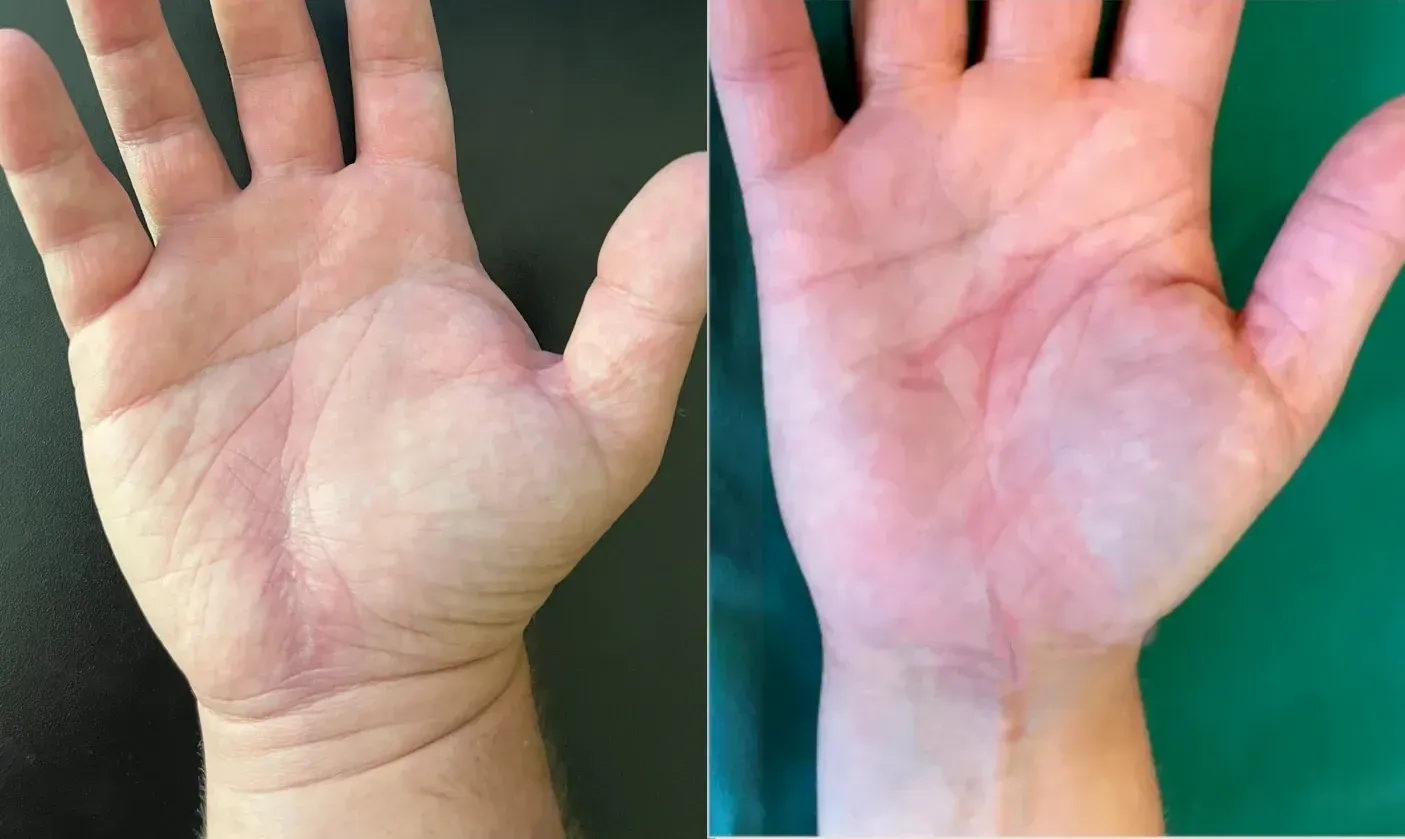
A second carpal tunnel surgery (“revision surgery”) is sometimes recommended when symptoms persist or return after the first operation. However, revision surgery has lower success rates and less predictable outcomes than initial surgery, so non-surgical options should usually be explored first.
If your first carpal tunnel surgery failed—or symptoms later returned—you may be wondering whether another operation is worth it.
That situation is more common than many patients realize.
Some people never improve after surgery. Others feel relief for months or years before symptoms slowly return. In these cases, surgeons may recommend a second operation called revision carpal tunnel surgery.
But revision surgery is generally more complicated, less predictable, and harder to recover from than the original procedure.
Before committing to another surgery, it’s important to understand:
- why the first surgery failed
- what the success rates actually are
- and whether non-surgical treatments were fully explored first
A second carpal tunnel surgery is called revision carpal tunnel release. It is performed when symptoms persist or return after the first operation. Common causes of failed surgery include incomplete ligament release, scar tissue formation, recurrent tendon inflammation, or permanent median nerve damage. Revision surgery can help some patients, but outcomes are generally less predictable than first-time surgery.
According to the American Academy of Orthopedic Surgeons, conservative treatment options should generally be explored before surgery whenever appropriate — especially when symptoms persist after a prior operation.
People Also Ask
Can you have carpal tunnel surgery twice?
Yes. A second procedure is called revision carpal tunnel surgery. It may be recommended when symptoms never improved or returned after the first operation.
Why does carpal tunnel surgery fail?
Common reasons include scar tissue formation, incomplete ligament release, recurrent tendon inflammation, nerve damage, or an incorrect diagnosis.
What is the success rate of second carpal tunnel surgery?
Revision surgery generally has lower success rates and less predictable outcomes than first-time carpal tunnel surgery.
Should you try non-surgical treatments before revision surgery?
In many cases, yes. Treatments like night bracing, stretching exercises, activity modification, and myofascial release therapy may still improve symptoms without another surgery.
Why Is a Second Carpal Tunnel Surgery Needed?
A second carpal tunnel surgery is usually recommended when:
- Symptoms never improved after the first operation
- Symptoms improved temporarily but later returned
- Hand weakness continues progressing
- Numbness becomes constant
- Severe nighttime symptoms persist
- Scar tissue compresses the median nerve again
Revision surgery attempts to relieve pressure on the median nerve a second time.
However, unlike the first operation, revision surgery is technically more difficult because scar tissue and altered anatomy are already present.
Why the First Surgery Sometimes Fails
There are several reasons a first carpal tunnel surgery may fail.
Incomplete Ligament Release
The transverse carpal ligament may not have been fully divided during surgery, leaving residual nerve compression.
Scar Tissue Formation
Internal scar tissue can form around the median nerve during healing and create renewed pressure.
Ongoing Tendon Inflammation
Surgery cuts the
ligament, but it does not always eliminate the tendon inflammation that caused the compression in the first place.
Incorrect Diagnosis
Sometimes symptoms are actually caused by:
In these cases, surgery may not solve the real problem.
Severe Nerve Damage Before Surgery
If the
median nerve was compressed for too long before treatment, permanent nerve injury may already exist.
Failed surgery does not always mean symptoms worsen immediately. In many patients, warning signs develop gradually over time.
⚠ Revision Surgery Is Usually More Complex
Scar tissue from the first operation can make revision surgery technically harder and recovery less predictable than the original procedure. In many cases, the anatomy around the median nerve has already changed, making a second operation more difficult and outcomes more variable.
Signs Your First Surgery Failed
Symptoms of failed carpal tunnel surgery may include:
- Persistent
numbness
- Tingling that never resolved
- Continued nighttime awakening
- Burning hand pain
- Grip weakness
- Dropping objects
- Thumb weakness
- Symptoms returning months or years later
Some patients also develop:
- Pillar pain
- Hypersensitivity around the scar
- Stiffness
- Loss of dexterity
Still Having Symptoms After Your Surgery?
Many patients assume failed surgery means they have no other options. But persistent symptoms often improve when the underlying tendon inflammation and nerve compression are addressed properly.
Take the Free Carpal Tunnel Self-Test
Success Rates for Revision Surgery
Revision surgery generally has
lower success rates than first-time surgery.
That’s because:
- Scar tissue complicates the procedure
- Nerve damage may already exist
- Chronic inflammation may continue
- Recovery is usually slower
- Outcomes are less predictable
Some patients improve. Others experience:
- Partial relief only
- Temporary relief
- No improvement
- Worsened pain or sensitivity
The success of revision surgery often depends on identifying why the first surgery failed.
Can Doctors Predict Revision Surgery Success?
Some surgeons use prior treatment response to estimate the likelihood of success.
One factor sometimes evaluated is whether steroid injections previously provided temporary symptom relief.
If injections relieved symptoms temporarily, it may suggest that decompression of the nerve could still help.
However, no predictor is perfect.
Patients with these factors generally have less predictable outcomes:
Non-Surgical Options Before Another Surgery
Before agreeing to another operation, many patients benefit from trying conservative treatment again.
Options may include:
Night Bracing
Proper nighttime wrist positioning can reduce nerve compression during sleep.
Activity Modification
Reducing repetitive gripping, vibration exposure, and prolonged wrist flexion often helps.
Tendon and Nerve Gliding Exercises
These
targeted exercises may improve tendon movement inside the carpal tunnel.
Myofascial Release Massage
Some patients experience improvement when soft tissue restrictions and swelling are reduced with
this technique.
Heat Therapy
Heat can improve circulation and reduce stiffness in chronic cases.
Anti-Inflammatory Strategies
Reducing tendon inflammation may decrease pressure on the median nerve naturally.
The American Academy of Orthopedic Surgeons recommends
conservative treatment approaches before surgery whenever appropriate.
Second Surgery vs. Non-Surgical Treatment
If your first surgery failed, comparing surgical and non-surgical options side-by-side can help clarify the differences in recovery, risks, and long-term expectations.
| Factor |
Second Surgery |
Non-Surgical Treatment |
| Invasiveness |
Surgical procedure with incision and recovery time. |
Non-invasive therapies used at home or with a therapist. |
| Recovery time |
Often weeks to months. |
Usually little to no downtime. |
| Scar tissue risk |
Scar tissue can form again after surgery. |
No surgical scar tissue created. |
| Nerve injury risk |
Possible in revision procedures. |
Very low when used properly. |
| Goal |
Attempts to decompress the median nerve again. |
Reduces inflammation and wrist pressure naturally. |
| Predictability |
Less predictable outcomes. |
Usually gradual and adjustable. |
| Cost & disruption |
Higher cost and possible missed work. |
Usually lower disruption. |
Note: Revision surgery may still be appropriate in selected cases, but conservative care is often worth exploring first.
Second Surgery vs. Non-Surgical Treatment
If your first surgery failed, comparing both approaches can help clarify the differences in recovery, risks, and expectations.
Invasiveness
Second Surgery
Surgical procedure with incision and recovery time.
Non-Surgical Treatment
Non-invasive therapies used at home or with a therapist.
Recovery Time
Second Surgery
Often weeks to months.
Non-Surgical Treatment
Usually little to no downtime.
Scar Tissue Risk
Second Surgery
Scar tissue can form again after surgery.
Non-Surgical Treatment
No surgical scar tissue created.
When Is a Second Surgery Worth Considering?
A second carpal tunnel surgery may be reasonable when:
- Severe nerve compression is confirmed
- Symptoms are progressively worsening
- Significant weakness is developing
- EMG studies show ongoing compression
- Conservative treatment truly failed
- Scar tissue or incomplete release is clearly identified
But revision surgery should usually be approached cautiously because outcomes are more variable than first-time surgery.
Considering Another Surgery?
Before committing to revision surgery, it’s important to understand your current CTS stage and whether non-surgical options may still help.
Take the Free Severity Quiz
Summary
A second carpal tunnel surgery—called revision surgery—is sometimes recommended when symptoms persist or return after the first operation. However, revision procedures are generally less predictable and technically more difficult than initial surgery.
The most important step is understanding why the first surgery failed.
In many cases, persistent inflammation, scar tissue, nerve damage, or incomplete decompression are responsible. Before committing to another operation, patients should ensure they have fully explored appropriate non-surgical treatments and obtained a careful re-evaluation of the diagnosis.
For many patients, understanding why the first surgery failed is more important than simply repeating the procedure.
Key Takeaways
- A second carpal tunnel surgery is called revision surgery.
- Revision surgery is usually more complex than the first operation.
- Common causes of failed surgery include scar tissue, incomplete release, and ongoing tendon inflammation.
- Symptoms may persist immediately after surgery or return months or years later.
- Conservative treatments should usually be explored before another operation.
- Outcomes for revision surgery are generally less predictable than first-time surgery.
About Dr. Zannakis