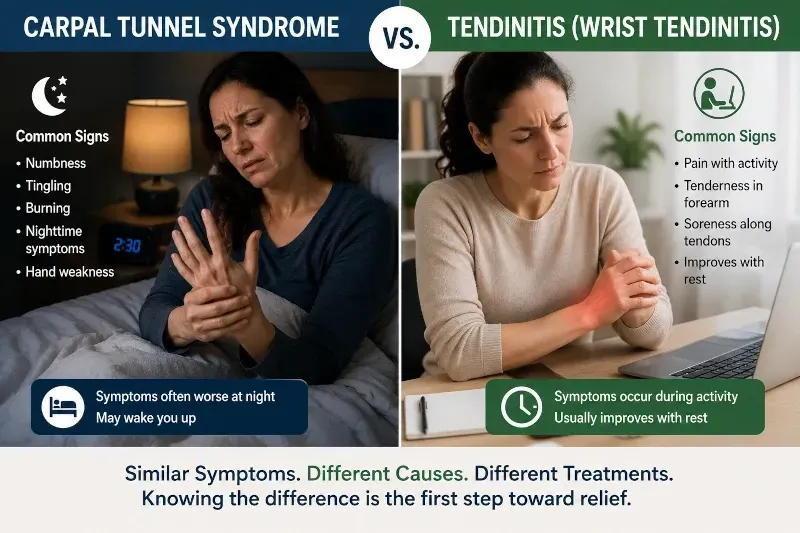
The signs of carpal tunnel syndrome & tendinitis can be very similar because both conditions may cause hand pain, weakness, numbness, tingling, and reduced grip strength. However, carpal tunnel syndrome typically causes nighttime symptoms and affects the thumb, index, and middle fingers, while wrist tendinitis usually causes activity-related pain along the forearm and wrist tendons.
If your hand hurts, feels weak, or keeps going numb, determining the cause can be frustrating.
Two of the most commonly confused conditions are
carpal tunnel syndrome & tendinitis. Both can affect your ability to work, sleep, grip objects, and perform everyday tasks.
The good news is that there are important differences between these conditions. Understanding those differences is the first step toward finding the right treatment.
The signs of carpal tunnel syndrome & tendinitis often overlap, but key differences exist. Carpal tunnel syndrome usually causes nighttime numbness, tingling, and weakness affecting the thumb, index, and middle fingers. Tendinitis more commonly causes pain during activity, tenderness along the forearm tendons, and symptoms that improve with rest.
People Also Ask
Can tendinitis feel like carpal tunnel syndrome?
Yes. Both conditions may cause pain, weakness, and reduced hand function. However, nighttime numbness and tingling are much more typical of carpal tunnel syndrome.
Does tendinitis cause numbness?
Sometimes. However, numbness is usually less common and less severe than with carpal tunnel syndrome.
Can I have carpal tunnel syndrome and tendinitis together?
Yes. Many patients have both conditions at the same time because repetitive hand activities can contribute to each disorder.
Which condition is easier to treat?
Tendinitis is generally easier to treat because it usually improves with rest and activity modification before nerve damage develops.
Not Sure Which Condition You Have?
Pain, numbness, tingling, and weakness can have several causes. Determining the source is the first step toward treatment.
Check Your Symptoms
Test Your Severity
Why These Conditions Are Often Confused
Both carpal tunnel syndrome and wrist tendinitis involve irritated tendons and repetitive hand use. Because they share many symptoms, even healthcare providers occasionally
misdiagnose one as the other.
Common symptoms shared by both conditions include:
- pain
- weakness
- reduced grip strength
- hand fatigue
- difficulty performing repetitive tasks
The similarities often end there.
The easiest way to distinguish the signs of carpal tunnel syndrome & tendinitis is to compare their most common symptoms side by side.
Carpal Tunnel Syndrome vs Tendinitis
| Feature |
Carpal Tunnel Syndrome |
Wrist Tendinitis |
| Night Symptoms |
Very Common |
Uncommon |
| Numbness |
Common |
Less Common |
| Tingling |
Common |
Occasional |
| Pain During Activity |
Sometimes |
Very Common |
| Forearm Tenderness |
Rare |
Common |
| Symptoms Improve With Rest |
Sometimes |
Usually |
| Thumb Muscle Wasting |
Possible |
No |
One Important Difference
Carpal tunnel syndrome involves a compressed nerve. Wrist tendinitis involves inflamed tendons.
Because a nerve is involved, carpal tunnel syndrome is much more likely to cause numbness, tingling, electric-shock sensations, and loss of sensation. Tendinitis is much more likely to cause soreness, tenderness, and pain during activity.
Signs Of Carpal Tunnel Syndrome
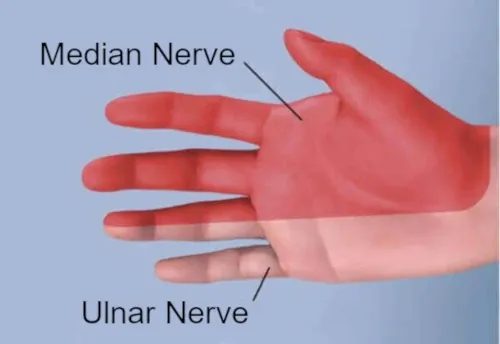
Carpal tunnel syndrome develops when swollen flexor tendons compress the median nerve inside the wrist. Because a nerve is involved, symptoms often extend beyond simple pain.
Early Signs
Many people first notice symptoms while trying to sleep. They include:
- mild tingling
- occasional pain
- occasional numbness
- hand fatigue
- fingers "falling asleep"
- intermittent burning sensations
The thumb, index finger, middle finger, and part of the ring finger are usually affected. Importantly, the little finger is generally not involved.
As Symptoms Progress
As pressure on the median nerve increases, symptoms become more noticeable.
Common signs include:
Many patients report that symptoms become worse while sleeping because the wrist naturally bends during the night.
Advanced Signs
In
severe cases:
- numbness or pain become constant
- symptoms occur day and night
- grip strength declines significantly
- fine motor skills deteriorate
- thumb muscles begin to flatten or atrophy
At this point, permanent nerve damage becomes a concern.
Signs Of Wrist Tendinitis
Wrist tendinitis is very different because the problem involves inflamed tendons rather than a compressed nerve. As a result, pain is usually the dominant symptom.
Common Signs
Patients frequently experience:
- aching pain
- soreness
- tenderness
- forearm discomfort
- pain while gripping
- reduced endurance
- hand fatigue
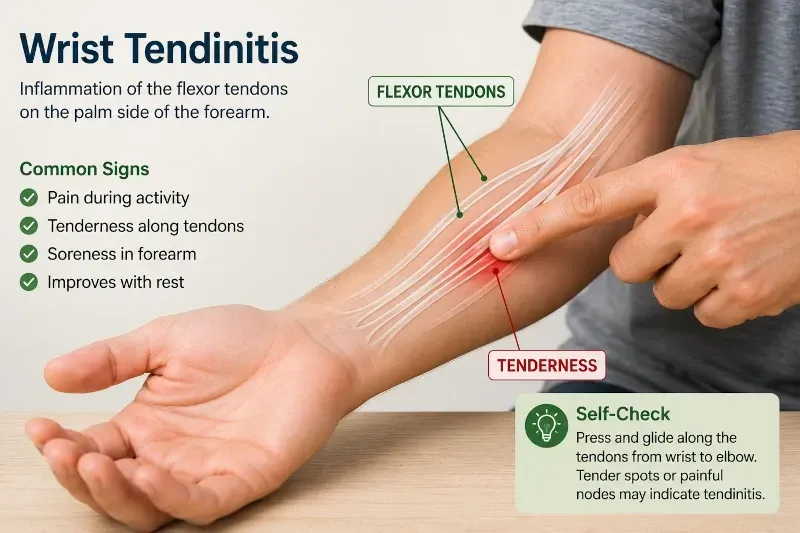
Symptoms are usually located in the hand, wrist, and forearm where the flexor tendons run.
Activity-Related Pain
One of the biggest clues is that tendinitis often hurts while you're performing the activity that caused it.
Examples include:
Unlike carpal tunnel syndrome, symptoms often improve when the hand is resting.
A Helpful Self-Check
A useful sign of wrist flexor tendinitis is tenderness along the tendons themselves. A
simple test is to gently press and glide your fingers along the palm side of the forearm from wrist to elbow. Tendinitis becomes much more likely if you discover:
- tender areas
- painful nodules
- sore tendon pathways
Quick Rule Of Thumb
If numbness and tingling wake you up at night, carpal tunnel syndrome becomes more likely.
If pain occurs mainly while performing a repetitive activity and improves with rest, tendinitis becomes more likely.
Can You Have Both Conditions?
Yes.
In fact, many patients have signs of both carpal tunnel syndrome & tendinitis at the same time. This happens because repetitive hand activities can inflame tendons throughout the forearm while simultaneously increasing pressure inside the carpal tunnel.
Patients with both conditions often experience:
- pain
- numbness
- tingling
- weakness
- forearm tenderness
- nighttime symptoms
This overlap is one reason these conditions are
frequently confused. In fact, many patients who believe they have only carpal tunnel syndrome are surprised to learn that wrist tendinitis is contributing to their symptoms as well.
When To See A Doctor
You should seek medical attention if symptoms:
- persist longer than several weeks
- interfere with work
- wake you at night
- cause weakness
- lead to dropping objects
- continue worsening
Early diagnosis often prevents both conditions from becoming much more difficult to treat.
Still Not Sure Which Condition You Have?
Many symptoms overlap. Determining whether your problem is carpal tunnel syndrome, tendinitis, or both can help guide treatment.
Check Your Symptoms
Test Your Severity
Summary
The signs of carpal tunnel syndrome & tendinitis often overlap, but several clues can help distinguish them. Nighttime numbness, tingling, weakness, and thumb muscle wasting suggest carpal tunnel syndrome. Activity-related pain, forearm tenderness, and symptoms that improve with rest suggest wrist tendinitis. Some patients have both conditions, making proper diagnosis important before treatment begins.
Key Takeaways
- Carpal tunnel syndrome and wrist tendinitis are often confused.
- The little finger is usually not affected by carpal tunnel syndrome.
- Both conditions can cause pain, weakness, and reduced grip strength.
- Nighttime numbness and tingling strongly suggest carpal tunnel syndrome.
- Activity-related pain more strongly suggests tendinitis.
- Forearm tendon tenderness is a common sign of tendinitis.
- Some patients have both conditions simultaneously.
- Early diagnosis improves treatment outcomes.
- Persistent symptoms should be evaluated by a healthcare professional.
About Dr. Zannakis