Carpal tunnel syndrome has no permanent cure because symptoms can return if the underlying causes remain. However, many patients achieve long-term remission through conservative treatment or surgery combined with ongoing prevention.
If you're searching for a
carpal tunnel cure, you're probably hoping for one treatment that permanently eliminates the pain, numbness, and tingling forever.
Even after symptoms completely disappear—whether through conservative treatment or surgery—they can return months or years later if the conditions that caused the problem remain.
The good news is that many people enjoy years of symptom-free living. The key is understanding that the goal isn't finding a permanent cure. It's achieving long-term remission and preventing symptoms from coming back.
Is there a cure for carpal tunnel syndrome?
There is currently no permanent cure for carpal tunnel syndrome because symptoms can return if the underlying causes remain. However, many patients achieve long-term symptom relief through conservative treatment or surgery combined with ongoing prevention.
People Also Ask
- Can carpal tunnel syndrome be cured permanently?
- Does carpal tunnel come back after treatment?
- Can surgery permanently cure carpal tunnel syndrome?
- What is the closest thing to a cure for carpal tunnel?
Could You Achieve Long-Term Remission?
The first step toward lasting symptom relief is knowing whether you actually have carpal tunnel syndrome and how advanced it has become.
Check Your Symptoms
Test Your Severity
What Does "Cure" Really Mean?
The word
"cure" suggests that a disease is permanently eliminated and can never return. Unfortunately, that's not an accurate description of
carpal tunnel syndrome.
Carpal tunnel develops because pressure builds inside the wrist, compressing the median nerve. Even if that pressure is successfully relieved—through conservative treatment or surgery—the factors that caused it can return. Repetitive hand use, diabetes, arthritis, pregnancy, weight gain, or other medical conditions may once again increase pressure inside the carpal tunnel.
For this reason, most physicians avoid using the word cure. Instead, they talk about
symptom relief,
recovery, or
remission.
Remission simply means that symptoms have disappeared and normal hand function has returned. Many patients remain in remission for years. Others experience symptoms again if the underlying causes are not addressed.
For most people, achieving long-term remission is a realistic and highly successful outcome—even if medicine cannot honestly promise a permanent cure.
Think Of It Like Back Pain
Many people recover completely from low back pain, but symptoms may return if they go back to poor lifting habits or repetitive strain. Carpal tunnel syndrome behaves much the same way. Long-term success depends on controlling the factors that caused the problem in the first place.
Why Do People Think Carpal Tunnel Can Be Cured?
Most people naturally assume there must be a permanent cure for carpal tunnel syndrome. After all, many common medical conditions can be cured with a single treatment. Antibiotics eliminate bacterial infections, cataract surgery restores vision, and an appendectomy permanently removes appendicitis.
Carpal tunnel syndrome is different.
Rather than being caused by a single event, it usually develops gradually from repeated stress on the wrist, tendon swelling, underlying medical conditions, or a combination of factors. Even if treatment successfully relieves pressure on the median nerve, those contributing factors may still exist.
A better way to think about carpal tunnel syndrome is to compare it with chronic conditions such as low back pain, arthritis, or migraine headaches. Many people live comfortably for years without symptoms, but flare-ups can occur if the underlying triggers return.
Fortunately, that's also where the good news lies. Once you understand what causes symptoms to return, you can often make simple lifestyle changes that greatly reduce the chance of recurrence. For many patients, maintaining long-term remission becomes a much more realistic—and ultimately more satisfying—goal than searching for a permanent cure.
Why Carpal Tunnel Comes Back
One of the biggest misconceptions about carpal tunnel syndrome is that once symptoms disappear, the condition is gone forever.
In reality, symptoms often return because the underlying causes never changed.
Common reasons carpal tunnel symptoms recur include:
- repetitive hand-intensive work
- returning to stressful activities too quickly
- poor workstation ergonomics
- weight gain
- diabetes
- arthritis
- pregnancy
- scar tissue after surgery
- normal aging of tendons and joints
These factors continue placing stress on the tendons and median nerve long after treatment has ended.
The encouraging news is that recurrence is
not inevitable. Many patients remain symptom-free for years by recognizing these risk factors early and making small lifestyle adjustments before symptoms become severe.
Permanent Cure vs. Long-Term Remission
| Feature |
Permanent Cure |
Long-Term Remission |
| Symptoms
|
Gone permanently |
Gone, but may return |
| Underlying risk factors
|
Completely eliminated |
Often still present |
| Need for maintenance
|
Usually none |
Healthy habits continue |
| Likelihood for CTS
|
Not currently possible |
Common and realistic goal |
| Best expectation
|
Rare |
✔ Achievable for many patients
|
Permanent Cure vs. Long-Term Remission
Symptoms
Cure: Gone permanently
Remission: Gone, but may return
Underlying Risk Factors
Cure: Eliminated
Remission: Often remain
Maintenance
Cure: Usually none
Remission: Continue healthy habits
CTS Reality
Cure: Not currently possible
Remission: Realistic goal for many patients
Best Expectation
✔ Long-term remission
Can Surgery Cure Carpal Tunnel?
Surgery is often the most effective way to relieve pressure on the median nerve, but it should not be viewed as a guarantee that symptoms will never return.
While surgery is often very successful, it is more accurate to say that it relieves pressure on the median nerve rather than curing the underlying tendency to develop the condition.
Carpal tunnel release surgery works by cutting the transverse carpal ligament. This creates more space inside the wrist, reducing pressure on the median nerve. For many patients, this leads to substantial improvement in pain, numbness, tingling, and nighttime symptoms.
However, surgery cannot eliminate every factor that contributed to the disorder. For example, it does not prevent:
- repetitive hand-intensive work
- diabetes
- arthritis
- weight gain
- pregnancy-related swelling
- future tendon inflammation
- scar tissue formation
Because these factors may continue after surgery, some patients eventually experience persistent symptoms or recurrence.
That doesn't mean surgery failed. It simply means surgery should be viewed as one part of long-term management rather than a guaranteed permanent cure.
Many patients remain symptom-free for years after surgery, but that success depends partly on avoiding the same repetitive stresses that contributed to the problem originally.
Surgery Creates Opportunity
Carpal tunnel surgery relieves pressure on the median nerve, giving it the opportunity to recover. Long-term success still depends on protecting the wrist from the same stresses that contributed to the problem in the first place.
Can Conservative Treatment Produce Long-Term Remission?
Absolutely.
Many patients achieve years of symptom-free living without surgery.
The goal of
conservative treatment is not simply to reduce pain for a few days. Instead, it is to lower pressure inside the carpal tunnel, improve tendon movement, reduce inflammation, and allow the median nerve time to recover.
Successful long-term management usually combines several approaches, including:
Each treatment addresses a different part of the problem. When combined and performed consistently, they often produce much better results than relying on any single treatment alone.
Many patients mistakenly stop treatment as soon as symptoms improve. However, continuing healthy wrist habits even after symptoms disappear greatly increases the chances of remaining in long-term remission.
Remission Is Success
Many chronic medical conditions—including back pain, arthritis, and migraines—cannot be permanently cured, yet millions of people live comfortably with few or no symptoms. Carpal tunnel syndrome is often no different. Achieving long-term remission is a realistic and highly successful outcome.
The Biggest Mistake Patients Make
One of the most common reasons symptoms return is that patients stop doing the very things that helped them improve.
Once pain and numbness disappear, it's easy to assume the problem has been permanently solved. As a result, many people gradually stop:
- wearing their night brace
- stretching regularly
- taking rest breaks
- using proper ergonomics
- performing myofascial release massage
- reducing repetitive hand stress
Ironically, patients often stop treatment because they feel better—not because they were told to stop. As a result, months later, symptoms slowly begin returning. Patients often believe the original treatment "stopped working," when in reality the underlying causes simply returned.
Think of maintaining wrist health the same way you think about brushing your teeth or exercising. A small amount of ongoing maintenance is often far easier than treating another painful flare-up.
Ready To Keep Symptoms From Returning?
Knowing your symptom severity is the first step toward building a treatment plan that helps you achieve long-term remission rather than temporary relief.
Check Your Symptoms
Test Your Severity
How To Keep Carpal Tunnel From Returning
The closest thing to a permanent cure for carpal tunnel syndrome is preventing symptoms from coming back after they have resolved.
Think of these habits as maintenance rather than treatment. Once symptoms disappear, the goal shifts from recovery to prevention.
Whether your symptoms improved with conservative treatment or surgery, protecting your wrists from future irritation greatly reduces the risk of recurrence.
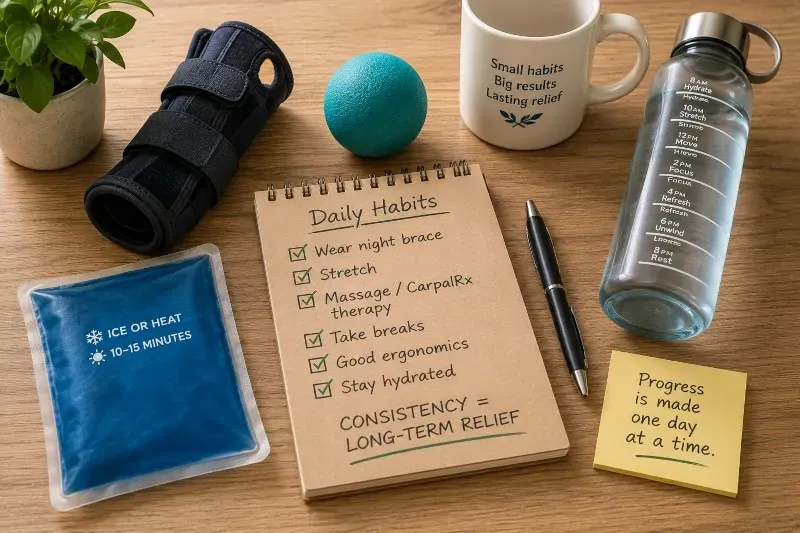
Simple habits that help maintain long-term remission include:
- wearing a
proper wrist brace during symptom flare-ups or while sleeping
- performing stretching exercises throughout the day
- avoiding prolonged repetitive hand stress
- taking short rest breaks during repetitive work
- maintaining good workstation ergonomics
- keeping diabetes and other medical conditions well controlled
- maintaining a healthy body weight
- treating new symptoms early instead of waiting for them to worsen
Many patients believe these long-term wrist care habits are only necessary while symptoms are present. In reality, they work best as ongoing maintenance, much like exercising to stay healthy or brushing your teeth to prevent cavities.
The goal isn't to eliminate every risk factor—that's impossible. Instead, it's to reduce enough of them that pressure inside the carpal tunnel remains low and symptoms never have the chance to return.
Small Habits Prevent Big Problems
A few minutes of stretching, proper ergonomics, and occasional night bracing are far easier than allowing symptoms to return and starting treatment all over again.
When Is Surgery The Right Choice?
Although many patients achieve long-term remission without surgery, conservative treatment is not the right choice for everyone.
Surgery may be recommended when:
- symptoms continue despite appropriate conservative treatment
- muscle weakness is becoming noticeable
- thumb muscles begin shrinking (thenar atrophy)
- nerve testing shows significant median nerve damage
- daily activities or sleep are severely affected
At this stage, the
goal of surgery is to relieve pressure on the median nerve before permanent nerve damage develops.
Even then, surgery should not be viewed as the finish line. Most surgeons still recommend protecting the wrist during recovery and minimizing repetitive stress afterward to maximize long-term success.
Whether treatment is surgical or non-surgical, the ultimate objective remains the same: keeping symptoms under control for the rest of your life.
Summary
There is currently no permanent cure for carpal tunnel syndrome because symptoms can return if the underlying causes remain. However, that doesn't mean lasting relief is impossible.
Many patients achieve years of symptom-free remission through conservative treatment or surgery combined with healthy long-term habits.
The greatest contributors to long-term success include:
- reducing repetitive wrist stress
- maintaining good ergonomics
- using night bracing when appropriate
- performing stretching exercises
- using myofascial release massage
- treating recurring symptoms early
The closest thing to a carpal tunnel cure is achieving long-term remission and maintaining healthy habits that prevent symptoms from returning.
Key Takeaways
- There is currently no permanent cure for carpal tunnel syndrome.
- Long-term remission is a realistic goal for many patients.
- Symptoms may return if the underlying causes remain.
- Surgery relieves pressure on the median nerve but does not eliminate future risk factors.
- Conservative treatment can produce years of symptom-free living when performed consistently.
- Stopping treatment immediately after symptoms improve increases the risk of recurrence.
- Daily habits such as stretching, activity modification, and good ergonomics help maintain remission.
- The best long-term results come from managing the condition rather than expecting a one-time cure.
Selected Sources
About Dr. Zannakis