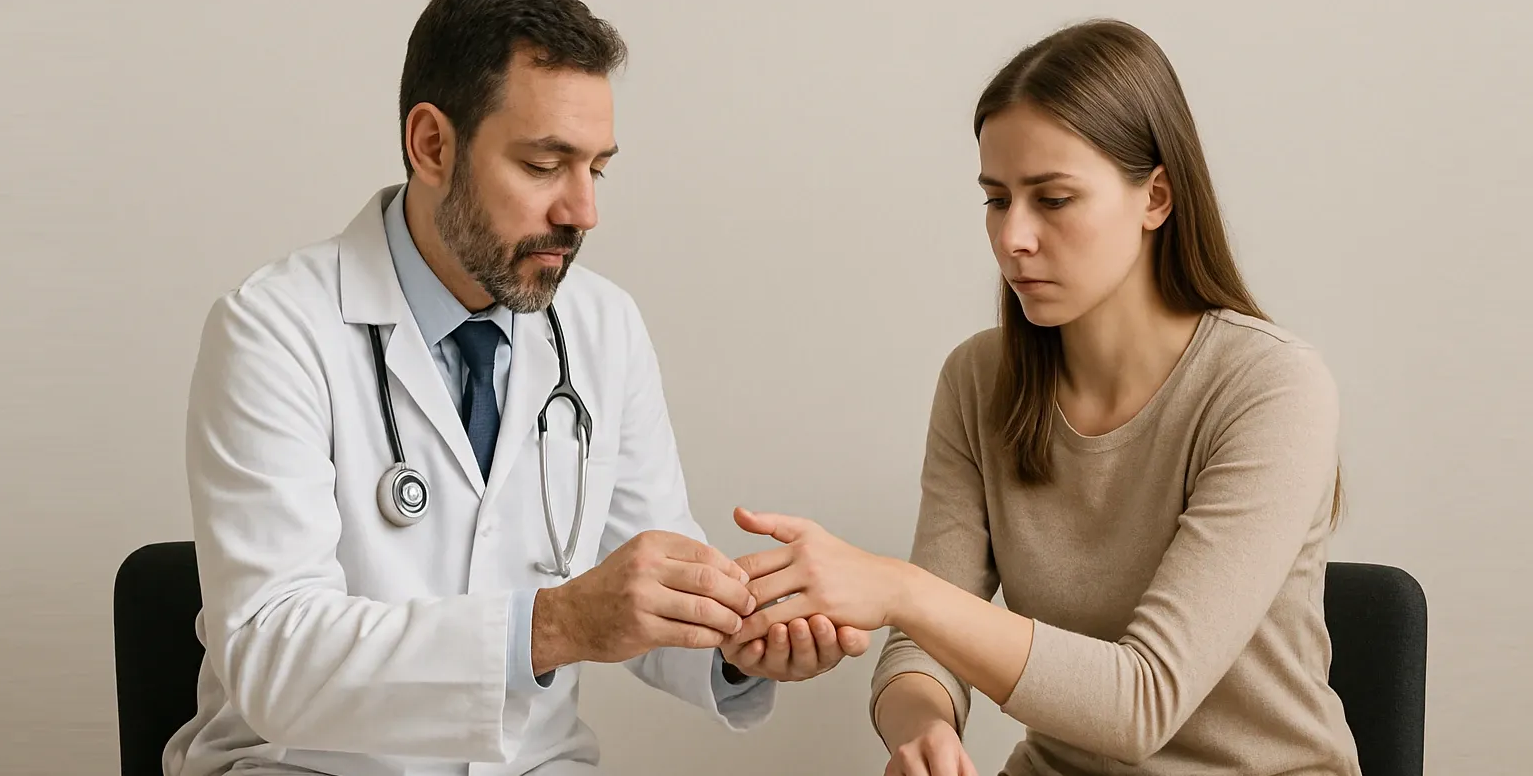
Carpal tunnel tests help diagnose median nerve compression using provocative tests like Phalen, Tinel, and Durkan, plus EMG and nerve conduction studies.
Carpal tunnel tests are used to determine whether symptoms such as numbness, tingling, pain, weakness, or burning are caused by compression of the median nerve inside the wrist.
Doctors commonly use two categories of tests:
- provocative tests
- electrodiagnostic tests
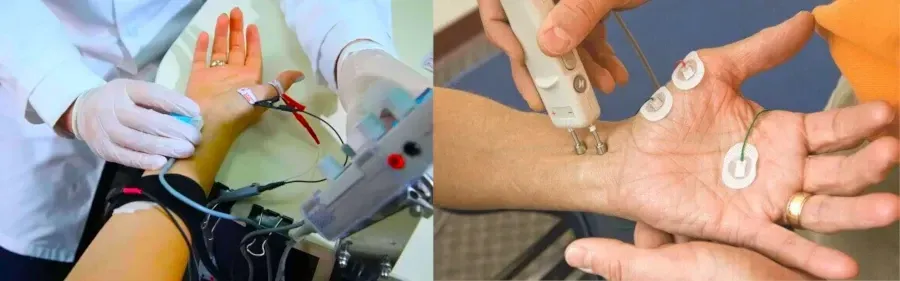
Provocative tests involve bending, tapping, or pressing on the wrist to reproduce symptoms. Electrodiagnostic tests such as EMG and nerve conduction studies use electrical signals to measure nerve function and confirm nerve compression.
Carpal tunnel tests
include provocative tests such as the Phalen, Tinel, and Durkan tests, along with electrodiagnostic tests like EMG and nerve conduction studies. These tests help determine whether the median nerve is compressed inside the wrist.
People Also Ask
What are the main carpal tunnel tests?
The main carpal tunnel tests are the Tinel test, Phalen test, Durkan compression test, nerve conduction study, and electromyography (EMG) test.
Are carpal tunnel tests painful?
Provocative tests are usually not painful unless the median nerve is irritated. EMG testing may cause temporary discomfort because thin needle electrodes are inserted into muscles.
Can I do carpal tunnel tests at home?
Yes. The Tinel, Phalen, and Durkan provocative tests can often be performed at home with reasonably reliable results.
What does a positive carpal tunnel test mean?
A positive carpal tunnel test reproduces numbness, tingling, pain, or electric sensations in the fingers, suggesting median nerve compression.
Signs of Carpal Tunnel Syndrome
Carpal tunnel tests are usually performed after symptoms suggest
median nerve compression inside the wrist.
The
most common symptoms include:
Symptoms usually affect:
- the thumb
- index finger
- middle finger
- part of the ring finger
The little finger is usually spared because it is controlled by a different nerve.
Important:
Nighttime waking, hand shaking for relief, and numb fingers during sleep are classic warning signs of carpal tunnel syndrome.
Risk Factors for Carpal Tunnel Syndrome
Several risk factors increase the likelihood of developing carpal tunnel syndrome.
Common risk factors include:
Certain occupations and hobbies also place heavy stress on the
flexor tendons and wrist.
Higher-risk activities include:
Why Correct Diagnosis Matters
Carpal tunnel syndrome can resemble several other disorders.
Conditions commonly mistaken for carpal tunnel syndrome include:
Symptoms alone are often not enough to confirm carpal tunnel syndrome. That is why proper testing is important before considering surgery or invasive treatment.
Best rule of thumb:
A proper diagnosis should combine symptom history, physical examination, provocative testing, and — when necessary — electrodiagnostic confirmation.
Causes of Carpal Tunnel Syndrome
Carpal tunnel syndrome happens when swollen flexor tendons increase
fluid pressure inside the carpal tunnel and compress the nearby median nerve.
The flexor tendons become irritated from
repetitive stress, high force, and overuse.
Common causes include:
- prolonged typing
- repetitive gripping
- heavy lifting
- prolonged pinching
- repetitive hand motions
- forceful hand activity
As tendon swelling increases, pressure on the median nerve increases too, producing numbness, tingling, pain, burning, and weakness.
Provocative Carpal Tunnel Tests
Provocative carpal tunnel tests attempt to temporarily reproduce symptoms by increasing pressure on the median nerve.
The three most common provocative tests are:
- Tinel test
- Phalen test
- Durkan compression test
These tests can be performed by a doctor or
at home with self-testing.
If the tests reproduce numbness, tingling, pain, or electric sensations in the fingers, carpal tunnel syndrome becomes more likely.
Tinel Test
The Tinel test involves tapping repeatedly over the wrist crease where the median nerve enters the hand.
To perform the test:
- hold the affected hand straight out
- tap firmly over the wrist crease
- continue tapping for 10 to 20 seconds
A positive Tinel test reproduces tingling, numbness, pain, or electric sensations in the fingers.
Phalen Test
The Phalen test bends the wrist sharply to increase pressure inside the carpal tunnel.
To perform the test:
- bend the wrist forward approximately 90 degrees
- hold the position for 30 to 40 seconds
- maintain firm pressure if possible
A positive Phalen test reproduces pain, tingling, or numbness in the fingers or palm.
Durkan Test
The Durkan test applies direct pressure over the carpal tunnel.
To perform the test:
- locate the soft area at the base of the palm near the wrist
- press firmly with the opposite thumb
- hold pressure for 30 to 60 seconds
A positive test reproduces numbness, tingling, pain, or electric sensations in the fingers.
Electrodiagnostic Carpal Tunnel Tests
Electrodiagnostic carpal tunnel tests measure how well the median nerve functions electrically.
These tests are usually performed after provocative testing and physical examination.
The two most common electrodiagnostic tests are:
- nerve conduction study
- electromyography (EMG)
Doctors use these tests to help confirm nerve compression or evaluate
more advanced nerve damage.
Nerve Conduction Test
A nerve conduction study measures how quickly electrical signals travel along the median nerve.
During testing:
- electrodes are placed on the skin
- small electrical pulses are delivered
- signal speed is measured across the nerve
If the nerve is compressed, signal speed may slow down.
Most patients describe the test as uncomfortable, with brief electrical shock sensations.
Electromyography (EMG) Test
An EMG test measures electrical activity between nerves and muscles.
During testing:
- thin needle electrodes are inserted into muscles
- electrical signals are recorded
- muscle and nerve function are evaluated
An EMG may help identify more advanced nerve compression or muscle involvement.
Some patients experience temporary burning or electrical sensations during the test.
Not Sure If Your Symptoms Match Carpal Tunnel?
A symptom self-test can help determine whether your symptoms match median nerve compression.
Check Your Symptoms
Nonsurgical Carpal Tunnel Remedies
Doctors commonly recommend trying conservative treatment before surgery.
Common nonsurgical approaches include:
These treatments aim to reduce tendon irritation, swelling, and pressure on the median nerve.
Summary
Carpal tunnel tests help diagnose median nerve compression inside the wrist.
Provocative tests such as the Tinel, Phalen, and Durkan tests attempt to reproduce symptoms through tapping, bending, or pressure on the wrist.
Electrodiagnostic tests such as nerve conduction studies and EMG testing evaluate the electrical health of the median nerve and muscles.
Together, these tests help confirm whether symptoms are truly caused by carpal tunnel syndrome and help guide proper treatment.
Key Takeaways
- The main provocative carpal tunnel tests are Tinel, Phalen, and Durkan.
- EMG and nerve conduction studies evaluate nerve function electrically.
- Nighttime numbness and tingling are classic warning signs.
- Proper diagnosis is important because several disorders can mimic carpal tunnel syndrome.
- Conservative treatment is usually recommended before surgery.
About Dr. Zannakis