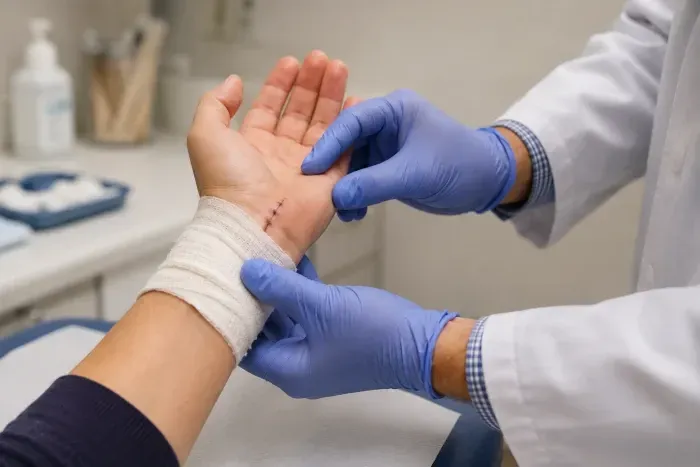
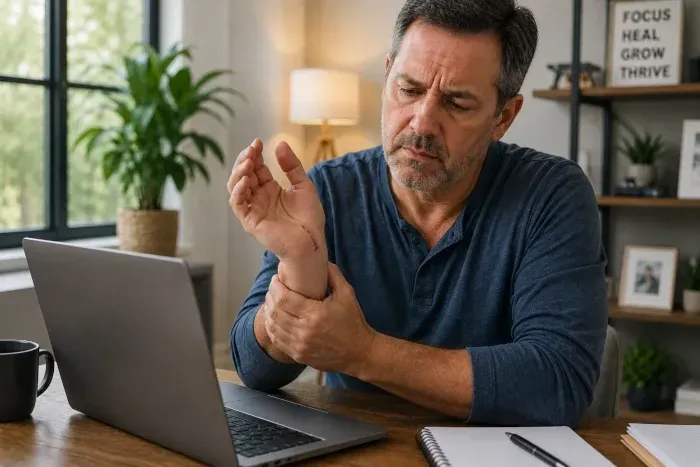
Carpal tunnel surgery aftercare means protecting the incision, controlling swelling, watching for complications, and rebuilding hand function gradually.
Carpal tunnel surgery aftercare is the recovery process that begins immediately after carpal tunnel release surgery. It includes wound care, pain control, swelling management, activity restrictions, scar care, and watching for symptoms that may signal a complication.
Most patients expect some soreness, stiffness, bruising, and weakness after surgery. But pain that worsens, numbness that returns, increasing swelling, drainage, fever, or loss of hand strength should be taken seriously.
The goal of aftercare is simple: protect the healing wrist, restore normal hand use, and recognize early warning signs before they become long-term problems. The original article notes that discomfort is expected, but persistent or worsening pain may signal infection, nerve irritation, or surgical failure.
Carpal tunnel surgery aftercare
focuses on protecting the incision, reducing swelling, controlling pain, and slowly restoring hand function. Mild soreness, bruising, and stiffness are common early on. However, worsening pain, spreading redness, drainage, fever, increasing numbness, or returning weakness may signal infection, nerve irritation, or incomplete relief.
Find Out If You Have Carpal Tunnel — And How Severe It Is
Step 1 confirms whether your symptoms match carpal tunnel syndrome. Step 2 helps you estimate how advanced it may be.
People Also Ask
How long does it take to recover from carpal tunnel surgery?
Skin healing often takes a few weeks, but deeper tissue healing and strength recovery can take several months. Some patients may need up to a year for full strength to return.
What is normal pain after carpal tunnel surgery?
Mild to moderate soreness near the incision, bruising, swelling, and stiffness can be normal early on. Pain should gradually improve rather than worsen.
When should I call the doctor after carpal tunnel surgery?
Call your doctor if you notice worsening pain, spreading redness, drainage, fever, increasing numbness, severe swelling, or weakness that does not improve.
Can carpal tunnel symptoms come back after surgery?
Yes. Symptoms can persist or return if the nerve was severely damaged, the ligament was incompletely released, scar tissue forms, or the original pressure problem continues.
What to Expect After Carpal Tunnel Surgery
Carpal tunnel release surgery is designed to reduce pressure on the
median nerve by cutting the transverse carpal ligament. After surgery, the ligament tissue gradually heals while leaving more room for the nerve.
During recovery, it is common to experience:
- Pain near the incision
- Swelling in the palm or fingers
- Bruising
- Stiffness
- Weak grip strength
- Scar tenderness
- Temporary numbness or tingling
These symptoms do not automatically mean something is wrong. The important issue is whether symptoms gradually improve over time.
Carpal tunnel surgery aftercare focuses on protecting the healing wrist while slowly restoring normal hand use. Recovery is usually gradual rather than immediate.
The First Few Days of Aftercare
The first few days after surgery are mostly about swelling control and protecting the incision.
Your surgeon may recommend that you:
- Keep the hand elevated
- Keep the bandage clean and dry
- Move the fingers gently
- Avoid gripping or lifting
- Use pain medication as directed
- Watch the incision for changes
Some surgeons use a splint after surgery, while others encourage gentle early motion. Your instructions may differ depending on whether you had open surgery or endoscopic surgery.
The goal during this phase is not aggressive exercise. The goal is preventing stiffness while protecting healing tissues.
Typical Carpal Tunnel Surgery Recovery Timeline
First Few Days
- Swelling, soreness, bruising, and stiffness are common
- Keep the hand elevated
- Avoid gripping or lifting
- Gentle finger motion is usually encouraged
1–2 Weeks
- Bandages and stitches are often removed
- Incision tenderness may continue
- Light daily activities become easier
2–6 Weeks
- Grip strength slowly improves
- Many patients return to light-duty work
- Pillar pain or stiffness may still persist
Several Months
- Strength and endurance continue improving
- Scar sensitivity gradually fades
- Full recovery may take several months or longer
Pain After Carpal Tunnel Surgery
Pain is usually the most noticeable part of carpal tunnel surgery aftercare.
Mild to moderate soreness near the incision is expected and should gradually improve. However, worsening pain deserves attention.
Watch these four things carefully:
- Where is the pain?
- Pain near the incision is common.
- Pain spreading into new areas may suggest nerve irritation.
- Is the pain improving?
- Normal healing pain gradually decreases.
- Pain that intensifies over time is not typical.
- Is there swelling, redness, or drainage?
- These may indicate
infection or wound problems.
- Are old symptoms returning?
- Returning numbness, tingling, burning, or weakness may suggest ongoing median nerve irritation.
Some patients also develop
pillar pain, which is soreness on either side of the incision near the thick muscles of the palm. This can persist for weeks or months in some patients.
Normal Recovery vs Warning Signs
| Normal Recovery Symptoms |
Possible Warning Signs |
| Mild soreness near the incision |
Pain that worsens instead of improves |
| Temporary swelling or bruising |
Severe swelling or spreading redness |
| Temporary stiffness |
Loss of finger or thumb strength |
| Mild scar tenderness |
Drainage, pus, or fever |
| Gradual improvement over time |
Returning numbness or worsening tingling |
✓ Normal Recovery Symptoms
- Mild soreness near the incision
- Temporary swelling or bruising
- Temporary stiffness
- Mild scar tenderness
- Gradual improvement over time
⚠ Possible Warning Signs
- Pain that worsens instead of improves
- Severe swelling or spreading redness
- Loss of finger or thumb strength
- Drainage, pus, or fever
- Returning numbness or worsening tingling
Incision and Bandage Care
Incision care is an important part of recovery because the palm is constantly used during daily activities.
Your surgeon may recommend keeping the bandage dry until your follow-up appointment. Stitches are often removed within 1–2 weeks.
Call your doctor if you notice:
- Increasing redness
- Warmth around the incision
- Drainage or pus
- Fever
- Worsening swelling
- The incision opening
- Severe tenderness that worsens
Even after the incision closes, scar tenderness may continue for some time. Once healing progresses, your doctor or hand therapist may recommend gentle
scar massage.
Activity Limits During Recovery
Many patients try to use the hand too aggressively too soon after surgery. That can delay healing.
During recovery, avoid:
- Heavy lifting
- Forceful gripping
- Push-ups or weight-bearing through the palm
- Repetitive squeezing
- Vibrating tools
- Prolonged typing without breaks
- Returning too quickly to strenuous work
Light finger motion is usually encouraged, but heavy palm pressure is not. Grip strength often takes several months to recover fully, and hand therapy is often helpful.
When Can You Return to Work?
Patients who undergo endoscopic surgery sometimes return to light activity sooner than patients who undergo open surgery, although long-term outcomes are generally similar.
Return-to-work timing after carpal tunnel surgery depends on:
- The type of work you do
- Whether your dominant hand was operated on
- Your healing speed
- The type of surgery performed
- Whether your job involves repetitive hand use
In general:
- Desk workers may return within several days to 2 weeks
- Light-duty workers often return within 2–4 weeks
- Heavy labor workers may need 6–12 weeks or longer
Studies suggest many workers with physically demanding jobs struggle to return immediately to their previous duties.
Workers must be mindful about
jobs involving:
- Heavy gripping
- Vibrating tools
- Repetitive wrist motion
- Lifting
- Constant typing
- Forceful squeezing
...because they usually require a longer recovery period.
Even if the incision looks healed, your grip strength and endurance may still be reduced. Returning too aggressively can increase pain and delay recovery.
Many surgeons recommend gradually increasing hand activity rather than immediately resuming full-duty work.
Some patients also benefit from:
- Ergonomic adjustments
- Reduced typing time
- More frequent breaks
- Wrist supports
- Temporary job modifications
- Stretching exercises
Recovery is highly individual. The safest timeline is the one recommended by your surgeon based on your specific healing progress.
Warning Signs After Surgery
Some discomfort is normal after surgery. But certain symptoms should never be ignored.
Contact your doctor if you experience:
- Pain that worsens instead of improves
- New numbness in different fingers
- Increasing tingling or burning
- Loss of thumb or finger strength
- Spreading redness
- Drainage from the incision
- Fever
- Severe swelling
- Fingers becoming pale, bluish, or cold
- Symptoms that fail to improve during recovery
Persistent symptoms may result from:
Early evaluation can help prevent long-term
complications.
When Surgery Does Not Fully Work
Carpal tunnel surgery helps many patients, but not everyone experiences complete relief.
Some patients continue to experience:
This may happen because:
- The nerve was severely compressed before surgery
- Scar tissue developed afterward
- The ligament was not fully released
- The original pressure problem persisted
Persistent symptoms do not necessarily mean you have no options left. You can opt for another (revision) surgery, but thir success is
usually lower than the first surgery.
Many patients see symptoms relief with targeted non-surgical therapies even after they had surgery.
Still Having Symptoms?
Carpal Tunnel Surgery Doesn't Always Fully Solve The Problem
If numbness, tingling, pain, weakness, or stiffness continues after surgery, you may still benefit from conservative treatment designed to reduce pressure around the median nerve and improve tendon movement naturally.
Non-Surgical Options After Surgery
If you still have symptoms after surgery, conservative treatments may still help reduce irritation and improve hand function.
Common options include:
- Night bracing
- Helps keep the wrist in a neutral position during sleep.
- CarpalRx therapy
- Designed to mimic therapist-grade myofascial release massage to reduce soft tissue tightness around the wrist and palm.
For many patients, these approaches may improve comfort and function without requiring another surgery.
Carpal tunnel surgery aftercare involves protecting the incision, controlling swelling, limiting stress on the wrist, and watching for warning signs during recovery.
Some soreness, stiffness, bruising, and weakness are normal early on. However, worsening pain, drainage, fever, increasing numbness, or returning symptoms should be evaluated promptly.
If surgery does not completely resolve symptoms, non-surgical therapies such as bracing, stretching, hand therapy, and myofascial release may still help restore comfort and hand function.
- Carpal tunnel surgery aftercare begins immediately after surgery.
- Mild pain, swelling, bruising, and stiffness are common early symptoms.
- Pain should gradually improve rather than worsen.
- Redness, drainage, fever, or worsening numbness may signal a complication.
- Grip strength recovery may take several months.
- Persistent symptoms do not always mean surgery permanently failed.
- Bracing, stretching, hand therapy, and myofascial release may still help after surgery.