

The prayer stretch is designed to lubricate the entire length of your flexor tendons.
Place your palms together in front of your chest with fingers pointing upward. Slowly raise your elbows while keeping your palms together. Hold for 10 seconds.
CarpalRx - Carpal Pain Solutions
2609 S. Federal Highway
No. 1147 Fort Pierce, FL 34982
From Dr. Z - Carpal tunnel syndrome specialist
You can prevent carpal tunnel syndrome by reducing repetitive hand strain, improving posture, stretching daily, taking regular breaks, and protecting your wrists during stressful activities.
Learning how to prevent carpal tunnel syndrome early is one of the best ways to avoid chronic hand pain, numbness, tingling, and weakness later in life. Fortunately, most cases develop gradually — which means early prevention habits can make a major difference.
Most cases of carpal tunnel develop from repetitive stress, poor wrist positioning, overuse, and tendon irritation. Fortunately, simple daily habits can dramatically reduce your risk.
The best prevention plan focuses on four core strategies:
• resting your hands
• avoiding excessive strain
• protecting your wrists
• performing daily stretching exercises

Carpal tunnel syndrome is a condition caused by pressure on the median nerve as it travels through the wrist.
The condition commonly causes:
Symptoms usually affect the thumb, index finger, middle finger, and part of the ring finger. The little finger is typically spared.
Many people first notice symptoms while sleeping, especially waking up with numb or painful hands at night.
Common risk factors include:
•
repetitive hand-intensive occupations
•
pregnancy
• diabetes
• obesity
•
rheumatoid arthritis
• smoking
•
family history
•
female sex
• small wrist anatomy
High-risk occupations include:
•
dental hygienists
•
hairdressers
•
gamers
• mechanics
•
transcriptionists
•
graphic designers
• assembly workers
• gardeners
•
musicians
• truck drivers
• power tool users
The most effective prevention plan focuses on four core principles:
Together, these habits help reduce irritation inside the carpal tunnel and prevent tendon inflammation from compressing the median nerve.
Small daily ergonomic improvements can significantly reduce long-term stress on the wrist and median nerve.
One of the simplest ways to prevent carpal tunnel syndrome is to take regular breaks while using your hands.
Even short 1-3 minute breaks can reduce tendon irritation and relieve stress inside the wrist.
During breaks:
• shake out your hands
• stretch your fingers
• roll your shoulders backward
• arch your back gently
• relax your grip
Frequent short breaks are usually more effective than infrequent long breaks.

Repetitive hand stress is one of the biggest contributors to carpal tunnel syndrome.
Certain hand activities known to increase strain include:
• rapid typing
• repetitive gripping
• prolonged pinching
• vibrating tools
• forceful wrist bending
• twisting motions
• prolonged bent-wrist posture
Try to keep your wrists in a neutral position whenever possible. Alternating tasks and reducing prolonged gripping can significantly decrease tendon irritation.
Protective equipment can reduce stress on the hands during repetitive or forceful activities.
Helpful strategies include:
• wearing
padded gloves with vibrating tools
• using insulated gloves in cold weather
• improving desk ergonomics
• adjusting
keyboard and mouse height
• maintaining
proper sitting posture
Poor posture can increase strain throughout the shoulders, arms, and wrists. Sitting upright with relaxed shoulders and neutral wrists helps reduce pressure on the median nerve.
Daily stretching exercises are one of the most effective ways to prevent carpal tunnel syndrome.
Stretching helps:
• improve tendon flexibility
• reduce stiffness
• improve circulation
• decrease pressure inside the wrist
• maintain healthy wrist mobility
Even a few minutes of stretching several times per day can make a major difference.

The prayer stretch is designed to lubricate the entire length of your flexor tendons.
Place your palms together in front of your chest with fingers pointing upward. Slowly raise your elbows while keeping your palms together. Hold for 10 seconds.

This stretch concentrates on the flexor tendons inside the wrist joint.
Hold one hand out as if signaling “stop.” Use the opposite hand to gently pull the fingers backward. Hold for 10 seconds and repeat on the other side.

The finger interlace stretch is similar to the "stop stretch" and also helps stretch the finger muscles.
Interlace your fingers and rotate your palms outward. Extend your arms forward until you feel a stretch through the hands and wrists.
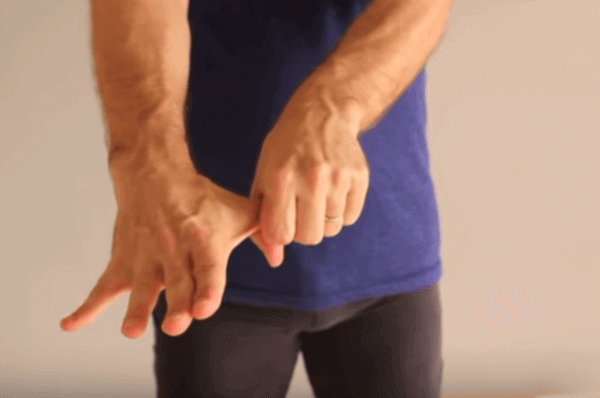
The thumb is the finger most often affected by carpal tunnel syndrome -- so it needs special attention.
Gently pull the thumb backward and hold it for a few seconds. Then rotate it slowly in circles a few times like a helicopter blade. Switch directions.
If symptoms have already begun, prevention alone is no longer enough. At that point, treatment becomes important.
Fortunately, mild symptoms often improve successfully with:
Night bracing is commonly recommended because many people sleep with bent wrists, which increases pressure inside the carpal tunnel. A proper night brace keeps the wrist neutral during sleep and may reduce nighttime numbness and tingling.
However, avoid wearing wrist braces while actively working unless heavy lifting or wrist instability requires protection.
More advanced carpal tunnel symptoms usually require a more aggressive and consistent treatment approach.
At this stage, all of the conservative measures discussed earlier become even more important and should usually be combined together, including:
However, severe symptoms often require an additional treatment called myofascial release massage.
Myofascial release massage works by loosening tight tissue restrictions and improving movement of the flexor tendons through the forearm and wrist. The goal is to reduce pressure on the median nerve while restoring healthier tendon movement.
More severe cases usually require greater consistency and longer treatment periods than mild cases.
In some patients, steroid injections or hydrodissection procedures may also be considered. These treatments are generally used when symptoms are more persistent, more advanced, or not improving adequately with conservative therapy alone.
When conservative treatment fails, steroid injections or surgery may be considered.
These treatments are generally reserved for severe cases involving persistent numbness, weakness, muscle loss, or constant symptoms.
Preventing carpal tunnel syndrome usually comes down to reducing repetitive strain and improving hand health habits early.
The most effective prevention strategies include:
• taking regular breaks
• maintaining neutral wrist posture
• improving ergonomics
• protecting the hands
• stretching daily
These habits can dramatically reduce your chances of developing painful hand numbness, tingling, and weakness later on.
The earlier you begin these habits, the easier it usually is to avoid chronic symptoms later in life.
• You can often prevent carpal tunnel syndrome by reducing repetitive hand strain early.
• Frequent breaks help reduce pressure and irritation inside the wrist.
• Keeping wrists in a neutral position lowers stress on the median nerve.
• Daily stretching exercises improve tendon flexibility and circulation.
• Proper posture affects the shoulders, arms, wrists, and hand mechanics.
• Padded gloves and ergonomic adjustments can protect high-risk workers.
• Mild symptoms are usually much easier to reverse than advanced symptoms.
• Early treatment often prevents progression to severe carpal tunnel syndrome.

Dr. Maik Zannakis, CarpalRx Medical Director
Dr. Maik Zannakis (“Dr. Z”) is a highly respected medical scientist and leading authority in carpal tunnel syndrome and soft tissue disorders. With more than 40 years of clinical and research experience, he has authored hundreds of peer-reviewed medical publications along with hundreds of in-depth articles focused on the diagnosis and treatment of carpal tunnel syndrome.
As the inventor of the CarpalRx, Dr. Z has pioneered innovative, non-surgical approaches to treating wrist and tendon-related conditions. His work has helped shape modern understanding of carpal tunnel syndrome, particularly in addressing its root causes rather than just symptoms.
Recognized for both his scientific contributions and patient-centered approach, Dr. Z is widely regarded as a trusted expert in the field. His insights, inventions, and personalized treatment strategies have made him a go-to authority for patients seeking effective, long-term relief. Read full Bio
Email: dr.z@carplarx.com
Phone: 800-450-6118
CarpalRx - Carpal Pain Solutions
2609 S. Federal Highway
©2025 Copyright | All Rights Reserved | CarpalRX