


Carpal Tunnel Syndrome Splint: What Works (and What Can Make It Worse)

From Dr. Z - Carpal tunnel syndrome specialist

A carpal tunnel syndrome splint must be worn at night and designed without a palmar spine. The wrong splint can increase nerve pressure and worsen symptoms.

Choosing the right carpal tunnel syndrome splint can make the difference between relief and worsening symptoms.


Unfortunately, most splints sold in pharmacies are not designed specifically for carpal tunnel syndrome. Many people wear them for weeks—only to see no improvement or even feel worse.


The key isn’t just wearing a splint—it’s using the right carpal tunnel syndrome splint, the right way.
Here’s exactly how a carpal tunnel syndrome splint should be used—and what to avoid:

A carpal tunnel syndrome splint should be worn at night and must avoid a palmar spine, which increases pressure on the median nerve. Certified splints use dorsal or lateral supports to keep the wrist neutral and reduce nerve compression during sleep.

Think you might have carpal tunnel syndrome?
Take this quick self-test to find out in under 2 minutes.
Start the Free Self-Test →
People Also Ask
What is the best carpal tunnel syndrome splint?
The best splint has no palmar spine and uses dorsal or lateral supports to keep the wrist neutral and reduce pressure on the median nerve.
Should I wear a carpal tunnel syndrome splint all day?
No. Splints should only be worn at night. Wearing one during the day can increase strain and worsen symptoms.
Why can a wrist splint make carpal tunnel worse?
Many splints contain a palmar spine that presses into the wrist, increasing compression of the median nerve.
How long does it take for a carpal tunnel syndrome splint to work?
Mild cases may improve within a few weeks, but moderate or severe symptoms usually require additional therapies beyond splinting.

Be Certain You Have Carpal Tunnel Syndrome

Before using a carpal tunnel syndrome splint, confirm that your symptoms match this condition.


Typical symptoms include:


A simple rule:

  • Worse at night or during rest → more likely carpal tunnel syndrome
  • Worse during activity → more likely tendonitis


If you’re unsure, take a quick self-test before choosing a splint.

How to Use a Carpal Tunnel Syndrome Splint (Correctly)

1) Use Only a Certified Carpal Tunnel Syndrome Splint


Not all splints are created equal.

bad wrist brace for carpal tunnel

A proper carpal tunnel syndrome splint must be specifically designed to relieve pressure on the median nerve—not just stabilize the wrist.


A certified splint:

  • ❌ Does NOT have a palmar spine
  • ✅ Uses dorsal or lateral supports
  • ✅ Keeps your wrist neutral during sleep


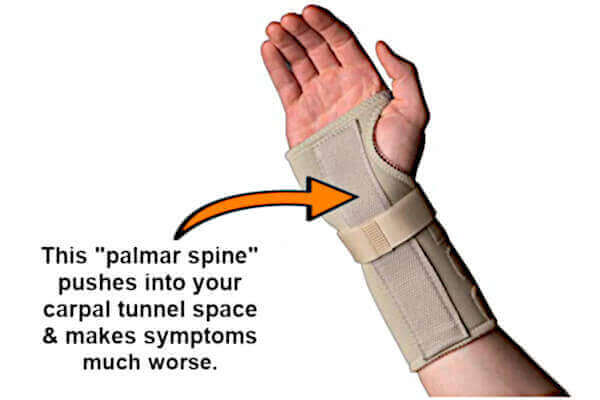
A palmar spine pushes into the carpal tunnel space, increasing pressure and worsening symptoms


2) Wear It at Night—Never During the Day


A carpal tunnel syndrome splint is designed for nighttime use only.


At night:

  • Your wrist stays neutral
  • Tendons rest
  • Nerve pressure decreases


During the day:

  • Your hand must move and work
  • A splint creates resistance
  • This increases tendon stress and worsens symptoms


👉 Bottom line: Night use only.

Here’s exactly how a carpal tunnel syndrome splint can make symptoms worse:
⚠ Warning: Palmar Spine Splints Can Worsen Carpal Tunnel
Most wrist splints sold in pharmacies contain a metal bar on the palm side (called a palmar spine).

This design presses directly into your carpal tunnel, increasing pressure on the median nerve.

Instead of relieving symptoms, it can make them worse—especially overnight.
If your splint isn’t helping—or symptoms are getting worse—it’s critical to know your stage.
Already have symptoms?
Find out how severe your carpal tunnel is—and what to do next.
Take the Severity Quiz →

The Problem with Drugstore Splints

Most drugstore splints are designed as “one-size-fits-all” solutions.


They claim to treat:

  • Sprains
  • Arthritis
  • Tendonitis
  • Carpal tunnel


But no single splint can effectively treat all of these conditions.


Drugstore splints:

  • Are not designed specifically for carpal tunnel syndrome
  • Often include harmful palmar spines
  • Focus on immobilization instead of nerve relief 

Splints to Avoid

These commonly sold splints are not appropriate as a carpal tunnel syndrome splint:


  • Ace products
  • Bauerfeind products
  • Bio Skin products
  • Bledsoe products
  • DonJoy products
  • FLA products
  • Futuro products
  • Hely and Weber products
  • Mueller products
  • Ossur products
  • ProCare products


👉 If it’s sold in a pharmacy, it’s not designed specifically for carpal tunnel syndrome.

Certified Carpal Tunnel Syndrome Splints

Certified splints are specialty medical devices designed specifically for treating carpal tunnel syndrome.


Examples include:


These splints:

  • Are designed for nighttime use
  • Keep the wrist neutral
  • Reduce pressure on the median nerve

Summary

A carpal tunnel syndrome splint can be highly effective—but only if it’s the right type and used correctly.


Night splinting is an excellent first step for mild to moderate symptoms. However, more advanced cases often require additional therapies such as stretching and myofascial release. Choosing the correct splint—and using it properly—can prevent symptoms from progressing and reduce the need for more aggressive treatment.

Key Takeaways

  • Not all splints help carpal tunnel syndrome
  • A proper carpal tunnel syndrome splint has no palmar spine
  • Splints should only be worn at night
  • Drugstore splints are usually not appropriate
  • Moderate to severe cases need combined treatment

About Dr. Zannakis

Biography: Dr. Z - CarpalRx Medical Director & author

Dr. Maik Zannakis, CarpalRx Medical Director


Dr. Maik Zannakis (“Dr. Z”) is a highly respected medical scientist and leading authority in carpal tunnel syndrome and soft tissue disorders. With more than 40 years of clinical and research experience, he has authored hundreds of peer-reviewed medical publications along with hundreds of in-depth articles focused on the diagnosis and treatment of carpal tunnel syndrome.


As the inventor of the CarpalRx, Dr. Z has pioneered innovative, non-surgical approaches to treating wrist and tendon-related conditions. His work has helped shape modern understanding of carpal tunnel syndrome, particularly in addressing its root causes rather than just symptoms.


Recognized for both his scientific contributions and patient-centered approach, Dr. Z is widely regarded as a trusted expert in the field. His insights, inventions, and personalized treatment strategies have made him a go-to authority for patients seeking effective, long-term relief. Read full Bio


Email: dr.z@carplarx.com

Phone: 800-450-6118